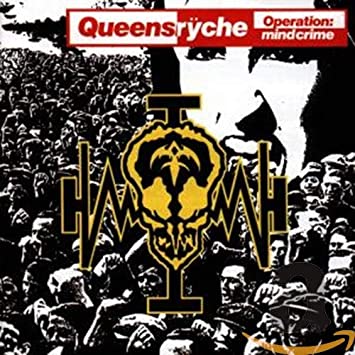
Queensrÿche – Operation: Mindcrime (1988)


SAMPLE IDENTIFICATION

Artist: Queensrÿche
Album: Operation: Mindcrime
Release Year: 1988
Country: United States
Label: EMI
Studio Album No.: 3
Genre(s): Progressive Metal / Power Metal
Tracklist:
1. I Remember Now- 01:18
2. Anarchy-X – 01:27
3. Revolution Calling – 04:40
4. Operation: Mindcrime- 04:45
5. Speak – 03:43
6. Spreading the Disease – 04:07
7. The Mission – 05:48
8. Suite Sister Mary – 10:40
9. The Needle Lies – 03:09
10. Electric Requiem – 01:23
11. Breaking the Silence – 04:34
12. I Don’t Believe in Love – 04:23
13. Waiting for 22- 01:06
14. My Empty Room – 01:32
15. Eyes of a Stranger – 06:39

Total: 59:14


BACKGROUND

At a period of time when heavy metal was stagnating and a major resurgence was necessary, when glam and hair metal was at its peak, right between thrash metal’s decline and death metal’s increasing momentum, before there was even fucking Dream Theater, Queensrÿche reigned supreme in the “progressive metal” department. Barely. The bar was low in 1988. Storybook concept albums from heavy metal bands weren’t common yet, and edgy Big Bad Government allegories outside of a punk or thrash context was a fresh enough perspective to resonate with pop-metal sensibilities. Needless to say, Operation: Mindcrime is a fan favorite and is still regarded positively over 30 years later. It was Queensrÿche’s breakthrough album and lead to even higher success with their next two records Empire and Promised Land.

METALLURGICAL EVALUATION

Oof. I’ve always felt a little dumb when listening to Queensrÿche. Geoff Tate’s voice is operatically high-pitched and melodramatic, which works better if your power metal band either a) has a sense of humor, or b) has a kernel of self-awareness, and I never believe for a second that Queensrÿche has either. Music like this BEGS to be taken less seriously, and if the whole package contains mad scientists, prostitute-turned-nuns, heroin abuse, secret organizations, corrupt government agendas, hired assassins, a love story, and it’s presented in the way Operation: Mindcrime is presented, I’m sorry, it’s going to be hard to stop feeling a little dumb when listening to it.

This is why I find the widespread acclaim perplexing, and why I need to try putting on my metalhead hat while listening to this if I have any chance of enjoying it. Critics praised Tate’s voice, the complex story, and the unusual song structures. I already bitched about Tate’s voice, but I guess that’s a personal hang-up and I’m alone in finding his singing cheesy. The story is complex, I’ll give them that, but it’s rife with action movie clichés and lack of nuance. I’ll excuse a lot of this, since this is an entirely a musical production anyway and Queensrÿche can hardly be faulted for lack of nuance on their grandiose progressive metal album. Again, though, when Tate sings lines like “Don’t ever trust the needle (it lies!)/Don’t ever trust the needle when it cries!” or “Mary, Mary, just a whore for the underground/They made you pay in guilt for your salvation” with the voice that he chooses to sing with, I feel super dumb by proxy. Like, I’m imagining the 55-year-old guy that still gets really super into this album and the story and is genuinely thinking about how badass it is while he’s listening to it. Like, he’s sitting in his armchair and raising his glass at the crescendos or something. And to think, this could have all been avoided if I had even an inkling that Tate didn’t take himself too seriously every step along the way.

And here’s the kicker: the story was entirely Tate’s idea. He reportedly had to work hard to convince the entire rest of the disinterested band on a one-on-one basis to roll with it. He was finally able to get one guy on his side, and then soon everyone else gave in. That tells me all I need to know about the dynamics of the band’s interpersonal politics. It’s no wonder they ended up kicking Tate the fuck out in the early ’10s.
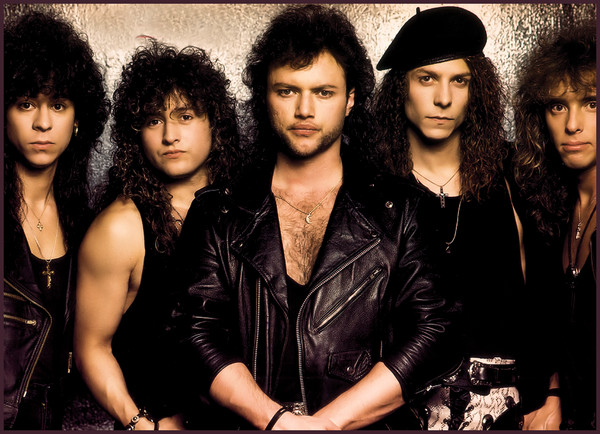
Figure 1. The Leather Brigade is on a mission for more chest hair oil and beret detergent.

CONCLUSIONS

I’m somewhat familiar with about five Queensrÿche albums and Operation: Mindcrime is probably their best, which I don’t think is a very good defense for the band. I’m going to end on a positive note, because I’ve focused too much on taking the piss out of this album without highlighting the good parts. The pacing and sequencing of the album is well done, and my interest stays for the hour without too much effort. The songs are actual songs! Like, with obvious verses and choruses and melodies and bridges and solos and beginnings and endings. For all I know, Operation: Mindcrime is a collection of stand-alone singles that Tate wrote a narrative around. The good and bad bits have mostly equal weight, so after digesting this album as much as I can stomach I’m hard-pressed to join in on the overwhelming acclaim. This album is very flawed. You need to have heard this album for the first time as a teenager or younger to go all-in with it. If you are a fully grown adult that HASN’T heard Operation: Mindcrime yet and you DO have the emotional intelligence of a teenager, then you’re going to be in for the thrill of your life! There’s guns and drugs and fucking!


Pixel Grip, Sleaford Mods, and Japanese Breakfast

Third installment of Newer Release Roundup! When should I stop counting? When does it get ridiculous? Why should I force my obsessive compulsive tendencies on you guys? How is that fair?

This week I kept it extra positive, featuring three albums that I liked right away. This is how I can prove to you, the cautious audience, that I’m not just entirely black clouds and spilled milk. This is what we call the honeymoon phase, and it won’t last forever. Onward!


Pixel Grip – ARENA
(May 21, 2021)

Pixel Grip - ARENA

The inspiration behind ARENA was, surprise surprise, pandemic lockdown. Like much of the music released since March 2020, Pixel Grip’s second album represents the air of frustration with respect to collectively losing our freedoms for the better part of a year. On top of that, losing the dance club as a haven of freedom from queer persecution. The Chicago trio did the next best thing and created this album as a portable version of this haven, bringing the club to you, and they don’t hold back.

The music is fun to listen to, featuring infectious minimal wave dance beats and the gothic vocals of Rita Lukea. You know you’re in for a good time when you hear lyrics like “Your pussy wait/My pussy go/My pussy fast/Your pussy slow“! The ten tracks cover the overarching theme of RESISTANCE AGAINST THE ESTABLISHMENT, which is always a good time! Plus, there’s the added bonus of sweaty sexuality! So intertwine these themes and you have a clear picture. Lukea refers to the album as their “villain origin story”. ARENA is dark, unafraid, and unapologetically mean. I’m looking forward to digging into it some more and also checking out their debut album Heavy Handed.

Early Verdict:


Sleaford Mods – Spare Ribs
(January 15, 2021)

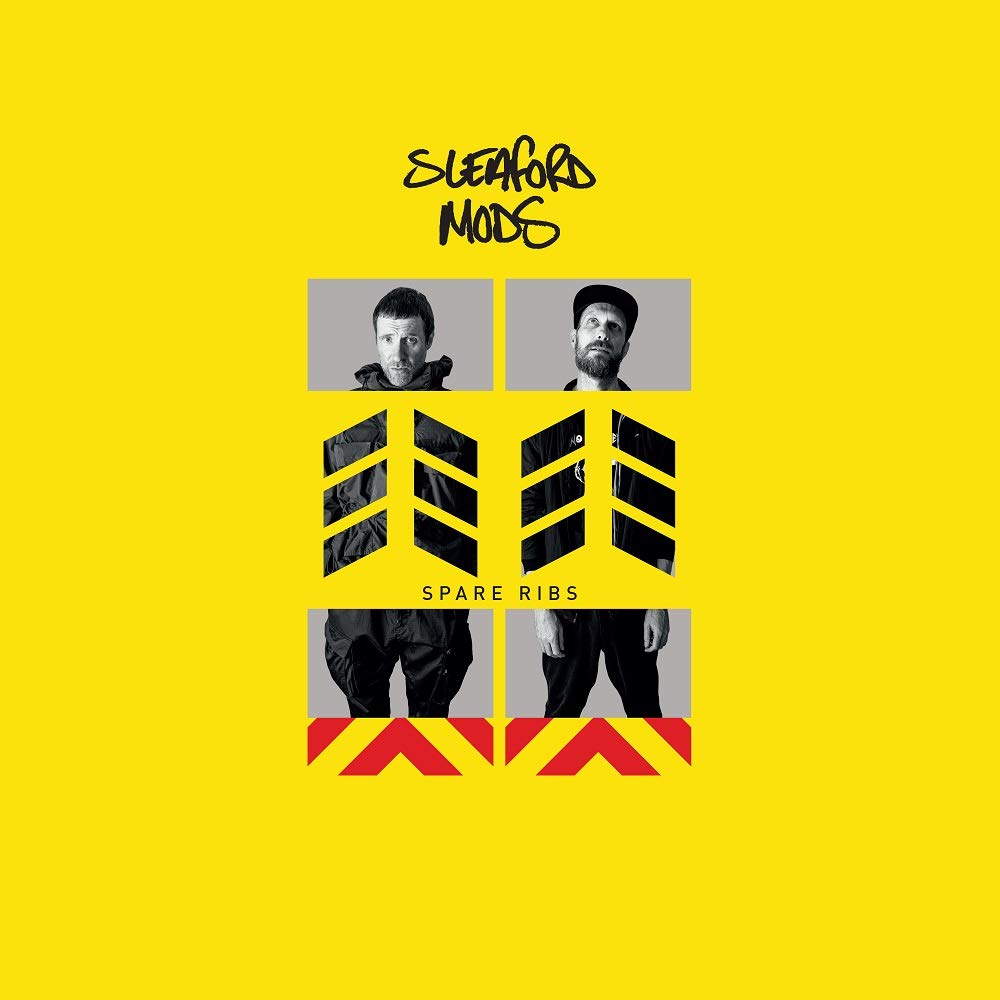
Sleaford Mods - Spare Ribs

Eleven studio albums since 2007. Sleaford Mods are so prolific that I found it hard to jump in at all in the last few years. When I saw that Spare Ribs was getting some solid positive reception, just like everything else they’ve put out, I decided that now was the time to finally take the dive and hear what these aging representatives of British working class and mod subculture have to say. And I’m pleased.

With a name like “Sleaford Mods” I expected something very British, and it’s way more British than even that! Jason Williamson rap-speaks with a very thick regional East Midlands dialect so that he sounds like a grizzled old angry drunk, vulagarly waxing poetic about some very local political and social issues (i.e. Brexit) over Andrew Fearn’s grime-infused post-punk dance beats. As a filthy American who barely wants to indulge in keeping up with my own country’s political and social climate, I don’t have even the slightest understanding of the United Kingdom’s except, of course, that their country is similarly fucked. That I can relate with!

From a musical standpoint this album is incredibly fascinating, and the combination of styles, grime/punk/hip-hop/dance/club influences, and Williamson’s unique voice make for a compelling listen. The best part of finally dipping into Sleaford Mods’ music is that I have ten more studio albums to absorb as well! Points off for the British references losing me a bit, but hey, I’ll enjoy the beats and Williamson’s accent when he says stuff like “fookin’ cunt!

Early Verdict:


Japanese Breakfast – Jubilee
(June 4, 2021)

Japanese Breakfast - Jubilee

Michelle Zauner’s third album under the moniker Japanese Breakfast was only released last Friday and I’m already really into it. After having lukewarm feelings about her overly shoegaze-y 2016 debut Psychopomp and then slightly better feelings about her slightly more diverse 2017 album Soft Sounds from Another Planet, Jubilee is even MORE stylistically diverse and, frankly, more melodically exciting.

From the joyful snare and horn-driven indie rock throwback opener “Paprika” to the pure, hooky pop song “Be Sweet” to the lush and elegant chamber pop of “Kokomo, IN” to the smooth jazz soloing in “Slide Tackle” and beyond, Zauner’s ambitions are adequately realized and she never strays too far from sounding like Japanese Breakfast. I think it’s her voice, which bounces between powerful and reserved and ethereal as directed by the music, that threads everything together very well.

Also, one of her music videos features Christopher from the Sopranos, who is old and beardy now. Everyone likes Christopher from Sopranos! That one’s fun for the kids.

Early Verdict:

Oingo Boingo – Boingo (1994)


And here it is, the final Oingo Boingo album. Years of film scoring had really taken its toll on Danny Elfman’s desire to keep the band going, and after unapologetically phoning it in on Dark at the End of the Tunnel he decided he needed to take drastic measures to breathe some life back into the project. He dropped the horns, dropped the keyboards, brought in a second guitarist, and most notably, dropped the “Oingo”.

It comes as no surprise to me that something like this wasn’t sustainable for the long-term, especially when reading accounts that album production kept getting stalled due to Elfman’s other projects. Elfman was clearly still trying force it, and finally admitted years later that he really just didn’t care anymore. The band dissolved after a final farewell concert on Halloween 1995 (which was released as a fantastic live album), and considering the circumstances surrounding the dissolution, even in these weird times when even the most unlikely reunions are happening, I wouldn’t count on seeing new material from Oingo Boingo ever again. ALTHOUGH, THIS FRIDAY on June 11th, 2021, Elfman is releasing his very first rock album since Boingo‘s 1994 release! So, stranger things have happened…

The total upheaval of the band was a success, there’s nothing here that sounds like the same band anymore. Boingo is packed to the nines with grungy alt-rock melodies, lush orchestral arrangements, unorthodox non-pop song structures, sullen and quiet acoustic passages, subtle vocals, and bravely long track lengths. At the time, Elfman called it “the most challenging, fun, and difficult record” they’ve ever done, although I’m sure we was trying to keep a positive attitude about it for the most part. It certainly is ambitious, I’ll give him that much, but I think a lot of the album sees the band biting off more than they can chew, and while many elements here are different than what came before, a lot of it is derivative of the times and, as a result, isn’t exciting enough to justify its 77-minute runtime.

The good stuff, though, is fantastic. Boingo opens strong with “Insanity”, a cinematic masterpiece of crisp, stark and desolate production, unnerving horror orchestration, no-holds-barred political commentary, and creepy voice effects. The song is driven by rhythmic marimba, and Danny’s voice has never sounded better as he woefully bemoans the poisonous influence of religion through media. He’s even got a children’s chorus à la “Another Brick in the Wall”! At 7:59 this song is not a second too long, and it’s likely the biggest thrill you’re going to get out of Boingo.

After “Insanity”, the record start getting muddied with one pleasant, yet ultimately disposable and overlong, tune after another. “Hey!” is Nirvana-worship, plain and simple, with similar grunge riffs and the Cobain-style “Hey-ey-ey-eyyy-eyyyyyy!” chorus. It aptly begins with “Hey, I’ve got commentary without much to say” and then continues for seven more minutes! “Mary” is a lush symphonic ballad with a rather banal melody and a dramatic story with subtle anti-religious commentary. It’s pretty, but needed some editing. I feel the same way about “Can’t See (Useless)”, which has similar tone and instrumentation and might have been more powerful placed later in the record. Part of the problem thus far is that it’s all so serious, just like Dark at the End of the Tunnel was, and while Boingo has a leg up on melodic maturity and richer instrumentation…that same nagging feeling persists, the one where I think even Elfman believes he’s completely full of shit. I don’t buy this “authentic presentation” schtick at all.

Moving on, “Pedestrian Wolves” could literally be six minutes shorter, and gets my award for The Most Generic Alt-Rock Song on Oingo Boingo’s Generic Alt-Rock Album. If your song is going to be nine minutes long then you better make it memorable, holy shit dude. And those lyrics. “I’m so exci-i-i-i-i-i-ted/About the prospects of meeting with a stranger in an alley/I’m so exci-i-i-i-i-i-ted/I hope they’re rough/I hope their skin is tough/Like Spanish leathe-e-e-e-e-e-e-rrrrrrr“, what the ever-loving fuck is this? Terrible.

Things start to pick up again musically with the next tracks: “Lost Like This”, “Spider”, and “War Again” are all solid cuts with plenty of hooks, albeit they all have some more of that cringey high school depression poetry that would make even Morrissey raise an eyebrow. I’ve caught myself belting out “I’ve never been lost like this/But I wouldn’t be HAAA-A-AA-A-PPY anywhere else” along with the Elf Man, but never in public! “Spider” has somber acoustic beauty, but a clunky chorus so try not to listen too hard to the words. “War Again”, ugh, such a kickass reverb-laden electric guitar driven moody piece that just gets undermined by the stupid lyrics (“Don’t you know this is better than any video friend/It’s an action movie/Here we go watch the bad guys get their butts kicked/Really makes me feel good!“). I know this is supposed to be satire, but it’s not very sophisticated satire. I mean, lines like these used to fit more adequately within the old herky-jerky ska-punk Boingo but it simply does not work very well with this super serious film score music. That fucking “War Again” verse doesn’t even rhyme! He’s not even trying!

OK, time to get incredibly Beatles-y, so buckle up! After a faithful “I Am the Walrus” cover, updated for the times of course, we traipse over a throwaway interlude (“Tender Lumplings”) and then jump into the mammoth 16-minute “Change”. Now, usually, a giant closer can really break a whole record for me, especially a record that already has its unfair share of ballooned-out track lengths, but “Change” is a fully-engaging psychedelic trip and a welcome stylistic shift. Symbolically, it’s not only the perfect finish to a band’s career, but it’s also the ultimate culmination of all the isolation, social outcast, anxiety, and fear-based themes running through the entire Oingo Boingo discography. Over the course of sixteen minutes we seem to go through the audio equivalent of the five stages of grief: denial (“Don’t you ever wonder why/Nothing ever seems to change?“), anger (“Oh God, here’s that question now/The one that makes me go insane“), bargaining (“I’ll gladly tear my heart out/If you never, never, never, never change“), depression (“And it kills my brain to think of all the time I wasted here/All the effort, sweat, and broken hearts, the screaming and the tears“), acceptance (“Something happened, something strange/Something it appears has changed“). Of course, this is a gross oversimplification on my part, but it works nicely and I’m sticking with it! Anyway, the song is a stew of post-Rubber Soul-era Beatles influence; a blatant Lennon/McCartney ripoff/homage/whatever you want to call it, full of familiar rock riffs, hallucinatory manipulations, psychedelic guitar solos, faux British-tinged accented singing, kaleidoscopic string quartets, odd experimental sound collages, catchy earworms, soulful balladry, you name it. I think it’s a brilliant song almost all the way through; FINALLY, the lyrics and the voice don’t sound melodramatic and dumb, FINALLY the emotion sounds genuine again.

“Change” alone is worth the admission price. OK, well, “Insanity” and “Change. Just take the first and final tracks and don’t bother with the rest unless you have the time.  I can only wonder where the band would have gone next had they continued on, but it was only a matter of time before the well would have run completely dry anyway. This is way better than Dark at the End of the Tunnel, I’m glad the band didn’t finish on their weakest note and then put out a completely embarrassing run of artistically bereft albums chock full of zombie emotions and out-of-touch dinosaur sentiments like so many other bands that should have known when to quit. At least with Boingo the dignity can stay intact. They would be wise not to regroup.

Now to brace myself for that Elfman solo album dropping in a few days. Hoo boy…

JUST OK

The Release of the Pentagon UFO Report!

The aliens are coming and not even your outdated landlines are safe! This scary specimen is ordering pizza.

I was trying to wrap up a very busy day at work last week hitting large pieces of metal with smaller pieces of metal, or whatever the fuck it is that I do all day, when one of my more annoying coworkers started talking to me out of the blue about how his entire family has stories of their alien encounters. This annoying coworker–for anonymity’s sake let’s just call him HALEY JOEL OSMENT–proceeded, without prompt, to regale me with all sorts of BONE-CHILLING anecdotes ripped off right from his favorite episodes of X-Files and Rick and Morty: when he was 10 years old he was playing in his backyard at his house and a big, stupid, cartoony UFO came out and hovered above him. He went in to get his parents, and when the three of them came back out…oh man, what do you think happened next?? I thought he was going to tell me that it was no longer there, that his parents didn’t believe him, that only he knows the truth, but instead he told me there were THREE UFOs waiting when they all came out! Fuck me sideways! What a terrible story!

As it turns out, my coworker didn’t suddenly smell toast and start chatting to me out of nowhere about secret Antarctica research bases all run by one single secret unified world intelligence organization hiding advanced alien technology and iPhone 27s! There was a method to his madness! He already had aliens on the brain! Haley Joel Osment was giddy about the release of the Pentagon UFO report later this month:

One of the many curiosities packed into the $2.3 billion omnibus spending and coronavirus-relief package passed by Congress in December was a stipulation requiring the Department of Defense and the Office of the Director of National Intelligence to deliver an unclassified report on unidentified flying objects to Congress within six months, compiling what the government knows about about UFOs rocketing around over American airspace.

The report — which comes after a slow, four-year drip of reporting and government admissions on UFO sightings — could be delivered to Congress as early as June 1. Regardless of what’s in it, the release will be the most direct and substantive U.S. government account of what officials call unidentified aerial phenomena (UAP) ever made public. Below is a guide for those who want to believe — or at least understand what to expect from the Pentagon’s unprecedented act of transparency.

Pretty exciting stuff! Finally, in our lifetimes, we will know the real truth about all these aliens flying around Earth all the time, typically in rural areas, observed only by children, hicks, the mentally unstable, Trump supporters, Trekkies, glue sniffers, high school dropouts, IT technicians, and Haley Joel Osment. I’m looking forward to cracking open that report myself! I can only imagine what may be revealed at last! I’m going to make a few predictions about what’s finally coming out of this report that should have been made known to the public a long-ass time ago:

Our Lord and Savior is an alien himself and he’s hiding it rather well, but only I know the truth.

Aliens are the ones putting mind-controlling fluoride into our tap water and toothpaste
No shit, sherlock! According the Gary Busey Alien Handbook it’s a well-known FACT of SPACE NATURE that most extraterrestrials are fluorine-based and their fluorine-based excretions are leaking into our water supply. He also goes on to say for 750 more pages that every toothpaste conglomerate is owned and operated by these fluorine-based extraterrestrials and all their carbon-based subordinates are in the pockets of Big Fluoride.

So how can I actually BELIEVE Gary Busey? Are you kidding? How dare you? Gary Busey is the universe’s ONLY trustworthy individual, fluorine-based or not, and I recommend grabbing his other books as well: Bettering Yourself Through Beating Up Yoga Nerds and, of course, You Too Can Find Jesus in a Grotesque, Helmetless Motorcycle Crash As Long As You Also Had a Cocaine Overdose in 1995.

I know what you’re thinking now. “WAHH, BUHHH, OH TOOOOM, HOW AM I S’POSED TO KNOW MY MIND IS BEING CONTROLLED, HUH? DUURRRFF??” Well, that’s easy: you don’t believe in aliens, right? Exactly. While you’re spending your days not believing in aliens, the aliens are out there controlling our minds! Controlling us to not believe in them. Sinister!

Aliens shot John F. Kennedy
Oh man, this one is so obvious you’d have to be some dumbshit drinking the Kool-Aid to not see it. Lee Harvey Oswald didn’t shoot JFK! Do you really think some 24-year-old nerd like Oswald could even hold an inhaler let alone a gun?? Please, it was aliens! I’m not even going to waste my time explaining, you wouldn’t even understand. Let’s just move on.

Aliens also shot Lee Harvey Oswald
Come on, do you really think aliens were going to leave the Kennedy assassination open-ended like that? Hell no! You know that famous of photo of Jack Ruby shooting Oswald, the one where it’s obviously Ruby killing him at point blank range? Nah, it’s aliens. Check out my figure below for THE PROOF and just decide for yourself, if you’re ready to OPEN YOUR EYES and WAKE THE FUCK UP.

I think it speaks for itself.

Fever Ray

Fever Ray is the NOM-DE-GUERRE of Karin Dreijer, one half of the now-defunct Swedish electropop/electrodance duo the Knife. Between their third studio album Silent Shout (2006) and the collaborative opera Tomorrow, In a Year (2010), the Knife were on hiatus and Dreijer took the opportunity to cobble together and release their own solo material.

Dreijer uses the Fever Ray moniker to present their experience as a genderqueer individual. Like the Knife, there’s a large visual arts presentation to their work that brings to mind old school industrial artists like Throbbing Gristle and, especially, Genesis P-Orridge. Masks, face paint, costumes, often of a terrifying and off-putting nature, are common, although their work is way more introspective and personal and not as deliberately provocative or socially challenging as what you’d expect from a typical early industrial act. I like it!

They’ve only put out two albums since 2009 and both are good. At this rate we’ll get album #3 in 2025! I can’t wait.

Fever Ray’s Bandcamp page

JUMP TO:
(2009) Fever Ray
(2017) Plunge


Fever Ray (2009) – Rating: 7/10
No Full Album Review Yet

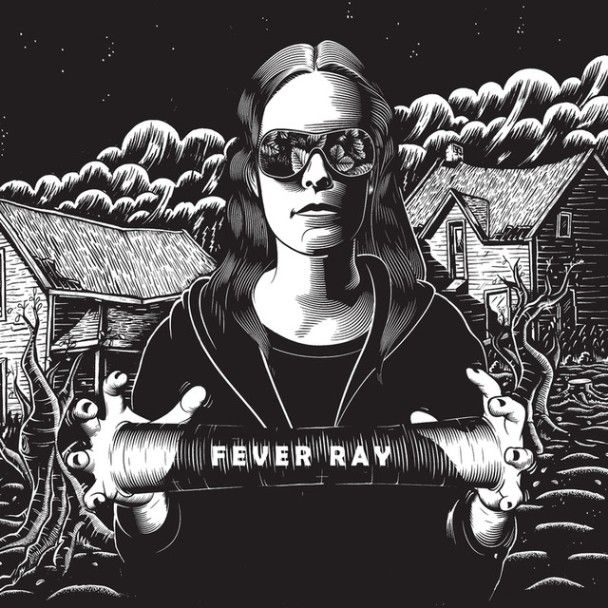
Fever Ray - Fever Ray

It’s hard to judge Fever Ray’s Fever Ray without direct comparisons to the Knife, since the connection is obvious but the projects are so different. While the Knife’s music is bouncy and poppy and playful, Fever Ray’s debut is tentative and serious. It’s clear that this is not dance music anymore, but what is it then? Brightly-colored goth pop? Nautical electro-industrial rock? Yes!

Dreijer builds a new identity around these aquatic synth pulses and the cold, inhuman, pitch-shifted singing, or at least this album is an exercise in attempting to build an identity. It’s like you’re listening to it happen in real-time. There are lots of unique little uncertain, but perfectly placed, bleeps and bloops, metallic scrapings, and echoing bangs and clangs scattered among the dreamy, restrained melodies. It reminds of me Brian Eno’s special electronic touches. A lot of these songs are reminiscent of other turn-of-the-millennium electropop acts like Goldfrapp or Ladytron.

If I have any complaints at all, and this is highlighted further by the release of Plunge, the songs are a little too similar to each other in tone and some melodies aren’t as robust as others. My personal picks for stand-out tracks are “When I Grow Up” and “Seven”, but, while Fever Ray is consistently good, there’s nothing here to get too worked up over. The highs and lows of the album are even-keeled. In short, things get better.


Plunge (2017) – Rating: 9/10
No Full Album Review Yet

Fever Ray - Plunge

My big, fat, shockingly unpopular opinion about Dreijer’s second solo album is that it’s a lot better than the debut. At first I thought it was just the novelty of it being so different from Fever Ray, but as I kept listening to it I realized that these songs are just superior, not different at all really. It’s still the same Fever Ray, it just seems like a more confident permutation. While the debut has their voice mixed behind the music, symbolizing the in-the-moment uneasiness, here it’s shoved to the front, symbolizing a more realized self-acceptance. The whole product is less quiet all around, more authoritative and direct, less dreamy and more angry and frustrated, more overtly sexual and political, and more frightening. Definitely not as shy anymore.

My feelings that the debut has a sort of nautical-industrial vibe is justified further by the second album; with a name like Plunge, plus the sea-blue background of the album cover, all the aquatic connotations are right there. A lot of the same bloopy metallic pipe percussion and dreamy underwater snakey synths are present like before, maybe with sharper edges and more aggressive melodies. My favorite track “Falling” begins with an extended sonic tapestry, with an occasional industrial gong that sounds like PLUNGING, if you will, deep into the abyssal ocean.

The debut had lyrics like “When I grow up/I want to be a forester/Run through the moss on high heels/That’s what I’ll do“, but Plunge has lyrics like “Let’s find out what you are about/What’s hidden in there/What you’ve got for me there“. The debut is all like “this is what I want to be, I think, I don’t know, I hope that’s ok” and the second album is all like “fuck you, this is who I am, deal with it or go fuck yourself”. Of course this is the better album! I hope Dreijer’s next effort gets so goddamned in-my-face that my eyeballs get pushed down my esophagus. Then we’ll have a 10/10 on our hands.