Oingo Boingo – Boi-Ngo (1987)


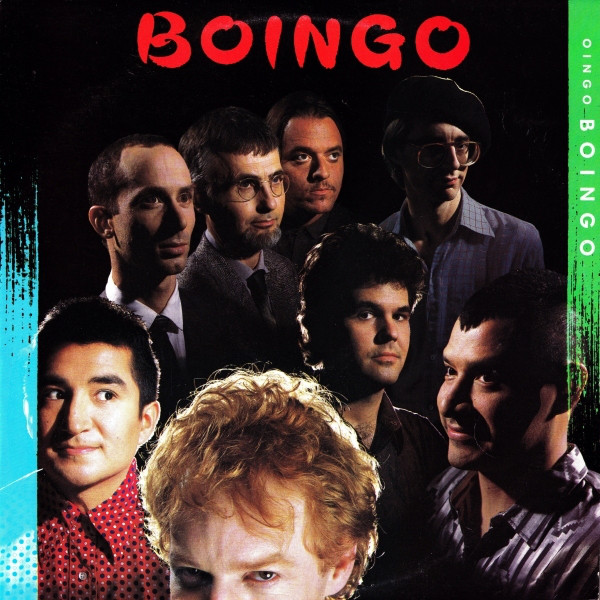
By now the nail was most certainly in the coffin for any hopes that Oingo Boingo would return to their manic and quirky early ska punk days. If the cover of their sixth album Boi-Ngo is any indication of the band’s steadfast ascension to maturity, then feast your weary eyes! The full band is on display for the first (and only) time! And what a band of sophisticates it is! Widow’s Peak, Poofy Hair, Beardy, Shifty, they’re all here! I see a guy with a fucking beret on his head. At least Danny Elfman himself has the good sense to stay coy, obviously concealing a goofy shit-eating grin, and reassuring us that the band hasn’t entirely lost its humorous edge.

But, yeah, to say that Boi-Ngo is a return to form after the tepidity of Dead Man’s Party is like saying that 9/11/02 was a better 9/11 than the previous 9/11. The production has improved drastically…so drastically, in fact, that this is likely their best sounding album ever. Crisp contrast and wide dynamic range here really make those fuckin’ horns POP without sounding too slick and cheesy, so congrats Oingo Boingo for narrowly avoiding making your 1987 album sound like it came out in, god-forbid, 1990. Ha! Along with the improved production, the energy is back too. It’s not as frantic as the days of old for the band, but Boi-Ngo recaptured the sorely lacking urgency of Dead Man’s Party while tempering the edges with more, let’s say, enlightened melodies and strong structures. That is to say, take the energy from the early albums and strip away all the weirdness and you’ve got Boi-Ngo. Take what you can get.

I like this album a lot, but only after accepting the fact that the band’s usual charming strangeness was gone now. Without the charming strangeness it all feels very pointless at first, like why would I even bother listening to this when I could listen to literally anything else? This was a tough hurdle to get over, and unfortunately this is what likely hurts Boi-Ngo the most: the shattered hope. BUT, aha, this is yet another perfect opportunity to drive home my philosophy of learning to enjoy an album on its own merits instead of trying to compare it to the band’s earlier, or “best”, or most quintessential, efforts. Listen to it in a vacuum and what do you get? Let’s break it down.

The album kicks off with “Home Again”, which sets the vibe immediately. Gone are the high-energy, rockin’, paranoid openers of yore. This one is high-energy, rockin’…not paranoid, though. Optimistic? Hopeful? Even a little sappy? Dig into the lyrics a little and you’ll learn that this is one of those stories as old as time about losing one’s way, losing innocence, never being able to go back and unsee what’s been seen (“He’s got charisma/But when he’s all alone/He curls up in a ball/And wishes that he was home again…/Home again…“). The familiar Boingo theme of introverted despair! I knew the band hadn’t changed much! Just a little bit of lyrical dissonance, but hey, what a strong and lively melody right out the gate huh? And Boi-Ngo more or less continues in this fashion, with track after track of lively, upbeat earworms offering nothing more profound than an enjoyable listening experience (even if Elfman thinks he’s being more profound than reality proves). “Where Do All My Friends Go” weaves in sneaky, slithering funk throughout the call-and-response lyrical phrasing (“I’ll follow you until I die/Tell me where my friends go/With outstretched arms into the sky/Tell me where my friends go“), chugging along on unrelenting momentum. “Elevator Man” is nothing more than a four-and-a-half minute cunnilingus joke (“Who’s goin’ down/Who’s comin’ with me?“) and it’ll make you feel oh-so-sleazy for enjoying the shit out of it! These first three songs are an incredibly solid one-two-three punch of boisterous, rollicking, catchy goodness for your earholes.

Then in comes Elfman’s preachy side with “New Generation”. I always like it better when Danny waxes poetic about inner turmoil, and I can tolerate the occasional social commentary as long as the tongue is lodged firmly in the cheek (which it almost always was), but “New Generation” lacks the irony or absurd humor that I’m used to with Oingo Boingo political statements. To me, this just comes across as one of those “Wake Up, Sheeple! The media is controlling your opinions!”-type tirades that was done much more subtly on Good For Your Soul‘s “Who Do You Want To Be” and much more effectively later on Boingo’s “Insanity”. It’s an interestingly structured song, and I like cool echoed horns during the choruses, but this is the longest track on the album and it essentially plods along on a couple of chords and a monotone delivery. AND THEN, there’s an even more monotone bridge where Elfman does his best to rattle off a diatribe using his lowest available quasi-guttural register. I consider this the album’s only real misstep.

The energy on the second half doesn’t reach the same heights that the first three songs achieved, but it’s respectable all the same. No stinkers! “We Close Our Eyes” is a stinker on the surface, though! It’s all ballad-y and shit, but oh my god is it a contender for the most beautiful melody ever cooked up by these nerds. And it’s actually uplifting too, no lyrical dissonance this time. It’s the kind of song you’d find at the end of a John Hughes movie if John Hughes movies were about death and dying and old people falling in love, like, right before they die. Plus, I’m a sucker for the dang ol’ accordion all over the place. “Not My Slave” continues the sentimental sappiness; it’s about love and commitment again, as are a lot of songs out there in the world. But are you hearing that melody? Jumping Jesus, where was all this songwriting talent on Dead Man’s Party? On “My Life” we’re once again back to personal mental anguish, but we’re not going to stoop to manic ska are we? Oh no no no, it’s all slow funk, baby! “Outrageous” nearly reaches the energy level of the earlier tracks, likely the catchiest number on Boi-Ngo, and for my money, with all the synthy New Wave flourishes, it’s the closest thing to classic Oingo Boingo that we’ll ever hear again in our lives! Also, consider this one a good subtle social commentary example with the word “outrageous” itself being a prominent overwrought buzzword of its time, and Danny basically saying “fuck you, nothing is outrageous”. I love it! This is how it’s done, stupid!

What if I wrapped this review up without even mentioning the final song “Pain”? Grrr! Whoops! “Pain” combines all the good elements of Boi-Ngo thus far and distills it into a fun, pompous, rhythmically infectious, hook-laden closer. And if that weren’t enough, surprise violin accompaniment pops up between the choruses. It’ll make ya wanna press play on the album all over again!

All right, am I singing the praises too highly? Could be, I don’t know. It’s hard to make a case against the solid songwriting, production, musical ideas, and sequencing. Lyrics, of course, tend to plow headfirst through the cheese, but with melodies this strong it just all fits very well anyway. I’m not cringing just yet. Enjoy this underrated and largely unrecognized Oingo Boingo stepping stone before we all get completely soured on what is still yet to come, my friends. If you think this is cheese, then you will NOT be prepared for what’s going to hit you next! Oh man, you have no idea! Get ready!
GOOD

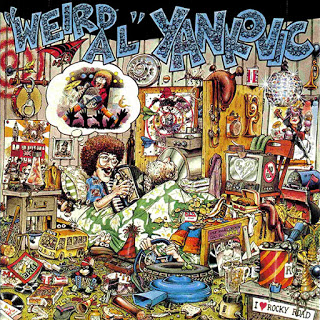
“Weird Al” Yankovic – “Weird Al” Yankovic (1983)


Ha! You know, for the longest time I wanted to write about Weird Al but I could never bring myself to do it. I write about guys like Zappa and They Might Be Giants and I attempt to make cases against the “novelty music” label that plagues these off-the-wall acts and everyone else like them, but what do you do when you think about a guy like Weird Al — a modern day honest-to-God unapologetic novelty act? How is it fair to take him seriously, give critical thought to his albums full of comedy music, and lump him in with actual musicians who make careers out of real, genuine artistry and talent?

Easy. Because, in my opinion, we can and should legitimize Weird Al as a real musician, plain and simple. You might know him only as the annoying accordion-wielding parody guy (influenced and elevated into mainstream success by the annoying Dr. Demento) who turns chart-topping hits like Michael Jackson’s “Beat It” and MC Hammer’s “U Can’t Touch This” into goofy songs about food and television. And, for the most part, this is all the casual observer needs to know. Digging deeper reveals a steady and successful career spanning four, almost five, decades; a career just as active now as it was when it started. Albums contain about a 50/50 distribution of full-on parody songs and original material, so it’s not all writing fart jokes over Nirvana songs. His loyal and talented backing band has basically remained unchanged since the beginning (Jim West on guitar, Steve Jay on bass, Jon “Bermuda” Schwartz on drums, adding Ruben Valtierra on keyboards in 1991), and all together they put on one hell of a live show. And, if you’re stubborn in your stance that he’s just one big gag and have nothing else positive to say about him, at least you have to admit he is consistent. And that’s saying quite a lot about an individual who just turned 60 years old this past October and therefore, more than most people in his business, needs to keep his finger on the pulse of pop culture in order to survive. And he’s really good at it, too. Adequacy!

Weird Al appeals to all ages, but the best time of your life to be steeped in his irreverent, nerdy offerings that deconstruct music just as much as embrace it would probably be the pre-teen through teenage years. After that, I doubt newcomers would get much of a religious experience from it, but oldcomers will never ever grow out of it. Living proof right here! *points to self, the smirking loathsome bastard* … still skeptical? OK, fine. How about this approach then: treat Weird Al as a gateway artist. His albums display a generous diversity of musical styles, often but not always coinciding with the times, and at best young enthusiasts may find themselves interested in checking out artists and bands that Weird Al saw fit to pay homage to over the years. Chances are good that if you like a Weird Al album from 2014 you’re also going to like a Weird Al album from 1985 regardless of outdated pop decisions. Longevity!

So let’s get right into “Weird Al” Yankovic, his bright-eyed and bushy-haired self-titled debut! Weird Al’s origin story is as close as you’d get to the early-’80s equivalent of sudden Youtube fame: Dr. Demento speaks at Weird Al’s high school, Al accosts him with homemade bedroom recordings of his accordion-accompanied solo efforts, Dr. Demento not only listens to the recordings but likes them and plays them on his own radio show, invites Al as a guest a few times over the years, Al tours with Dr. Demento’s stage show, Al gets noticed by nightclub managers and various outliers in the music industry that use their connections to get Al some recording studio time. OK, so not “sudden” Youtube fame. This is all over the span of roughly seven years, and in the meantime Al finishes school and goes to college and never really considers a full-fledged music career until it becomes an accidental reality. This whole slow burn to humble fame translates perfectly to his humble debut, a collection of earnestly crafted material that only a humble dork in his early 20s from moderately religious/conservative middle-class, suburban Los Angeles can earnestly craft. 30 minutes of enjoyable and wholesome, albeit amateur and shallow, comedy pop songs.

Out of ten tracks, exactly half are direct parody songs: “Ricky” (“Mickey” by one-hit wonder Toni Basil), “I Love Rocky Road” (Joan Jett’s “I Love Rock ‘n’ Roll”), “Stop Draggin’ My Car Around” (Stevie Nicks’/Tom Petty’s “Stop Dragging My Heart Around”), “My Bologna” (The Knack’s “My Sharona”) and “Another One Rides the Bus” (Queen’s “Another One Bites the Dust”). Bonus points to Weird Al for unintentional song-selection longevity, since four of those five are still extremely well-known 25 years later and one of them is kinda sorta well-known enough I guess maybe but probably not. I’ll let you, the humble reader, decide which are which.

The other half of the tracks are bona-fide Yankovic originals! Now, as time goes on Al will tend to frame his originals around the sound of other existing artists, so they’re pastiches instead of direct parodies (which have been termed in the canon as “style parodies”). So, for example, “Dog Eat Dog” off of the fourth Weird Al album Polka Party! is a clear Talking Heads style parody that, while maintaining a fully original melody and lyrical foundation, incorporates heavy elements of “Once in a Lifetime” and “And She Was” while aping and exaggerating David Byrne’s desperate, yelping vocal style. Bottom line: come for the direct parodies and stay for the style parodies, I always say! Those are far and above the best parts of the Weird Al catalogue! But alas and oh no! Where are all the style parodies on “Weird Al” Yankovic?! According to the internet, “Happy Birthday” is a Tonio K style parody! But who the fuck is Tonio K?! BOOOOOOOOO! Not impressed! However, “Happy Birthday” is the best song on this album so perhaps that adds credence to my bold “style parodies are always the best songs” claim anyway. The other originals are “Gotta Boogie” (thin post-disco built around a single, weak joke), “Buckingham Blues” (generic harmonica blues about the royal family, inspired by John Mellencamp’s “Jack & Diane”), “The Check’s in the Mail” (the first of many of Yankovic’s jabs at relatable white-collar corporate career shenanigans, something I doubt he can actually even marginally relate to), “I’ll Be Mellow When I’m Dead” (catchy and surprisingly sincere song about Al’s feelings at the time regarding the early ’80s yuppie lifestyle), and “Such a Groovy Guy” (one big, classy, public knock at his then-girlfriend’s ex). None of these are typical style parodies. Further still, none of these are a polka medley! Polka medleys are a Weird Al staple! Early installment weirdness! Aaaaahhhh!

OK, so is it all funny? Kinda sorta. I suppose the whole point of Weird Al’s comedy albums is to get a laugh out of them instead of, you know, dissecting them and appraising them on their musical merits like some basement-dwelling neckbeard. So, hereby and hitherto, all the Weird Al albums will be evaluated based on BOTH the music and the humor. And “Weird Al” Yankovic, the album that started it all…isn’t very musically interesting and isn’t very funny!

Fact of the matter is, Weird Al got much better at this very quickly. The first album is a mess of immature ideas, mediocre lyrical wordplay, and shoddy production. If the rest of his career followed this trajectory then no one would know who he was today. BUT, I gotta give the guy credit for putting himself out there by being no one else but himself and doing nothing but what he wanted to do. As time goes on he will gain the non-ironic respect of everyone from Kurt Cobain to Lin-Manuel Miranda. For all you know Alfred Matthew Yankovic has gotten laid more than Wilt Chamberlain. But, steer clear of his debut album until you’re already a fan, for the love of God.

JUST OK

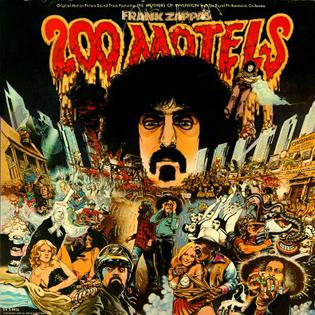
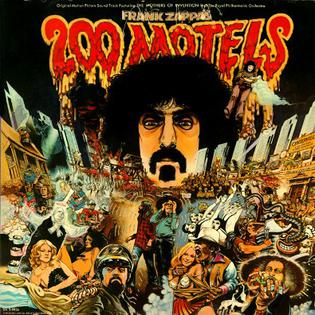
Frank Zappa – 200 Motels (1971)


My very permanent (as it turns out) decision to get a Zappa tattoo this past summer has given me the itch to write more Zappa reviews! An itch that is both literal and figurative. New tattoos are itchy, man. But that’s all in the past! I have the rest of my life now to look back on how I ended the 2010’s by paying someone money to eternally disfigure my perfect body while I hyperventilated nerdily.

Despite my personal, fanatical feelings toward Zappa, I want to make it clear that I don’t consider him to be a genius. I used to think he was, of course, but I don’t anymore. Unless a musician is constantly innovating and inventing, balancing accessibility with challenge, and keeping consistency, I’d be hard pressed to call anybody a genius. Nobody’s that good. In Zappa’s case, the “genius” label likely comes from his adequate mastery of multiple musical styles, which is inherent in his diverse range of interests. People will be quick to confuse a diverse artist for a genuine savant. No one will call AC/DC geniuses because they mastered one style and released the same record 15 times, but these same people may call David Bowie one (who is not a genius either).

Frank Zappa’s modern classical and doo-wop influences weren’t typical of his contemporaries, so his approach to anything would be understandably atypical as well. That’s why this “soundtrack” album of orchestral pieces mixed with rock music exists. If nothing else, Zappa had some instincts and was never afraid to go with his gut…but don’t call him a genius. This album, and the movie that inspired the music, are lauded by some as “genius” level. It’s actually not really that good in the first place! That’s the kind of problem everyone forgets to mention, and why I find it apt to bring it up now. 200 Motels is a deep cut in the catalog, but most hardcore fans far enough down the rabbit hole to come across this album will usually cite it in their defense for Zappa’s “genius” status. Meh. I don’t agree. In fact, if I were attempting to advertise Zappa’s “genius” I’d steer clear of this album entirely. It’s not a good argument for it.

Let’s talk about the movie first. Gotta give the music some context, no? Not just for you, but for me as well! I’ve never fucking seen it and I don’t wanna. Wikipedia here I come…ok, 200 Motels (the movie) is a film that “...attempts to portray the craziness of life on the road as a rock musician, and as such consists of a series of unconnected nonsense vignettes interspersed with concert footage of the Mothers of Invention.” OK, I’m going to stop right there because it’s not going to help clarify anything further. On paper it sounds an awful lot like the Uncle Meat movie, which was a thinly veiled life-on-the-road documentary wrapped with a bizarre sci-fi narrative. I think these young fresh fellows assumed their lives were much more interesting than reality and decided that everyone else wanted to know about it, so Zappa tried once more with 200 Motels and, since history repeats itself, failed again.

Now that’s not a huge loss, right? The Uncle Meat movie was supposedly a garbage turd from shit hell and the accompanying album was nearly perfect, right? Surely the same applies in this case??? Ha! No! In its favor, 200 Motels (the album) is not a life-on-the-road documentary. That will come 20 years later as the (sorta shitty) Flo/Eddie-era archival double CD Playground Psychotics. What this actually is, it’s about 90 minutes of surprisingly sophisticated orchestral arrangements woven into a mix of rock and comedy music. And what that actually means, it’s a tapestry of weak and mildly interesting orchestra music surrounded by low-brow butt rock and juvenile humor. So if you loved the Fillmore East – June 1971 album…you may actually like this even less due to the orchestra music, honestly. There’s an awful lot of it.

The orchestra music in of itself isn’t bad, but it’s certainly not too exciting and within the context of the final 200 Motels product it almost feels like it’s in the way of the rest of the music. I can’t think of many other albums that intersperse rock and roll tracks with orchestra music, but if this is THE BEST EXAMPLE IN THE WORLD then it falls flat anyway because the orchestral bits suck the life out of the project. Now, mind you, if these bits were as interesting as the odds and ends that made up the Burnt Weeny Sandwich album then I’d be whistling a different tune, but I’d be a filthy fucking liar if I elevated any of this stuff to Burnt Weeny Sandwich levels of output. Sorry.

And the rock songs? Flo and Eddie, of course, means you can knock off 150 points, but a lot of this stuff isn’t as overtly bad as the material on Fillmore East – June 1971. “Mystery Roach”, “Lonesome Cowboy Burt”, “Daddy, Daddy, Daddy”, “What Will This Evening Bring Me This Morning” and “Magic Fingers” all sound like solid Chunga’s Revenge outtakes, and where some of the subject matter gets revoltingly crass it gets made up for with, like, actual good melodies. The bad stuff is bad though, like “Shove It Right In”, which is yet another song about groupie fucking but sung all slow and sophisticated like it’s not about groupie fucking. And then there’s stuff like “Penis Dimension” and “Dental Hygiene Dilemma” that continues the Flo/Eddie and Co. suck-ass comic routine that goes on for too long, the former being a small dick joke and the latter being one big convoluted in-joke about Zappa’s bassist Jeff Simmons complaining about being in the band because Zappa actually did record him complaining about being in the band for real once and then he made Simmons complain about being in the band for his movie, and then Simmons “quits” but he doesn’t really. Sounds hilarious, doesn’t it? I can’t stop laughing.

And then there’s the stuff that’s less orchestral bits and rock songs and more stage antics translated to audio, which doesn’t work quite well as you might imagine. This is mostly segregated to the last half of disc two, starting with “The Lad Searches the Night for His Newts” and ending with “Little Green Scratchy Sweaters & Courduroy Ponce”. I’m not even going to pretend I know what the hell is going on with any of it, and I won’t waste any further time talking about it!

The finale is a Zappa staple: “Strictly Genteel”. It’s one of the very few arrangements Zappa ever made with some actual heart, and it would make the rounds here and there at live shows up until Zappa’s death. This version, however, is the worst one, as it begins with a monologue by Thoedore Bikel of Fiddler on the Roof fame and then continues on with lyrics that future versions would omit completely (“Lord have mercy on the hippies and the faggots/And the dykes and the weird little children they grow” ….yeah…). After the tune is properly over, though, a blues breakdown occurs with more Flo and Eddie filling your ears with their wiseguy garbage that goes on for five minutes.

A few bonus tracks of radio advertisements for the film are tacked on to the end of the album, followed by a radio edit for “Magic Fingers”.

So, yeah, that’s it. And this is all coming from me, the guy who thinks Zappa shat gold during his lifetime. Go listen to 200 Motels and try, just try as hard as you can, to make a case for “genius” using this album as your only frame of reference. Luckily for all of us, the Flo and Eddie years are almost over. Just one more shitty album left to go.

KINDA BAD

Top 15 Albums of 2010 – 2019

Whoa, did you know that a lot of music albums came out this decade?? Here are 15 of my favorites in alphabetical order by band/artist name because actually ranking them is a stupid exercise in stupidity. You’d actually probably hate all these albums, knowing you. Yes, you. Anyway, here we go:

Battles – Gloss Drop (2011)

Gloss Drop was the first new album I became obsessed with after college graduation, also known as the time of my life when I finally had to actually learn how to grow up and become an adult. Ha! Still haven’t done that yet anyway! Take THAT, Life! Anyway, this album very much represents my erratic transition from sheltered college life to equally-sheltered-but-in-a-different-way post-school new-beginnings life in a way that, honestly, feels pretty comforting in spite of it all. Battles sounds like no other band, this album sounds like no other album, and this noisy, zany, electronic hodge-podge of weird, fucked up groove-laden experimental math rock IS the summer of 2011 to me. I wouldn’t have it any other way.

Courtney Barnett – Sometimes I Sit and Think, and Sometimes I Just Sit (2015)

Courtney Barnett’s debut really hit home for me. The Australian indie singer-songwriter is basically having the calmest nervous breakdown ever recorded over 11 tracks, forcing a blasé slacker don’t-give-a-shit exterior while covering topics such as depression, anxiety, self-esteem, jealousy, introversion, self-confidence, shame, and disillusionment. All over mostly happy, upbeat, and catchy music! It’s like, the only difference between me and her is that she got rich and famous being self-deprecating and I work in a fucking metals testing lab. Life is funny sometimes. Half a decade later this album is still as fresh and relevant to me as it was when I first heard it, which may be good or bad depending on the perspective. Oh well.

Death Grips – Exmilitary (2011)

This mixtape was my gateway to hip-hop. I hated hip-hop until I threw Exmilitary on during the summer of 2013, which I only did because I decided by then it was stupid to hate hip-hop. The funny thing is, Death Grips is not at all representative of the genre as a whole: they’re exaggeratedly loud, hostile, angry, abrasive, annoying, immature, ferocious, even pretentious. Exmilitary is a hip-hop record for hardcore punk fans. Exmilitary is a hip-hop record for white hipster doofuses. I love it unconditionally, and I owe it my unending gratitude for extracting the stick out of my ass and motivating me to dig deeper into one of the most diverse and emotionally rewarding genres available. Fuckin’ A. Now go listen to some Ghostface Killah.


Fever Ray – Plunge (2017)

Nothing is more attractive to me in my music than a creepy, off-putting persona, and Karin Dreijer is positively gifted when it comes to being off-putting (just Google image search “Fever Ray” for a trove of horrible, horrible photos). Plunge is a thrilling, feminist, sexually terrifying, and ultimately accessible electronic and poppy experience. In short, it’s fucking fun to listen to. I was lukewarm on a lot of 2017 releases and this one was like a breath of fresh, weird air. I’m the only person who is going to remember this album in 10 years, but by then Karin Dreijer will have reinvented herself (xemself) 40 times over. Me too if I know what’s good for me.

Foetus – Hide (2010)

Speaking of off-putting, Foetus is a solo project by JG Thirlwell, a guy who sounds like raspy Spongebob and basically records albums of himself throwing pots and pans against the wall. Hide is different, though, it sounds more like a creepy industrial off-broadway musical complete with over-dramatic orchestral arrangements, female opera singing, spaghetti western ballads, and somber soundtrack-y sonic landscapes. Plus pots and pans against the wall. Albums like these are exactly my cup of shitty tea.

Janelle Monáe – Dirty Computer (2018)

As time went on this decade I became more and more enchanted with Janelle Monáe. While Dirty Computer is likely not her best it was certainly my fast favorite. She stayed relatively guarded on her first two albums where she mostly talks about robots and dystopias and other sci-fi nerd tropes, but on Dirty Computer she weaves the science fiction stuff into a more personal narrative, which ended up being unguarded and vulnerable and cool as shit. Janelle Monáe is cool as shit. I wish I was as cool as Janelle Monáe but since I’m a straight, white guy it will never ever happen, and I have to learn to accept that.

Knifeworld – Bottled Out of Eden (2016)

I was no stranger to Knifeworld in 2016, but Bottled Out of Eden passed under my radar until December of that year, three weeks before the birth of my daughter. My head was a torrent of anxiety and Christmas stress that the British whimsy of Knifeworld’s third album was able to quell. Lush, progressive arrangements and odd, angular melodies are married together in a beautiful way that, frankly, bands usually suck at achieving. This is like a Genesis album for people who hate Genesis. I don’t like Genesis that much, but I do like Knifeworld. I know you’ve never heard of Knifeworld before, but you should go listen to Knifeworld. Don’t continue on with this page until you’ve listened to Knifeworld.

LoneLady – Nerve Up (2010)

I’m a huge fan of all things post-punk, from Talkings Heads to Joy Division to The Cure to Siouxsie and the Banshees to The Fall to Wire to Big Black to . LoneLady’s debut album puts together everything I love about the genre and adds some R.E.M.-style jangle pop in the mix as well. I can see you sneering through your fucking teeth right into your screen right now, but this is my list and not your list so go away.

Major Parkinson – Twilight Cinema (2014)

Remember Knifeworld? OK, so maybe you didn’t like Knifeworld. Maybe progressive rock isn’t your thing. That’s fine. It’s my thing though, and sometimes even I get annoyed and fed up with the cheesiness of the genre. Prog rock albums are a dime-a-dozen, and it’s unfortunate when a really really good prog rock album, one that doesn’t succumb to the pitfalls of every other prog rock album, one that could be elevated into mainstream appeal, gets zero exposure. That album would be Twilight Cinema by Major Parkinson. This Norwegian band was my most rewarding discovery this decade. They have four fantastic albums of off-kilter dark pop, humor-laden cabaret, flawless prog rock, beautifully arranged symphonic suites, and a guy who sounds like a manic-depressive Cookie Monster. Twilight Cinema is my favorite album of the decade. Describing it won’t do it justice. You’ll have to listen to it for yourself and then yell at me for hating it later.

Man Man – On Oni Pond (2013)

Aha, another pivotal-point-in-my-life album! Man Man’s On Oni Pond dropped at the precise time that we were moving from our depressing first Chicago apartment and into our slightly less depressing second Chicago apartment! It may not seem that big of a deal, but to me this transition was pretty fucking important. Man Man was one of the first (and few) bands I fell completely in love with after college, so it’s only fitting that their fifth album from 2013 was in super heavy rotation at a time when I finally started legitimately loving living in the city.

Ramona Falls – Prophet (2012)

I was almost a year out of college when this album dropped. I was unemployed and living in Chicago with only a few hundred bucks to my name, facing the very likely reality that I would have to pack up and move back home to my parents within a few short months. This sprawling, melancholy album was on constant rotation at the time and it was one of the only albums that helped me feel better during one of the worst periods of my life. Basically, emotionally, this album is the antithesis of the above On Oni Pond by Man Man. I find Prophet tough to listen to now since that wasn’t a time I look back at too fondly, but it was once the most important album of my life and its spot on my list is therefore well-deserved. FUN FACT: We did NOT name our daughter after this band, and don’t let anyone tell you otherwise. Not even me! But seriously.

Sky Ferreira – Night Time, My Time (2013)

The only problem with this album is that there are full-blown titties on the cover so I had to find a censored version for my family-friendly blog. However, feel free to search out the full album cover if you wish (the one with the titties on it). Anyway, this album is very important because, as Death Grips’ Exmilitary hoisted me out of my bullshit “hip-hop sucks” opinion, Sky Ferreira’s Night Time, My Time hoisted me out of my bullshit “female-fronted pop music sucks” opinion and I’m forever grateful for it. This album is criminally underrated and if Ferreira had released it a few years later she would’ve been completely swept up among the other greats during the pop music craze that started in the late half of this decade. If you like Lorde, Lana Del Rey, Charli XCX, Billie Eilish, Carly Rae Jepsen, Taylor Swift, or Ariana Grande, you’ll love Sky Ferreira.

Swans – To Be Kind (2014)

Every album that Swans put out between 2010 and now was incredibly impressive, but their 2014 album To Be Kind is far and above better than the rest. But hey, I’m the kind of guy that can sit through and enjoy a two-hour album of fucked up noise so your own mileage may vary. Massive, drone-y, staggering, abrasive, beautiful, and stunning. There’s even a song on here that breaks the 30-minute mark. My favorite song of the decade is “Oxygen”, which is 8 minutes of a 60-year-old Michael Gira losing his goddamn mind over the noisiest and intense track you could imagine. It’s glorious.

Tub Ring – Secret Handshakes (2010)

Tub Ring is the stupidest sounding band ever, they sound like a bunch of suburban white boys trying to sound weird and cool but they actually just sound like a bunch of suburban white boys trying to sound weird and cool. But enough about my own suburban white boy hangups! I didn’t actually get around to listening to this album until early 2012 when I was in the throes of unemployment depression, but Tub Ring was huge for me at the time and this album of twisted, quirky, and ultimately satisfying weirdo pop music was the most fun I ever had during my Ramen-twice-a-day cleaning-dishes-with-cold-water penny pinching days of yore. I’m largely over Tub Ring as a whole, but I can still throw on Secret Handshakes once in a while and have a grand ol’ fucking time (unlike that Ramona Falls album, which sends me into a veritable tailspin of panic attacks and self-loathing lol).

Ty Segall – Freedom’s Goblin (2018)

Ty Segall is a cool dude. Usually he likes to put out album after album of crunchy garage rock, but Freedom’s Goblin was one big 75-minute love letter to classic rock and that’s awesome if you’re into that kind of thing. I very much am. This diverse collection of 19 tracks sounds like everything from The Beatles to David Bowie to T. Rex to Neil Young to Led Zeppelin to Patti Smith to The Who to The Rolling Stones to The Ramones to 100 others that I could bore you tears about if I listed everything. The guy can even sing like John Lennon! It’s almost like, instead of being murdered in the ’80s, John Lennon is singing through your speakers here in the ’10s. What a world that would be!

Whoa, that’s a lot of albums! I hope in the next decade I like 15 albums even half as much as I liked these 15! See you on the flipside, nerdmongers! Cowabunga!

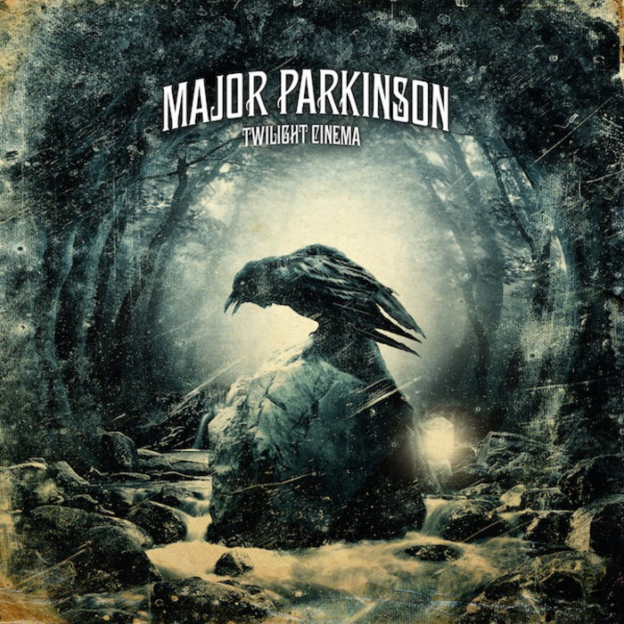
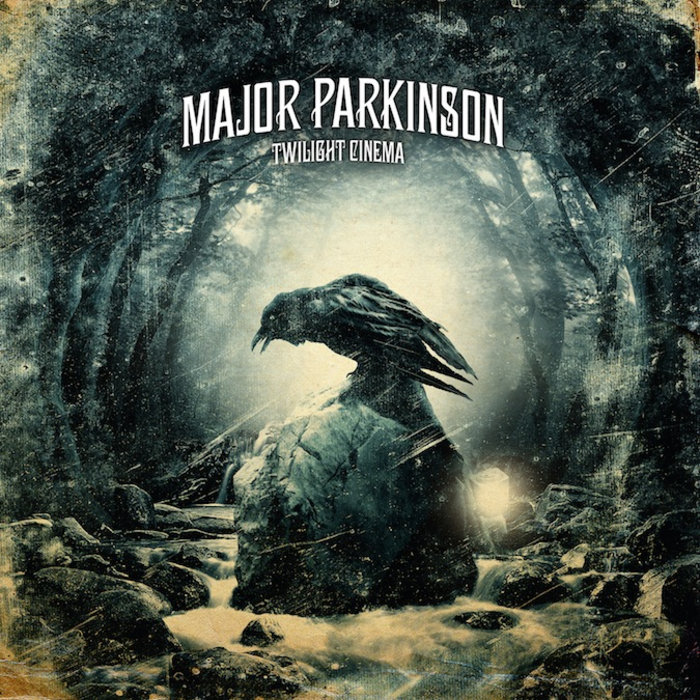
Major Parkinson – Twilight Cinema (2014)


After “dominating” the rock culture for about two or three good years in the early ’70s, progressive rock had rightfully, and for its own good, receded back into the shadows and stayed put. Nearly 45 years later the forgotten genre continues steadily on a rolling boil, maintaining its niche status among the throngs of rock geeks, budding musicians, fantasy/sci-fi fans, and other degenerate outliers of the greater music-listening population. A great compromise if you ask me! Progressive rock is bloated with garbage, but it’s the kind of garbage that people who are the target audience for that kind garbage will spend the time seeking out that kind of garbage because they enjoy that kind of garbage. God knows I’m guilty as hell about this. But, aggghhhhh, here’s the eternal problem!: once in a while something will be released in this niche-ass genre by a very unknown band from a part of the world known for releasing music in this niche-ass genre, that, tragically, deserves to be hoisted out of the shadows and into the spotlight…but never will just by virtue of its prog association.

Go ahead and read my reviews on the last two Major Parkinson albums in order to catch up on my feelings about the band’s unfortunate obscurity. Their third release, Twilight Cinema, is where it begins to start hurting a little. I can tell that the band is nowhere near slowing down as they currently work on their fifth album. Their fourth album was developed entirely upon donations by their loyal fans, of which I’m proud to consider myself a contributor. Very little backstory exists on Twilight Cinema, which I imagine was a similar low-budget fan-funded situation, but clearly this is a band that loves what they’re doing and are willing expend the effort to put out product with little monetary return. It makes it all more frustrating that Twilight Cinema, from beginning to end, is an incredible piece of music by anybody’s standards. The decade isn’t completely over and I will already confidently put it at the very top of my list of the best albums of the 2010s. No major music publications acknowledged it, because why should they? Virtually zero independent or minor music publications acknowledged it, because of the prog genre. As far as I’m concerned, this is Major Parkinson’s magnum opus. No one will ever know about this album, and that’s a sad fact.

The upside for me is that albums like these can be reviewed entirely from the gut, since no historical context or critical reception surrounding the album exists to impair my judgment! Allow me to begin by explaining why, exactly, this particular album deserves to be elevated above the vast, tepid bog of niche prog rock: 1) it avoids nearly all the worst pitfalls of overwrought prog while maintaining impeccable consistency, originality, and diversity, 2) it’s intellectually challenging without sacrificing mental or emotional accessibility, 3) it’s not overlong for fuck’s sake , and 4) it has a high replayability factor. In my travels it’s extremely rare to find modern progressive rock albums that hit all four points, and doggone it I’ll excuse it almost every time. Even Steven Wilson, the modern prog messiah himself, falters in nearly every instance (usually with #3, occasionally with #1). But to hit all four points effortlessly, or least with perceived effortlessness, that’s something special. No question about it.

The first track of Major Parkinson albums tend to feel like extended intros, and Twilight Cinema is no exception with “Skeleton Sangria”. Even at 2:50 it feels like a lead-in to the much more substantial and assertive “Impermanence”, especially since it’s easy to wave it off completely due to the immense strength of the next seven tracks. Hell, it’s my least favorite song here. Good to get it out of the way early. However, I have now been forced into actually, like, sitting down and critically listening to the song and evaluating it on its own merits. And you know what…yeah, ok, it’s good. I’ve come to appreciate the surprise of the happy-go-lucky (synthesized organ?) solo that pops in at the end after the rest of the acoustic and stripped-down cabaret waltz, but many other bands could (and do) base an entire album around this particular sound.

But the real star here is “Impermanence”, which actually sets the dark tone of the rest of the album in a way that renders the “Skeleton Sangria” intro POSITIVELY SUPERFLUOUS. Throw away “Skeleton Sangria”! “Impermanence” is an unbelievable display of everything good about progressive rock in four minutes and twenty-six seconds. They channel Porcupine Tree a bit here, to their favor. Atmospheric and skewing towards darkness, but with warmth dragging you down back down to earth thanks to the lush piano punctuating the driving beat. Crescendos and decrescendos are used to excellent effect, bringing tension to a head and providing satisfying release several times (yeah baby). The verse that starts with “Raindrops dripping from a parasol/Making bubbles to collect the blue skies…“, the one with several measures awash in low-range piano, the one that chillingly crescendos to the next verse, those are the best consecutive seconds of music in Major Parkinson’s entire discography. And it just keeps building, weaving in perfectly-balanced electronic Tangerine Dream-esque krautrock rhythms while Kollbotn gives a mellow, restrained, even beautiful vocal performance…and just when you think the song can’t possibly evolve further, the breathtaking coda starts chugging along with bongo-style drumming over acoustic strumming…and just when you think this sudden new melody can’t possibly evolve further, the breathtaking male/female vocal climax brings everything to the peak (yeah baby). I guess, in the end, you have to hear it, right? This song was my obsession in 2014 and I haven’t heard a track that has grabbed me quite the same way since. Merging talented rock performance with natural pop instincts will always win points in my book. Never the ‘twain shall meet for highfalutin prog snobs, but fuck those stuffed shirts. This track will make a believer out of anyone.

And then from this point forward the consistency is maintained. “Black River” is a rollicking, menacingly energetic song about…uh, I don’t know. You’ll need a thesaurus handy, but the lyrics are so abstract anyway that you might as well just enjoy the music and treat the vocals like another instrument (hmm…déjà vu…). You can pretend that the song is about pirates! It’s hard to listen to that chorus melody without picturing Captain Jack Sparrow sauntering up and down the Black Pearl – and see, that’s very close to the name of the song! I think the song is actually about a drowned woman, but I gleaned that only from the first two lines and the rest is just muckity muck anyway. “A Cabin in the Sky” is also menacingly energetic and a pure carnival horror show, so me likey! It’s a clever juxtaposition of schmaltzy waltzy old-timey three-ring circus music and modern big city…but still old-timey…illustrative lyrics (that I still can’t comprehend but the DO mention things like “bright lights on 42nd street” and convertible cars!). This is also Twilight Cinema‘s most infectious earworm and the in-your-face brashness of the horns during the chorus is fuckin’ cathartic. “A Cabin in the Sky” is surely a Top 40 hit in some twisted alternate clown dimension.

“Beaks of Benevola” is gorgeous and I believe that the band should really start employing more of the male/female vocal interplay. Oh wait, they will! On the next album! Excellent! The lush smoothness of the female voice (I can’t find any info on the vocalist; probably some Norwegian chick from Stjørdalshalsen!) works remarkably well with Kollbotn raspy, shitty, piece-of-shit, 1930s cabaret child-molestin’ voice, resulting in the first truly successful ballad the band has attempted (I love the noodly instrumental ending). The titular track “Twilight Cinem” wraps it up with a goofy and bouncy pop number that harkens back to the band’s earlier oddball material (“Epitaphs and pornographic literature!“). The final track also serves to unintentionally showcase just how different the first two albums could have sounded with crisper production. Let’s get some remasters going.

So I skipped “Heart Machine”, which is my second-favorite track behind “Impermanence”, only because it’s the most…underwhelming. More than any other song it sails under the radar because it’s not TOO weird or TOO different, but with its doom metal riffs and fast blast beat drumming (especially at the end) it’s undeniably the heaviest song on the album, at least part of it. The heaviness is tempered by some very pretty, ethereal piano passages and hushed vocals. My favorite bit is the instrumental bridge that starts with a tense, vibrating hum that follows with a piano breakdown into a bendy, echo-y, dreamlike guitar solo. These guys are good at tension-and-release! Yeah baby.

And I skipped “The Wheelbarrow” because, and I’ll fess up, it turns out that this album isn’t completely perfect. This one is the obligatory 8-minute epic suite right in the middle of the record, and it’s the closest they come to falling into the prog wankery trap. Freshness is kept throughout with some catchy melodic phrases and some repeated verses (“She can do anything/She can love everyone/Doing the same routine over and over“), and it wouldn’t be Major Parkinson without throwing in some gypsy accordion! But, other than that, being somewhat lengthy and inaccessible and, on the surface, similar to any other cookie-cutter 8-minute prog rock song released since 1969, this would be the most likely turnoff for the prog hater. Since I’m a prog lover I’m just going to end this paragraph with a hearty “fuck you, it’s good” and move on! Fuck you, it’s good.

Album of the Decade. Not much else to say.

VERY GOOD