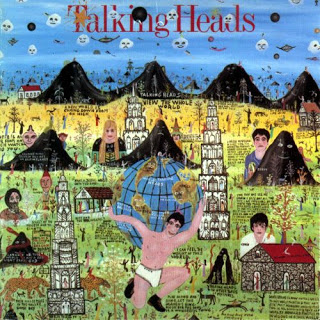
Talking Heads – Little Creatures (1985)


This is where people start bailing on the Heads. Listening to this completely blind (deaf?) you wouldn’t even know it was them if it weren’t for David Byrne’s highly distinctive voice, because Little Creatures is the most stylistically dramatic departure that you’ll find in their whole catalog: pop-oriented, lush, mellow, optimistic, innocuous, and most of all relaxed. Riding off the wave of their Speaking in Tongues mainstream commercial breakthrough, the Heads ditched quirky African beats, endless rhythmic drone exercises, and paranoid stream-of-consciousness nonsense lyrics for textbook pop song structures and relatively direct, straightforward lyrics. And you know what? They succeeded! This is a good album.

I wasn’t sold on it right away either, so I can understand why certain people would think about Little Creatures the way they do. This isn’t the Talking Heads that the fans knew and loved. The overall sound was way, way too different. In some ways it seemed like the band sold out, that they gave in to current trends, that they willingly acquiesced to the expectations of the masses and the demands of cultural shifts in order to maintain relevancy, that they weren’t doing what they wanted to do anymore. Maybe. But I can make a pretty strong case against all this with an overwrought and labored two-point bullet-point section:

  • Little Creatures was recorded in late 1984/early 1985. The chart toppers during this time period were, among others, “Shout” by Tears for Fears, “Take on Me” by A-ha, “You Spin Me Round” by who-the-fuck-knows…see what I mean here? The mid-’80s were a mechanized synthpop nightmare, and Little Creatures is anything but. Of course some of the mastering brings out some artificial coldness to Chris Frantz’s very real drumset at times, but no alternative post-punk band in America or in the UK was ditching their roots and making music that sounded like this in 1985. Usually, in an effort to “shift direction”, bands of the same genre would tend to either mellow out and pump out some embarrassing new wave balladry (while staying firmly rooted in synth Hell) or they will transition into full-on dance rockers (while staying firmly rooted in synth Hell). Talking Heads didn’t do either, they sort of morphed into an ’80s roots rock outfit like Dire Straits and developed a warm and cozy good ol’ American pop album. I guess what I’m saying is, if the Heads sold out then they didn’t do it correctly. In this case I interpret cries of “selling out” to only mean “making easy music for the common listener”. Fine, as long as we’ve pinpointed the real gripe. On to my next point, then.
  • This music is still fuckin’ weird, you guys. Artsy intellectuals like Byrne and Co. are simply incapable of true banality, try as they might. For all of their songwriting efforts to make a simple album of simple, catchy tunes, with lyrical subject matter that attempts to cover universal pop clichés like love and sex, there are plenty of musical decisions throughout that come across as non-conventional. Hell, Byrne still employs a lot of his odd vocal tics on most, if not all, of these songs. Not to mention the bizarre intertwining of new wave and country music on a couple of tracks (complete with steel guitar) and unironic employment of accordion on “Road to Nowhere”. And calling the lyrics “straightforward” gives them too much (or too little?) credit anyway. We’ll get into that later. But this ain’t no early-Beatles record, either. The whole package is just strange enough to put some people off if they’re paying enough attention. That isn’t to say that these people shouldn’t just swear off music altogether if this stuff is too quirky for their sensibilities. I mean, Jesus.

The long and short of it is this: Talking Heads fans are pissed that Talking Heads blatantly do not sound like Talking Heads anymore! They sound like wimpy pussies! I say go cry me a “Take Me to the River” about it. Ha! God forbid that a band DOESN’T want to make the same album thirteen times in a row *coughAC/DCcough*. But hold the phone, these people are also conveniently forgetting how unassuming and wimpy their debut Talking Heads: 77 sounded, too. In fact, that album is arguably more wimpy than this one. That one is all shy and reserved about it, too! At least on Little Creatures the band is unmistakably more assertive and confident about their pop attitude. To me, it’s still more evidence against the “sellout” accusations. You can’t suddenly sell out if what you’re doing is already what you sort of did it before anyone knew who you were eight years ago. Bah. Anyway, enough of this, let’s talk about the goddamn songs.

“And She Was”, the very first track, is already a great example of lyrical weirdness. Clearly the titular woman, the “she”, is on drugs, so at least the song isn’t so obtuse that you’d have to read an interpretation to understand it (“The world was moving, she was right there with it, and she was/The world was moving, she was floating above it, and she was“), but then Byrne has to ruin the poetry with his over-literal bean counter style that he’s been happily exercising since Album One (“And she was looking at herself/And things were looking like a movie/She had a pleasant elevation/She’s moving out in all directions“). Only David fuckin’ Byrne could some up with a lyric like “She had a pleasant elevation” without a shred of sarcasm, God bless him. But step away from the lyrics a moment and soak in the overall positive mood. It’s all major chords, man. No tension. No panic attacks. Maybe that’s not a good thing? Maybe the seasoned Heads fan prefers the tension? I know I do. But that’s not the point, the point is that the Heads are capable of branching out and succeeding at it! Fuck them forever for their bottomless well of talent.

And it continues with “Give Me Back My Name”, which is just as lyrically strange and indirect as any other Heads song from the days of yore. The music is downright cozy and pleasant, evoking thoughts of a placid summertime afternoon, but Byrne’s delivery is unsettling and ominous, and the words speak of an abstract notion of losing one’s identity. That’s just my interpretation, you can find many more interpretations online that speak of Malcolm X or Taoism. Once again, objective proof that I can’t agree fully with the “direct and straightforward” lyrics criticism. Take Byrne’s singing on this track, stick it on top of some angular and panicked rhythm guitar, and you have a song that wouldn’t sound out of place on Fear of Music both musically and thematically.

And I could keep going down the list, citing each track and explaining why each one is an example of maturity and progress from a very comfortable rock band who still puts the due effort into their work. My personal sleeper favorite is “Stay Up Late”, which has one of the catchiest choruses that they’ve ever written and subject matter that Byrne was still young enough at this point to sing about without coming across as a total creep. “Television Man” and “Road to Nowhere” are a one-two punch of incredibly strong tracks to close out the album. “Television Man” breaks the 6-minute mark with a funky (well…white-boy ’80s funky), extended, syncopated, feelgood rhythmic jam section in the middle and there’s not a second of wasted time. “Road to Nowhere” is my pick for the best album closer in the Talking Heads studio discography with its male/female a cappella introductory declaration, its bombastic snare drum lead-in, its infectious, jubilantly chugging progression, and its brilliant use of the aforementioned accordion to create an expanse of warm, welcoming sound. It’s hard for me to believe that these experts in claustrophobia are able to create a song with a depressing message (that we live, we die, and that’s all there is to it, basically) and spin it in way to make it genuinely optimistic and restrained in hokey spiritual bullshit (so enjoy it all while it lasts!). And positively danceable! You won’t even notice that the song is kind of depressing, that accordion is killing it!

The other songs take some time to grow on you. “Creatures of Love” is a corny and awkward song about sex that is presented in that autistic David Byrne fashion that only he could achieve. “The Lady Don’t Mind”, “Perfect World”, and “Walk it Down” can be interchangeable on any given day, and serve mainly to me as cute, simple filler tunes to further round out the album’s consistency. You won’t hate the songs, but you won’t love them either, and this may be one of Little Creatures‘ most unforgivable of crimes to some fans. I say fuck off to this, yet again, because Talking Heads: 77, More Songs About Buildings and Food, and Speaking in Tongues all have far more filler than Little Creatures.

If nothing else, take “Road to Nowhere” as shining of example of the Heads going against nearly everything that they’re known for, possibly going against their instincts at this point in their career, and coming out on top anyway. The band is shifting their way toward normalcy and embracing every bit of it. Could’ve fooled the best of us forever if it weren’t for the next record. True Stories still isn’t as bad as everyone says, but Little Creatures was undoubtedly all they really had in ’em when it came to this new approach. I guess in the end they are just too weird to be too normal. Hey, 1985 was one of the worst years in modern music history, at least Little Creatures helped bump the average up.

Man, I just read through all this and I’m awfully defensive, aren’t I? I take it all back. This album blows chunks!

GOOD

Frank Zappa – Fillmore East – June 1971 (1971)


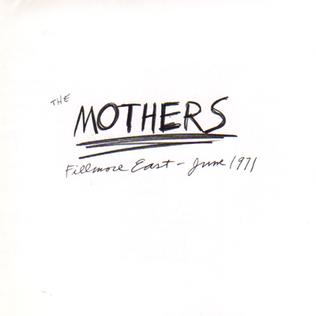
No. Nuh-uh. No no no no no. Frank Zappa put out plenty of sub-par records in his day, and many devotees will forgive and forget most of it (myself included). They’ll even go as far as enjoying the shitty records on principle or something, at least portions of the records. They’ll even defend the shitty records, including this one. I will never EVER give Fillmore East – June 1971 a pass as long as I’m alive on this rotting corpse we call Mother Earth. This is not a good album, I’m sorry. There are good parts, assuredly, but I refuse to defend any and all “good parts” that take dedication to unveil from this swirling miasma of fetid elephant shit. Not worth defending the good stuff to paint an apologetic picture of the bad stuff. In short, don’t waste your time with this album. I mean, take a look: the deliberately uninspired album title and the pencil handwriting on the plain white cover suggest to me that Zappa either attempted to pass this off as a bootleg or was directly mocking bootlegs in general. Either way, subconsciously, I don’t think he had too high of an opinion of this final product anyway.

Look back to my Chunga’s Revenge review to read my rambling, ranty opinions about Flo and Eddie, because I won’t bother rehashing all that in full again here. Chunga’s Revenge showed restraint with respect to the Flo and Eddie shenanigans, but on Fillmore East – June 1971 those two turds are front and center the entire time. This is a live album, documenting two concerts over the course of two consecutive days with bits spliced together as a connected, thematic package. The theme, of course, is…I don’t know, immaturity? Sexism? Pig-headedness? During the Flo & Eddie years there was a stronger emphasis on stage antics at the expense of the music, especially during live performances. This album feels like a show recording of a struggling comedy troupe. “The Mud Shark”, “What Kind of Girl Do You Think We Are?”, “Bwana Dik”, “Do You Like My New Car?”, these are all essentially glorified stand-up comedy routines taking up nearly half of the record. And guess what, brother? It’s all really FUCKING unfunny. Just abysmal, unintelligent preoccupations about hookups with groupies replete with awful sex puns. Don’t forget that Frank had full creative control on all of his output by this point, so it’s not like Beavis and Butthead over here were helping Frank write any of these bits. In fact, the archival release Playground Psychotics will make this even more obvious 20 years later (but it doesn’t paint Flo and Eddie in a less annoying light, unfortunately). It pains me to say this, but I can’t fault Flo and Eddie for a lot of what’s happening on Fillmore East – June 1971 and subsequent Flo and Eddie records, as easy as it is for them to retain scapegoat status for most fans on the shortcomings of this era of Zappa’s career. I, however, can and will certainly still hate the timbre of their shitty voices.

ALLOW ME TO GET MORE SPECIFIC, THOUGH, ON THE BULLSHIT PERVADING THIS RECORD: On “The Mud Shark”, Zappa himself regales everyone with a semi-famous tale that FASCINATED him involving a lewd happenstance among members of Vanilla Fudge, members of Led Zeppelin, and a promiscuous young groupie (the event even has its own Wikipedia page, look it up!). There’s a hotel in Seattle that allows you do go fishing right out your room’s window into the bay below and, allegedly, these guys caught a fish, tied the groupie to the hotel bed naked, and stuck pieces of the fish into her body. Different recounts offer different levels of the woman’s consent, ranging from “really into it” to “rapey as fuck”. To this day it’s all hearsay, and since John Bonham choked on his own puke in the early ’80s I’m surprised they didn’t just pin it all on him in the end. Zappa loves these kinds of stories because it validates his ever-present negative and cynical feelings about rock culture while simultaneously reveling in the shock value such stories provide for his live performances. The song ends with Flo & Eddie repeating the words of the “Mud Shark Dance” (“Out…/You go out…/So far out…You do the Mud Shark, baby“).

Frank removes himself from the spotlight at this point and allows Flo and Eddie to do their thing for most of the rest of the record. “What Kind of Girl Do You Think We Are?” is a sleazy, lounge blues number featuring some back and forth dialogue more on the subject of good old-fashioned groupie-fuckin’. There’s even some continuity peppered throughout about sex with sea creatures, thank god for that! Once it’s established that these subject women are only interested in fuckin’ members of a band with commercial success and charting hit singles (oh, ok, so there’s jealousy behind it after all huh?), it segues into “Bwana Dik” which is a dumb two minutes of dick-size boasting. “Latex Solar Beef” is presumably a song about dicks too, but its lyrics are cryptic and hemorrhoids are referenced for no obvious reasons. “Do You Like My New Car?” is a conversation piece about groupie-fuckin’, you know, for a change of pace. This one involves Flo and/or Eddie and/or whoever the fuck acting the role of enthusiastic groupies speaking to the rest of the uninterested band. This one will give you fun, cerebral gems such as “I’d like to come in your bus” and “Oh, you voluptuous Manhattan Island clit” that you can LAUGH and LAUGH about into the wee hours of the placid, sunrise-lit morning. All this funny-boy shit makes up 20 minutes of a 40-minute record. Awful.

I will still talk about the “good parts”, because even the worst suckfest albums accidentally contain good parts, but what really clinches the nonredeemable disappointment of Fillmore East – June 1971 is the exclusion of “Willie the Pimp, Part Two” from my Rykodisc CD version. It’s the AIDS icing on the HIV cake! OK, fuck me for such a bad joke, but I’m getting into the childish spirit of the album and I’m willfully channeling my inner 14-year-old. Apparently, both parts of “Willie the Pimp” were from two different shows and served as the closer and opener to sides one and two, respectively, of the original LP. Zappa opted to cut “Part Two” out of the CD version because, due to differing tempos, mixing, that kind of thing, combining the two parts wasn’t logistically optimal. Anyway, not the point, the point is that even sometimes the “good parts” can get sullied by the bad juju that comes with the territory of bad record, as if it were doomed from the start. But, if you’re the annoying hopeless optimist-type, you’ll find something to like about the “Little House I Used To Live In” intro, even if it pales in comparison to the full-blown Burnt Weeny Sandwich version for reasons of instrumental diversity and Flo/Eddie falsetto buffoonery, and it will deceitfully color your perception of what to expect next. And then there are the last four tracks, consisting of real goddamned music finally, that seems like such a departure from what has been heard so far that it’s like a completely tacked-on encore section. “Happy Together” is a faithful enough tribute to Flo and Eddie’s old band, the Turtles, that I’m surprised Frank was willing to include in his own canon. For me this is the highlight of record not because I’m a fan of the Turtles (I’m not), but it’s a tight pop tune that Frank could never write himself in a million years. It sticks out like a sore dick! “Lonesome Electric Turkey” is a forgettable and ultimately useless instrumental piece featuring some minimoog noodlings from guest former-Mother Don Preston that may have fit better on the previous album Chunga’s Revenge. This version of “Peaches En Regalia” is by-the-book and underwhelming (all live versions of the song are), and if you’ve read my Hot Rats review then you already know my unpopular opinion of this tune and I don’t need to elaborate. That leaves “Tears Begin To Fall” as the closer, which is features Zappa reverting back to his doo-wop proclivities, and since it was issued as a single it undermines all the previous satire regarding bands putting out hit singles. Blah.

Since I’m no longer a teenager I do try to suppress the snarky, ignorant thoughts of my inner 14-year-old in order to better myself as an open-minded person, you see, and since I’m also big ol’ liberal piece of shit on top of THAT I’m already predicting all the TIRESOME and repetitious Zappa gripes that I’m going to have as I move through his career. Here it goes: as a level-headed adult here in the 21st century, I’m finding that the kind of sexism saturated all over this record ages very poorly. I know enough about Frank Zappa to know that he was often overtly sexist to be callously thought-provoking at best and deliberately shocking at worst, but I don’t know enough to know if he carried deep-seated sincere sexist feelings. I think every white guy did in the ’60s and ’70s to some extent. I suppose utilizing it for philosophical or satirical reasons can be excusable when artfully executed, or at the very fucking least when it’s overshadowed by good music, but it’s not happening on Fillmore East – June 1971 in either case. I really don’t find the Mud Shark legend fascinating, I find it gross and ugly. But that’s just me.

Congratulations to Frank Zappa, my favorite musical artist of all time, on receiving the very first “Sucks” rating that I’ve given out so far on my blog. It would be irresponsible of me to give this any other rating. Fuck this shit and the shitty shit horse it rode in on.

SUCKS

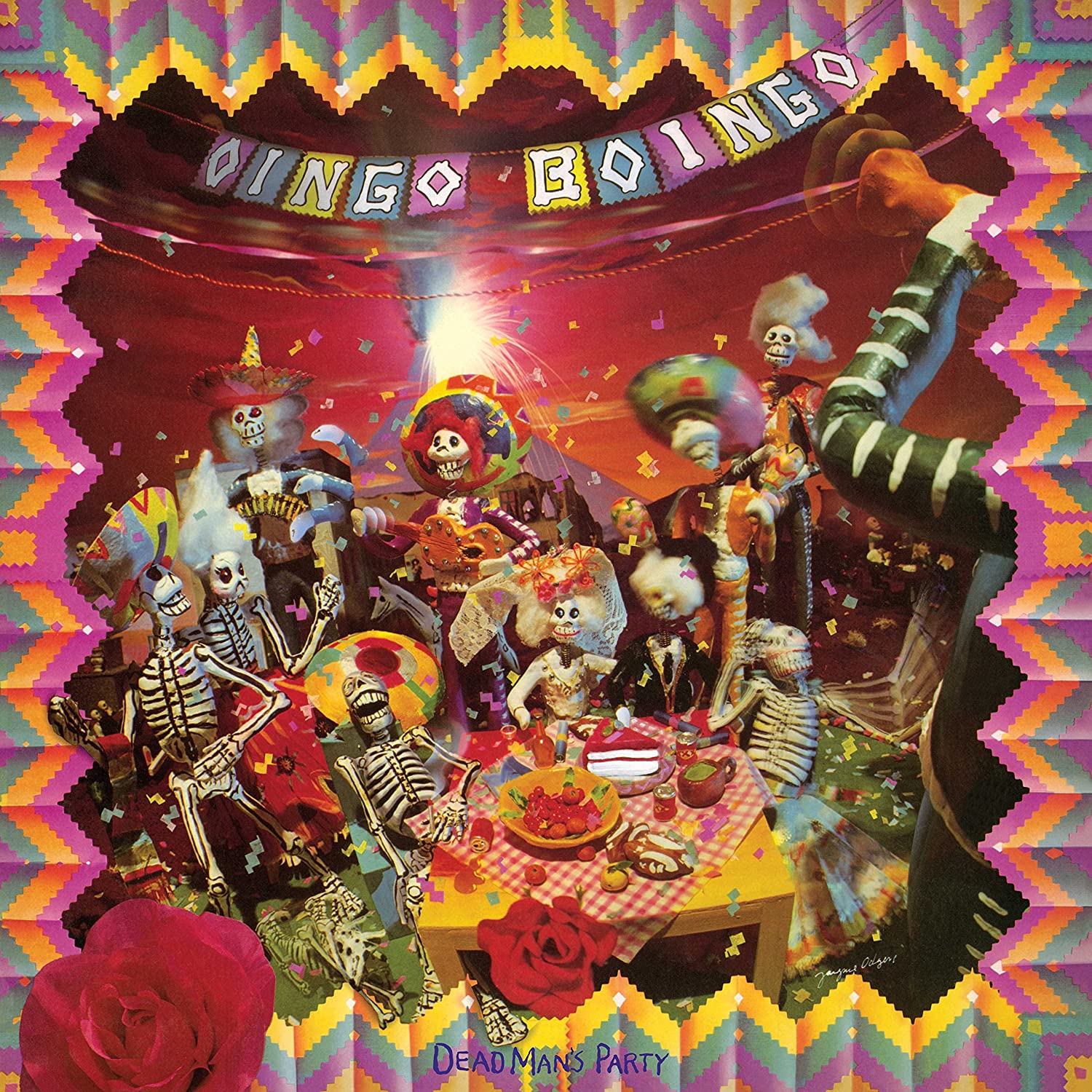
Oingo Boingo – Dead Man’s Party (1985)


How cool was I buying this album in 2004 when I was 16 years old? How cool was it when my mom came into my room one day while I was blasting it and mistook it for Duran Duran? How cool was it that, instead of discouraging me from listening to Oingo Boingo, it encouraged me to try Duran Duran? What a story!

NEEDLESS TO SAY, Duran Duran was a big disappointment. And, over the years, Dead Man’s Party has proven to be quite a big one for me as well. Seeing that it was my very first introduction to Oingo Boingo I maintain a certain fondness for the album TO THIS VERY DAY, but I’m not deaf to its faults and shortcomings. After all, Dead Man’s Party was the band’s official debut on MCA Records (I don’t count So-Lo), so maybe there was a lot of pressure to not disappoint the label that brought the world such shimmering gems as The Fixx or Alanis Fucking Morissette? Perhaps this was the destined path of the maturing Danny Elfman-led outfit? Maybe we can blame the mid-’80s and just leave it at that? Make any excuse you want for it, but moreso than any album so far this comes across as neutered and sterilized to oblivion. It’s not bad, not really I guess. It’s just mediocre. And from such a talented individual like Elfman it’s almost a worse offense.

It’s hard to find sufficient background information about Dead Man’s Party, which is telling in of itself, but I do know that we lost Rich Gibbs on keyboards bringing the head count back down to eight. Paul Fox, also on keyboards, dropped out, so both of these guys were replaced by Mike Bacich. I also know that, up until now, the band had been catching flak continuously from critics about the snarky playfulness of their earlier work. How rude of these music-making dudes to have fun while making music! Well, they took the hint, and Dead Man’s Party is NO fun at all. And the critics were ok with it! This was their greatest commercial success! BAAAHHH!! BUUUHHHH!! I don’t get it. Maybe I’m missing something? Just listen to the mixing, for chrissake! My no-foolin’ honest-to-fuck main complaint about this record is the flat flat FLAT FLAT production. No dynamics, no tension, no excitement. I won’t defend half the songs that really couldn’t have been helped anyway in this regard, but the other half could have really kicked some ass if the mastering had been on-par with earlier releases. Or later releases. This is an anomaly in the catalog, certainly, and it’s a frustrating situation.

“Just Another Day” starts us off on a somber note. At first it sounds like Duran Duran’s “Rio”, and then it starts to sound like a more goth version of “Rio”. The subject matter of the song should seem like familiar enough territory as a ballad of hopeless paranoia and despair akin to, say, “Private Life” from Nothing to Fear or maybe “Pictures of You” from Good for Your Soul. This time, however, the vibe is bereft of quirky panic or leery anxiety, and replaced instead with just-plain-not-funny Joy Division levels of bleak melancholy with Morrissey levels of self-seriousness and Robert Smith levels of fuck-you-I-can’t-take-it-too-seriously-anyway on my end as a listener. But, goddamnit, it’s hard to get the song out of my head for a while after listening to it, and Elfman’s voice is incredibly suited for expressing this manner of emotion, as melodramatically operatic as it may be. I can’t in good conscience call this a bad song. NEXT!

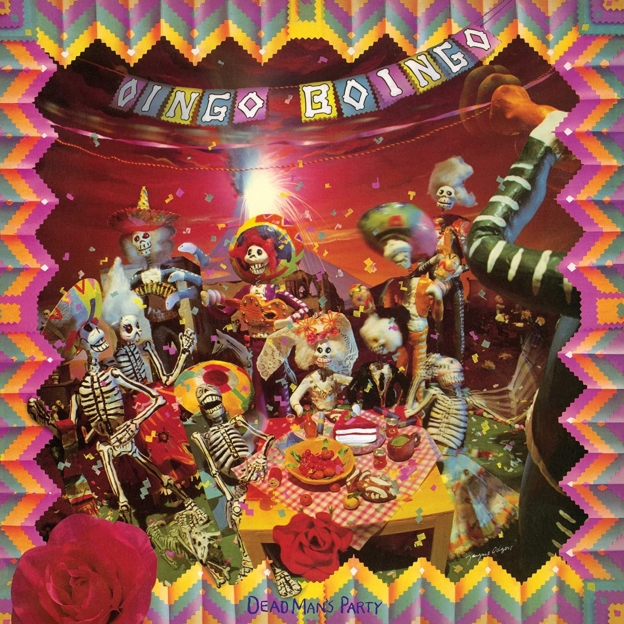
“Dead Man’s Party” suffers from a 6+-minute song length, punctuated further by its mid-tempo urgency and lumbering progression, but otherwise it’s textbook Oingo Boingo. Macabre, dance-y, tinged with ska, and replete with non-distracting mismatched time signatures. In fact, it’s so textbook that this is THE quintessential Oingo Boingo song, and the song that the band’s public image is almost completely based upon. Check it out: “Dead Man’s Party”, a tune that’s basically a glorified “Monster Mash” send-up from the album of the same name featuring iconic partying skeletons on its cover, and it came out in late October? Congratulations! You have now been pigeonholed as a Halloween band forever, dinguses. Probably deliberate, since it’s good marketing for a band who had been struggling to expand their brand beyond the Los Angeles music scene for years already. FUN FACT: The band appears as themselves in the Rodney Dangerfield laugh-o-fuckin’-rama “Back to School” playing this song. I kid you not, the scene is supposed to take place at a frat party and there’s literally an “OINGO BOINGO” banner hanging behind them as they’re playing, just like those adorable partying skeletons on the album cover. And the scene is riddled with awkward close-up shots of the nerds in the band. It’s all pretty weak. NEXT!

I’ll skip ahead to a couple of other highlights. My personal favorite is “No One Lives Forever”, which is even more macabre than “Dead Man’s Party” and brings back a little bit of that lost energy from the early days. Plus, I love the whole eastern European thing going on here, from the scales to the shouted “HEY!”s to the snake-y instrumentation, and it still sounds like a decent Halloween tune in the end with the creepy guitar effects that sound like rattling bones and the eerie haunted house-like atmosphere. “Weird Science”, while not THE quintessential Oingo Boingo song, is certainly the most well-known one. Elfman wrote it specifically upon request for the John Hughes movie that’s about Anthony Michael Hall wanting to fuck a robot he built himself, but Elfman never had a good feeling about the song and ESPECIALLY didn’t like that it was Oingo Boingo’s most successful single. Per Elfman, it just never felt like an Oingo Boingo song. I say poppycock, sir. “Weird Science” is the last classic you’ll find for the rest of their career, and in six minutes it displays all manner of trademark quirks and the catchy, off-kilter melodic FUN that is waning fast as time goes on with the band. “Weird Science” encapsulates the essence of mid-’80s pop sensibility perfectly while largely avoiding the schmaltziness that, frankly, was really fucking easy to stumble into in 1985 (Eddie Murphy’s “Party All the Time”, I’m staring daggers at you in particular). The awareness and apprehension of a rapidly changing technological world through the use of “modern” synth effects in songs like these are the ones that hold the test of time 30 years later because, from the future perspective, the mid-’80s feels like the fear-of-technology era. THANKS A LOT, OLD MAN REAGAN. He’s dead now, so I guess it’s a wash. This song also feels like a “Monster Mash” send-up, but it works better for me and it’s way more fun to listen to than the title track. Eat your heart out, Thomas Dolby, this is my go-to song about SCIENCE! NEXT!

It’s time to talk about what sucks now, because it’s the rest of the album! Ha! The remaining songs all kind of suck. “Heard Somebody Cry” kind of sucks because of its lackluster chorus and hookless melody, and I’m not sure what kind of mood Elfman is trying to evoke because there is no emotion in anything. Not in the vocal delivery of the cryptic lyrics, certainly not in the usually-expressive horn passages, and I already complained about the flat production. NEXT! “Stay” kind of sucks mostly because of the uninspired lyrical pattern that sounds more like a grocery list than a song (“This is not a horse race where winners beat the time/This is not a funeral with mourners in a line“… and so on and on), although the gloom-awashed haze blanketed over the music is at least different from every other song on Dead Man’s Party even if it makes everything feel slightly claustrophobic. NEXT! “Fool’s Paradise” and “Help Me” both kind of suck for the same reason: they’re vapid and forgettable pop-happy tunes without much edge or profoundness. Too bad, because they’re both fine enough songs by normal standards, they just feel disposable and inessential. Lukewarm. Boring. NEXT! “Same Man I Was Before” fuses new wave with some east-Asian musical styles and a little bit of neo-soul thrown in for good measure. At least this one is unique, but it kind of sucks because the melody is pretty derivative, the infusion of soul is flimsy, and (surprise!) the progression is flat and boring. Ugh.

What else is there to say? The good songs are really good and the bad songs are just disappointing. I’ll be kind with the rating on Dead Man’s Party because, like I said before, this album will always have a special place in my heart. And as an introduction to the band it didn’t completely scare me off, but between you and me this gets a “Kinda Bad” on the occasional off-day. Had my first introduction been Dark at the End of the Tunnel things would have been very, very different. I can at least thank Dead Man’s Party for keeping me going on the Boingo train, and I’ll leave it at that.

JUST OK

Courtney Barnett – Sometimes I Sit and Think, and Sometimes I Just Sit (2015)


Indie rock is flooded with bands and artists who sound like other bands and artists. It sickens me. Please feel free to join me as I revel in such negativity. BUT, I’m not completely jaded. I, too, am still capable of mirth. For instance, once in a while I listen to a fresh new indie album by a fresh new indie artist, you know, going into it expecting something that I may have heard before a hundred million thousand million times…and not only does it happen to be unique, I’m able to discern the uniqueness listening to literally only the first two notes from the debut album’s first track! Amazing! Then my faith in indie rock is revived until I hear the next My Morning Jacket clone and I’m bored all over again!

Courtney Barnett is who I’m talking about here. The singer-songwriter hails from southeastern Australia and broke out only relatively recently, largely due to online publications like Pitchfork. She grew up listening to American and English bands, and it sounds to me based on the information out there that she didn’t even consider making music herself until she realized that, imagine this now, Australian musicians exist too! But barely! In her defense, there aren’t really that many well-known ones, right? AC/DC, Nick Cave, Little River Band. What else? Olivia Newton-John and Midnight Oil? Men at Work?? Pfffft. No wonder she was so surprised. Anyway, there’s nothing monumental about her thus-far short tenure as a professional musician. Bouncing around bands here and there for a couple years, borrowing money from friends and family for various projects, that sort of thing. During my my even shorter tenure as a barely-amateur music reviewicist I haven’t tackled anyone so new to the scene yet, so since I don’t have the luxury of knowing Barnett’s career trajectory I’m going to have to make some generalizations that may not age well by the time I listen to her newest album that just came out last week! Here it goes…

First impressions of Sometimes I Sit… bring about Bob Dylan comparisons. From the very first two lines of “Elevator Operator” you can tell Barnett’s going to be a storyteller, and it becomes apparent pretty quickly that it comes naturally to her. The cadence of her slacker, nonchalant delivery also brings to mind Kurt Cobain, among other poster children of the early-’90s grunge scene. It’s almost as if Barnett put a lot of hours into practicing sounding like she doesn’t give a shit. The special touch here is that her method of singing doesn’t cover up her thick Australian accent one bit. Score one for uniqueness! It helps that it’s less actual singing and more, you know, talking. Plus, in case you forget that she hails from the Land of Oz, lyrics like “He’s dropping soy linseed vegemite crumbs everywhere” and “Taxidermied kangaroos are littered on the shoulders“, not to mention references to the Great Barrier Reef, for instance, will serve as objective reminders.

The good news is that diversity of tone and style in the music itself keeps this vocal formula from becoming stale. “Elevator Operator” is poppy and jaunty, “Pedestrian at Best” is punky and garage-y, “Depreston” is lazy and folksy, “Nobody Really Cares If You Don’t Go to the Party” is heavy and punchy, “Kim’s Caravan” is dreamy and hazy; the music seamlessly adapts to Barnett’s voice instead of the other way around. If every song sounded just like “Depreston” then I’d say “Fuck you, good sir and/or ma’am!”, but instead I’m left saying “Wham Bam, thank you sir and/or-” …yeah you get the point.

My personal favorite off of Sometimes I Sit… is “Pedestrian at Best”, and there’s no better song to exemplify the strengths of what Barnett seems to be going for here. It has all the trappings of the classic garage/grunge sound, raw and catchy with obligatory heaps of the attitude of course, but Barnett doesn’t sound angry, or aggressive even. She sounds incredulous. Barnett has such a natural, even flow through the verses it’s almost like she’s rapping in an EZ chair, and then she belts out a chorus that’s a culmination of all this incredulity building up that she literally can’t help but address and talk through it. “Put me on a pedestal and I’ll only disappoint you!/Tell me I’m exceptional, I promise to exploit you!“. Overall, it’s a very introspective song about Barnett handling her new fame and worldwide recognition after a few successful EPs. It’s a very honest display of doubt and self-deprecation while doing everything correct musically at the same time. It’s impressive.

The rest of the album projects this unassuming and humble disposition as Barnett kind of just…talks, sort of, more than she sings, about a collection of colorful characters and anecdotes, mostly autobiographical, that seem to be deeply personal. And, underneath it all, there are internal demons that Barnett is trying to reckon with. “Elevator Operator” is a simple story about a man who decides to skip work during the middle of his commute and leisurely takes en elevator to the roof of a random tall building in the city to relax and reflect on life. All the while, a woman taking the same elevator assumes the man is planning to commit suicide. The verse “I think you’re projecting the way that you’re feeling/I’m not suicidal, just idling insignificantly/I come up here for perception and clarity/I like to imagine I’m playing SimCity“, which is the man’s rebuttal to the woman’s assumptions, taps into more of Barnett’s insecurities and obvious preoccupations about the way others may be thinking of her. “An Illustration of Loneliness (Sleepless in New York)” creates a sense of restlessness inherent in its plodding-along, unambitious and lazy melody. Barnett’s stream-of-consciousness words intersperse imagery of death with the minutiae of lying on a bed bored. “Depreston” hints at Barnett’s future collaboratation with Kurt Vile. It appears that she, like Vile, is able to capture the essence of a mundane, summer day even if the lyrics themselves don’t betray this feeling. The words themselves describe a house-hunting excursion in the suburbs to get away from the city (“You said we should look out further/I guess it wouldn’t hurt us/We don’t have to be around all these coffee shops“), but underneath the literal context is a metaphor describing an existential crisis underway. The line is repeated at the end, “If you’ve got a spare half a million/You could knock it down and start rebuilding…“, alluding to the metaphor that anything one might spend time cultivating could be razed like it was nothing. There are a lot of this these kinds of panicked thoughts throughout Sometimes I Sit… masked by seemingly casual, stable, and somewhat upbeat melodies. Hell, even the title of the album itself is a big ol’ fat cry for help!

Some songs drag a little bit. “Small Poppies” overstays its welcome, I think, as profound as the progression might be. It’s a little bit drone-y, something out of the early-mid Sonic Youth catalog without luxury of actually being the mouthpiece of Generation X during 1989 to propel any possible influence forward, although the last line “I dreamed I stabbed you a coat hanger wire” packs a punch after a whole song about self-esteem issues. “Kim’s Caravan” is also long and slow, but at least here there’s a certain exhaustion setting in that the listener can feel and empathize with as the albums nears its close, especially as the line “So take what you want from me…” is laboriously repeated. It’s as if all the neuroses taxing on her psyche aren’t worth the effort anymore, but she doesn’t know it yet.

All in all, this is a hell of a debut to leave the gate with. Sometimes I Sit… represents an incredibly honest and heartfelt effort to the extent that a crippling introvert-type like Courtney Barnett is able to actually deliver, taking into account the limitations of a music album as a medium to channel this therapy session. I think she pulled it off incredibly well. One can only hope that the personality that Barnett decides to put out to the world matures and refines as her career continues. It’s hard to sustain the humble and self-disparaging image for too long, no matter how genuine it might be, and it may not be as endearing later as it is in these early stages. I hesitate to call this Very Good since I believe she can do even better. I look forward to hearing more from Barnett in the future, that’s for sure.

GOOD

Ween – GodWeenSatan: The Oneness (1990)

Let me take this opportunity to come clean. Come clean on my obscene, not unforeseen, affinity for all things Ween! Don’t intervene, butter bean, I’ve loved them since I was a teen! Listening to their music was part of my routine, and in their prime they pumped out albums that were pristine like a well-oiled, reliable machine! What? Hey, I just had some caffeine. Don’t be mean.

See? Dyed-in-the-wool Ween fans are assholes. They are among the biggest assholes you could ever have the misfortune to accidentally interact with. They are assholes because a) Ween is a very strange and inaccessible band, and it takes a concentrated effort to elevate oneself above casual-fan status, b) Ween is a very talented band, so those who elevate themselves above casual-fan status bask in their self-serving senses of self-satisfaction and good judgement and waste no opportunity to get you, the non-Ween fan, to accept the band as the best band in the universe as fervently as humanly possible, and c) Ween are very smart, very unpretentious, very self-aware, and are kind of assholes themselves, so their whole demeanor resonates extremely well with pretentious, sort-of smart assholes who have no self-awareness whatsoever. The only people who enjoy the company of Ween fans are other Ween fans, exclusively. Besides trying as hard as they might to convince you, the non-Ween fan, to get into the band, a Ween fan will also inevitably launch into their interpretation of why Ween does what they do, their interpretation of Ween’s thought process while crafting their songs, their take on the emotional and cerebral intentions of the lyrics and melodies and the satire, all as if the band is some kind of enigmatic shuffled-up 9×9 Rubik’s cube with colors that don’t exist outside of the Andromeda galaxy. I’m certainly not going to pretend I’m not going to do the same thing myself, but I least I’m going to be mindful about it. Plus, how can I not? I’m an asshole Ween fan, after all!

First and foremost, the band is and has always been the brainchild of Aaron Freeman and Mickey Melchiondo. They met each other in 1984 as classmates in middle school in a tiny eastern-Pennsylvania town. They both had unremarkable middle-class American upbringings. They were surrounded by unremarkable small-town people and were steeped in unremarkable small-town culture. They were both big ol’ slacker kids with no real professional ambitions. They bonded over a mutual love of music and spent a lot of time dicking around with instruments and cheap cassette recorders at each other’s houses after school. They spent their teenage years playing at small-town clubs and recording rough cassettes of both live and at-home recordings. They independently released a few of these cassettes in the late ’80s and made nearly no money off of them. I say all this because the story of their humble beginnings reads like such an astounding pipe dream that Aaron and Mickey’s eventual success was nothing short of a right-place-at-the-right-time miracle. You most likely knew kids exactly like this in high school and now they’re working the graveyard shift at Walmart. A little less luck and it would’ve happened to them too, no doubt about it.

You may know Freeman and Melchiondo better, respectively, as Gene Ween and Dean Ween. Gener does nearly all the singing, Deaner does nearly all the guitar playing, but lyrics and songwriting duties are split pretty evenly otherwise. They worked primarily as a duo until the mid-’90s, inviting their friends or session musicians to contribute to studio recordings as needed and eventually expanding to a full band for studio albums and live shows, but every ounce of creativity siphoned into their output has been from those two and those two alone. I have a lot to say about the Ween Bros. as I power through their discography, and a lot of it won’t make sense yet with only their debut album as a frame of reference so I’ll restrain myself for now, but I want to relay the following strong opinions I have here right at the top: a) Gener is one of the most underrated vocalists in popular music, b) Deaner is one of the most talented guitar players in history. I won’t be shy about piling on the reasons to back up my bold claims as time goes on.

GodWeenSatan: The Oneness (referred to as GWS from this point forward) is Ween’s hardcore album. Originally comprised of 26 tracks, the 2001 “25th Anniversary Edition” (hilarious!) throws three more tracks in three random spots within the tracklist totaling 29 tracks and 76 minutes worth of material. The whole package is a constant onslaught of heavy riffs, crass humor, screaming and shrieking, and profanity galore. You see, Gener and Deaner were barely 20 years old when GWS was released (all sources say it was released on January 1st, 1990, but this is impossible considering the song “Birthday Boy” references Gener’s 20th birthday, which wouldn’t happen until March). It’s basically, in its essence, a glorified Greatest Hits compilation of songs that they’ve been working on since they were barely 14 years old. All of this sounds like a recipe for complete disaster, right? On a normal day I’d agree wholeheartedly. That is, until it’s realized that the heavy riffs are melodious and interesting, the crass humor is legitimately comical, the screaming and shrieking is competent, hyperbolic and humorous, and the profanity is just the juvenile icing on the juvenile cake! Not only that, but the pacing of the album is incredibly well-thought out and the admittedly long album length isn’t punctuated by lulls or godawful filler. I kid you not, 29 tracks and not one I could grasp at straws to call a stinker! Not bad at all for a debut written by two dumbass kids.

In the early days, certainly, it’s undeniable that Ween set out to parody this kind music as an elaborate in-joke. The later years it’s debatable whether or not it continues to be the intention (debated still to this day, in fact, by passionate asshole Ween fans), and you can thank the early output for blurring those lines to begin with. GWS is Ween’s hardcore album, but it’s not a real hardcore album at all. I mean, ok, technically less than half of the album proper doesn’t necessarily classify as hardcore or post-hardcore anyway, but Gener belts out a raspy punk scream on a lot of these tracks with respectable authenticity. But forget even that for a second, because even the real hardcore isn’t really real hardcore, ya know what I mean? “You Fucked Up” begins the album on a particularly aggressive note indeed, with crunchy slow riffing and Gener shouting holes into his esophagus. On paper it’s textbook punk, but here is a lyric for you: “YOU FUUUUCKED UUUUP!/YOU FUCKING…NAZI…WHOOOOOORE!” Or how about this one: “YOU FUUUUCKED UUUUP!/YOU SLOPPY, LITTLE…SHIT…BITCH…/AHHHHHHHHH!!”. You can either have two thoughts running through your head about this: you can either think that this is so overtly juvenile as to be a complete waste of time, or you can think that this is so overtly juvenile that it’s hilarious. Luckily for everyone involved, trust gets built over the course of GWS to ensure the listener that this is all very self-aware and deliberate. It’s all designed to accentuate the tropes of the genre, and music in general, to make them seem so ridiculous that all you can do is laugh. If this were an attempt at a straight-faced hardcore album it would be embarrassing, but twisting everything into a bastardization instead flips the perception into something, dare I say, sublime. It’s as if you, the listener, are in on the joke too! And now you’re part of some exclusive club! “Common Bitch” is another ode in the same vein, with Gener prefacing the song by screaming in his best WASPy suburban teenage voice “LET ME TELL YOU ‘BOUT THE FUCKIN’ BITCH, DEANER!“, and then Deaner’s off-mic response is his best WASPy suburban teenage voice “WHY’D YA KNOW SHE’S A FUCKING BITCH, GENER?“, and then Gener’s response “SHE’S A FUCKING BITCH, DEANER!” Juvenile misogyny is hilarious! A lot of the songs employ this exact tone: “Tick”, “Old Queen Cole”, “Fat Lenny, “Wayne’s Pet Youngin'”, “Bumblebee”, “Papa Zit”, all just raw, lo-fi bursts of energy fueled with a relentless, mocking attitude and directionless shouting.

But what definitely doesn’t make this a hardcore album are all the other songs! “Up on the Hill” is a gospel tune with a bluesy southern reprise, with Gener singing the first half as a vaguely-but-definitely racist black woman caricature. “Licking the Palm for Guava” and “Mushroom Festival in Hell” are out-of-control psychedelic acid trips, utilizing fuzzed-out guitar like a palette of colors from that Andromeda galaxy I’ve been hearing so much about lately. “Birthday Boy” is very much like an emo goth lo-fi bedroom recording, vocals dripping with pain and angst (likely recorded on an old cassette, with added self-pitying touches of Gener’s…ahem, excuse me, Aaron Freeman’s home answering machine recordings of relatives wishing him a happy birthday). “Don’t Laugh (I Love You)” is an absolutely saccharine-y sweet love song, complete with plinky melodies, high-pitched vocals, and everything you could ever want from sarcastic-as-hell ditty steeped in childish innocence. “Puffy Cloud” is a baked-as-fuck, barely audible duet of dreamy, hazy folksiness closing out the album (“Float away on a cotton ball/We write songs about the clouds/My brain is dead from too much pot/Because [Gene/Dean] and I smoke too much pot“).

I would be remiss…REMISS!…if I failed to dedicate a paragraph to the two best goddamned buttfucking tracks on here. Not content with showing the world their range distributed exclusively as two-minute musings on their debut, Ween also produced two glorious tracks each around nine minutes long plopped right in the middle of the madness. “Nicole” and “L.M.L.Y.P.” are the two clear stars of GWS, and anyone who presents a conflicting opinion can go shit in his hat! “Nicole” starts out unassuming enough, kinda plinky and cute like “Don’t Laugh (I Love You)”. As plods along throughout its duration it slowly descends into a paranoid, angry, vulgar cacophony, becoming abundantly clear that it’s a breakup song. The progression is so organically gradual and meaningful that there’s no way it could’ve been any less than nine minutes long. I can’t think of many other songs covering the subject of love that uses its own song length as a plot device. I hate using the word “genius”, but I have to here. “L.M.L.Y.P.”, on the flip side of the same coin, is absolutely the opposite of genius. It’s the Prince song that even Prince himself couldn’t have written. We’re talking about a long, sweaty, funky, gross jam all about pussy eatin’, my friend. Just listen to it and you’ll know what the acronym stands for, awwwwwww yeah. Again, this song could not have been any shorter, because that repetitive funk swagger overstays its welcome on purpose to maximize the absurdity of the subject matter and the discomfort of the unseasoned listener. If the song sucked it would be a total trainwreck, but the Prince tribute is masterfully done. Dean even caps off the song with a blistering guitar solo. Ween don’t tour much anymore these days, but if you’re lucky enough to see a show with “L.M.L.Y.P.” as its encore, be prepared for a 40-minute extended version. Yowza!

All right, that’s more than enough words for this. Final Thoughts: The homogeneity of the final product is surprising considering its ambitious size, but I think the hot pink album cover helps. Every song on here for me is tinged with hot pink flair. Probably less for you than for me, perhaps that makes no sense at all to you, but GWS is their aggressive and trashy hot pink album and I wouldn’t have it any other way.

VERY GOOD