Review: Talking Heads – Talking Heads: 77 (1977)


Yeesh. Where do I even begin with the Talking Heads? You could write pages and pages about frontman David Byrne alone (well…I could write pages and pages), a man so genuinely strange that he probably can\’t even see the autism spectrum from his vantage point. Byrne\’s devoid-of-personality style personality was so unintentionally and unavoidably intense that he overshadowed the rest of the \”ensemble cast\” band. The rest of the band comprised of Chris Frantz (drummer) and Tina Weymouth (bass, girl). There, I\’ve successfully distilled EVERYTHING I know about those two into nice little parenthetical half-statements. Oh yeah, wait, they\’re also married. And Frantz looks like Bill Clinton now. There\’s also Jerry Harrison (guitar, weird nose).

Byrne, Frantz and Weymouth all met at the Rhode Island School of Design, which I can only presume to be a very pretentious New England college of arts and farts. Mostly farts. So what you\’re getting here is art-school punk in the truest definition of the term. Early influences such as David Bowie and the Velvet Underground certainly help contribute to the artsy-fartsiness of the Talking Heads\’ overall oeuvre, but don\’t mistake \”artsy-fartsy\” for \”up their own asses\” in this case. Talking Heads knew exactly what they were setting out to accomplish, for the most part, and were more often than not pretty damn modest. Jerry Harrison was added later prior to the release of the debut album, presumably because the woman-to-man ratio of the band was too high. But I kid! Harrison didn\’t go to the Rhode Island School of Design, oh no. He had to settle for Harvard instead.

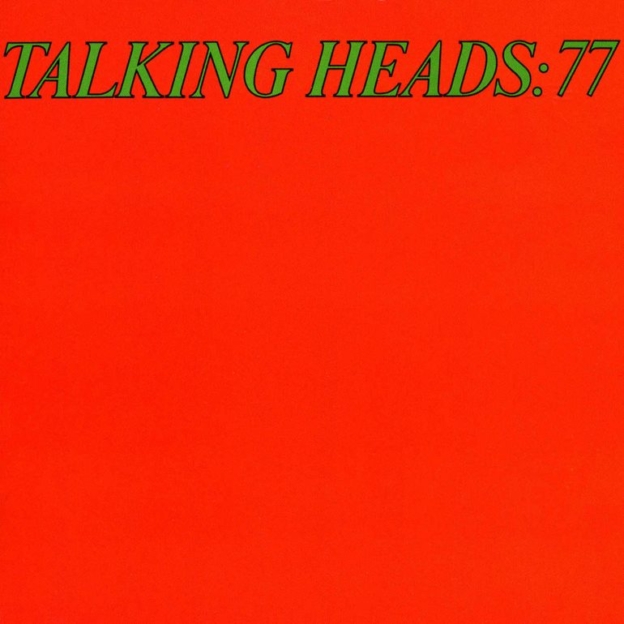
So the scene is set for you: Educated, smartypants, art punk sensibilities coming from normal-looking, wimpy college kids. In September of 1977 they released their debut album, aptly titled Talking Heads: 77. The name is bland, the cover is bland, on the surface it\’s one of the most underwhelming and least bombastic debuts in music history. And once you drop that needle on the record and the first few notes of \”Uh Oh, Love Comes to Town\” hits your ears, you\’ll notice that it, too, is wimpy. \”So what the fuck? You told me this was supposed to be punk! This sounds like shit my slut mother would like!\” Whooooaaa, take it easy there, Guy Fieri. Just keep on listening to the record and…

…oh shoot, yeah, it doesn\’t really get less wimpy, does it? There\’s a very good chance that your first run-through on Talking Heads: 77 will not only barely leave an impression, but will leave you bewildered as to its significance in the history of new wave and post-punk. \”Uh Oh, Love Comes to Town\” turns out to be a pleasant little ditty with cute little steel drum interludes. \”Tentative Decisions\” is a nice little song with a simple little bassline with a pretty little snare drum during the chorus. \”Don\’t Worry About the Government\” has some adorable little acoustic strumming. \”New Feeling\”, \”Who Is It?\”, and \”No Compassion\” feature some angular guitar stylings, but it\’s nothing too out there. Nothing that Guy Fieri\’s slut mother would be offended by. And hey, all these songs are catchy too! Some of them sound similar, but each song has honest-to-God melodies and hooks. Byrne\’s meek little voice leaves a lot to be desired at first, and no one ever said the guy has range, but there\’s a lot of character there behind his calculated, mechanical vocal expression (and believe me, it gets even more calculated and mechanical after a few albums). The guy is one of the most original vocalists in modern rock history, often imitated and never duplicated. I\’m looking at you, Adrian Belew.

The lyrics, though. Oh man, the lyrics! Prose over poetry, usually, with excellent results. If there ever was a voice to go with the lyrics these kids cooked up, Byrne\’s introverted and paranoid delivery is absolutely perfect. PERFECT. And here lies the real genius behind the Talking Heads: a perfect stew of elements to create an atmosphere of subtle anxiety and panic like no other band can. Sometimes the lyrics are so neurotic that you can just sense Byrne is about to snap (\”It\’s not cool to have so many problems/But don\’t expect me to explain your indecisions/Go talk to your analyst, isn\’t that what they\’re paid for?\”). Sometimes they\’re so banal that it seems like something sinister is lurking not far behind (\”I\’m writing \’bout the book I read/I have to sing about the book I read\”). My favorite sleight-of-hand lyrical twist comes from \”Don\’t Worry About the Government\”, where each verse begins by introducing an idea ripe for poetic musings (clouds, trees, the nation of America) and then the listener learns that Byrne just cares about his home. And not even the abstract multiple-meaning definition of \”home\” either, he\’s literally singing about the building that he lives in. The wind carries the clouds past his building. The pine cones fall from the trees next to the highway that will take him to his building. It\’s all day-to-day minutiae with no room for abstract thoughts. Irony like this wasn\’t cool at all yet in 1977.

Don\’t think this post is all about boner-spooge Talking Heads-fellatin\’ Guy Fieri\’s mom-style accolades. This record is certainly not without its flaws. Personally, I find this to be a rare example of an album where Side 2 is way better than Side 1. Everything from \”No Compassion\” until the end is stellar (plus you get the fantastic \”Psycho Killer\”), but I tend to hem and haw about my feelings of Side 1. The light-hearted attitude treads into disposable pop a bit to the point where most of the tracks on Side 1 are interchangeable. Another downside is that Byrne\’s singing chops are overall less refined on the debut, and there are some particularly cringe-inducing moments on tracks like \”New Feeling\” and \”Happy Day\” where he tries to hit some high notes with debatable success.

All boiled down though, this record from beginning to end is a good blueprint to show that punk music doesn\’t need an in-your-face punk attitude. You can still be sneery and sarcastic in the undertones, and the Talking Heads were among the pioneers of reviving rock and roll during an era that desperately needed it (think the downfall of overwrought, gluttonous prog rock). Alternative rock and indie rock wouldn\’t exist without albums like Talking Heads: 77.

Overall, you can\’t go wrong starting your Talking Heads collection with Talking Heads: 77. Simplistic and tame, but enjoyable nonetheless. Fans like to admonish casual listeners of the critical notion that this record will get praised for its simplicity while the later True Stories album will be shunned for precisely the same reason, but the major difference between the two is that the quirky Talking Heads personality pervades here nicely. Not so much in True Stories, in my opinion. Guy Fieri\’s whore of a mom would agree to that.


GOOD

Review: Frank Zappa – We’re Only in It for the Money (1968)


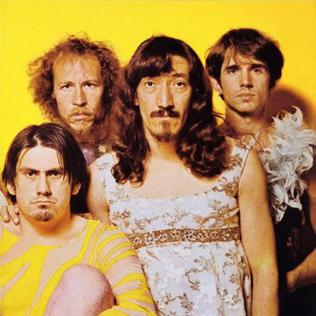
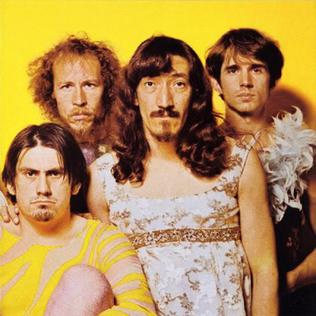
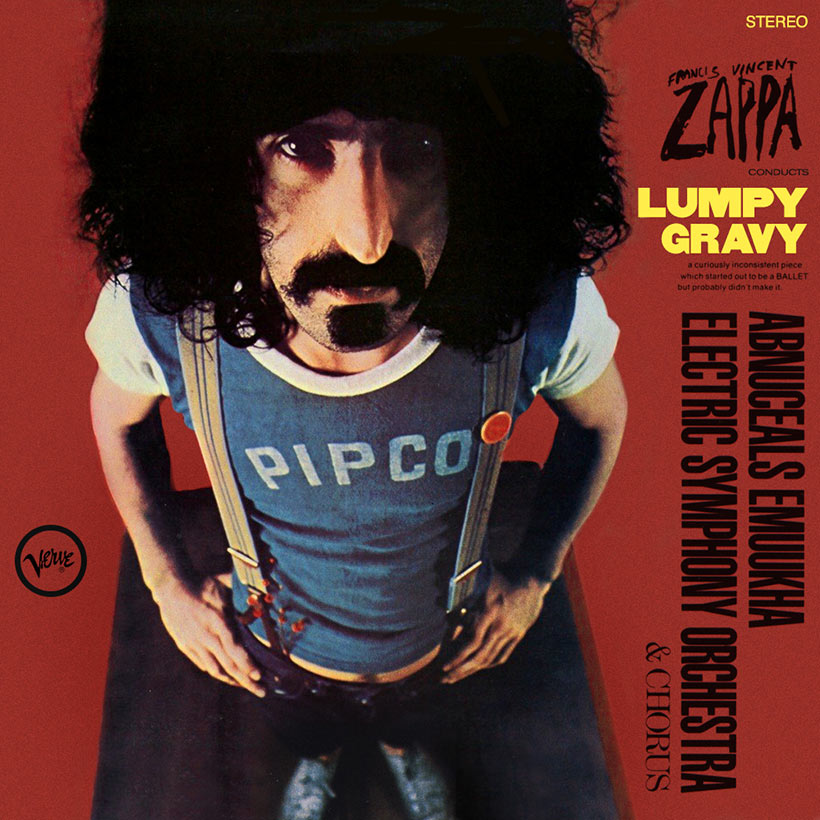
Disclaimer: Technically, Lumpy Gravy is the third Zappa album. We\’re Only in It for the Money was supposed to come out earlier than it did, but the release was delayed due to issues with the cover art (the original cover parodied the Beatles\’ Sgt. Pepper\’s album, and will actually come up more often than the above cover art in Google searches for We\’re Only in It for the Money). For this reason, and the fact that We\’re Only in It for the Money is considered \”Part 1\” in a trilogy with Lumpy Gravy being \”Part 2\” (Civilization Phaze III is \”Part 3\”, but I won\’t review that until 2028 during the Robot Reagan administration), AND the fact that my Rykodisc CD editions puts We\’re Only in It for the Money before Lumpy Gravy, bite me I\’m putting this one first.

I have not listened to The Beatles\’ Sgt. Pepper\’s Lonely Hearts Club Band enough at this point to comment on it intelligently, or especially draw comparisons between it and We\’re Only in It for the Money. I have no idea, honestly, how much of a mockery the latter is to the former in terms of the music, concept, and lyrics. So allow me to review this album on it\’s own merits instead! Good idea, huh??

We\’re Only in It for the Money is the final album in a series of three \”early-Mothers\” albums. Stylistically, these first three albums do follow a loose concept of satire, social commentary, and general snobbery. Freak Out! dealt with trivial teenage issues and some political musings, and Absolutely Free dealt with goddamn fucking vegetables. We\’re Only in It for the Money\’s main target is hippie-culture, a good a target as any at the time considering hippie-culture was at its peak during the recording of the album. Other targets include authority figures such as law enforcement, the military, and parental units. Basically, Frank still has an angsty bone to pick with the kind of people he should have gotten over already by now. But don\’t let me shit all over it! This album is pretty nifty! And of some minor historical importance to boot! You won\’t get that out of a lousy Goldfrapp record, that\’s for damn sure!

OK, so it\’s easy to notice right away that we\’re back actual distinct songs again after the swirling toilet of clumsy melodies that was Absolutely Free. 19 songs, to be exact, and if you listen reeeeaaallllly carefully you might even discover that there are actual hooks in most of them! And none of the songs are all that long either, so you just get punch after punch of memorable melodies. Take \”Bow Tie Daddy\”, for example, which gets its dig in at old people over an old-timey-singing-through-a-megaphone-type plinky backdrop and its over and out in half a minute. \”Harry, You\’re a Beast\” is a rape-y, slightly misogynist comment on women (is it truly misogynist or is it satirizing misogyny? Who knows! Likely the former though!). \”Absolutely Free\” (hey, that\’s the name of the previous album!) is a fun little knock at capitalism by using the word \”discorporate\” as a pun. You\’ll have to listen to the song to figure out what\’s fun about it, though. \”Mom and Dad\” and \”The Idiot Bastard Son\” are two more songs at the expense of old fart parental figures. And all these songs I\’m mentioning, they sound upbeat. The music itself doesn\’t betray the song\’s message, not always. Sometimes the music will creepify at the drop of hat, like the end of \”What\’s the Ugliest Part of Your Body (Reprise)\” where the melody melts away and devolves into an almost accusatory stance against the listener (\”I think it\’s your miiiiiiind/I think it\’s your miiiiiiind\”).

Some songs aren\’t very hooky, of course, and act more as transition pieces. This is Frank Zappa we\’re talking about, he\’s not going to make it entirely easy for you. \”Are You Hung Up?\” and \”Telephone Conversation\” are similar spoken word \”skits\”. \”Nasal Retentive Calliope Music\” is a bit of freaking out à la the good parts of Freak Out!, except in this case I find it rather disposable and uninteresting. \”The Chrome Plated Megaphone of Destiny\” is a 6-minute slog through some Beatles \”Revolution 9\” sound collage-esque bullshit that, luckily, concludes the album so it\’s easily skippable. I\’m definitely not one to snub some good ol\’ fashioned avant-garde rub-my-dick-on-the-guitar-strings musings, but this track in particular never did it for me. I\’d rather listen to the 12-minute \”Return of the Son of Monster Magnet\” from Freak Out! three times in a row than sit through \”The Chrome Plated Megaphone of Destiny\” once. Does that just go to show how highly I think of the former, or how poorly I think of the latter? Not for you to decide. Or me for that matter. Who cares, ultimately?

Historical significance? Well, the modern age of rock and roll as we know it wasn\’t rife with jokey funny-boy prankster-types like Frank Zappa as much in 1968 as you see these days, at least not ones as well-known or influential. Considering that this was a direct mockery of Sgt. Pepper\’s, an album that tops a lot of lists of the best albums of all time, and it wasn\’t written off completely as bunk, speaks a lot for its historical significance alone in my opinion. How many other albums can you think of that were borne out of a desire to ridicule someone else\’s musical expression and ended up being legitimate in its own right? Did someone in the back say \”Weird Al Yankovic\’s Bad Hair Day\”? Get the fuck out.

Of the first three early-Mothers albums, hardcore and casual fans alike tend to pick this one as the gold medal winner. I say they\’re full of beans! Freak Out! is more consistent and cohesive, Absolutely Free is more fun and experimental, We\’re Only in It for the Money sucks! But not really. Any music fan worth his or her salt will enjoy all three and worry not about ranking them. Unless you\’re a nerd like me who would rank them (this one would be 3rd), but I\’m not worth any goddamn salt.


GOOD

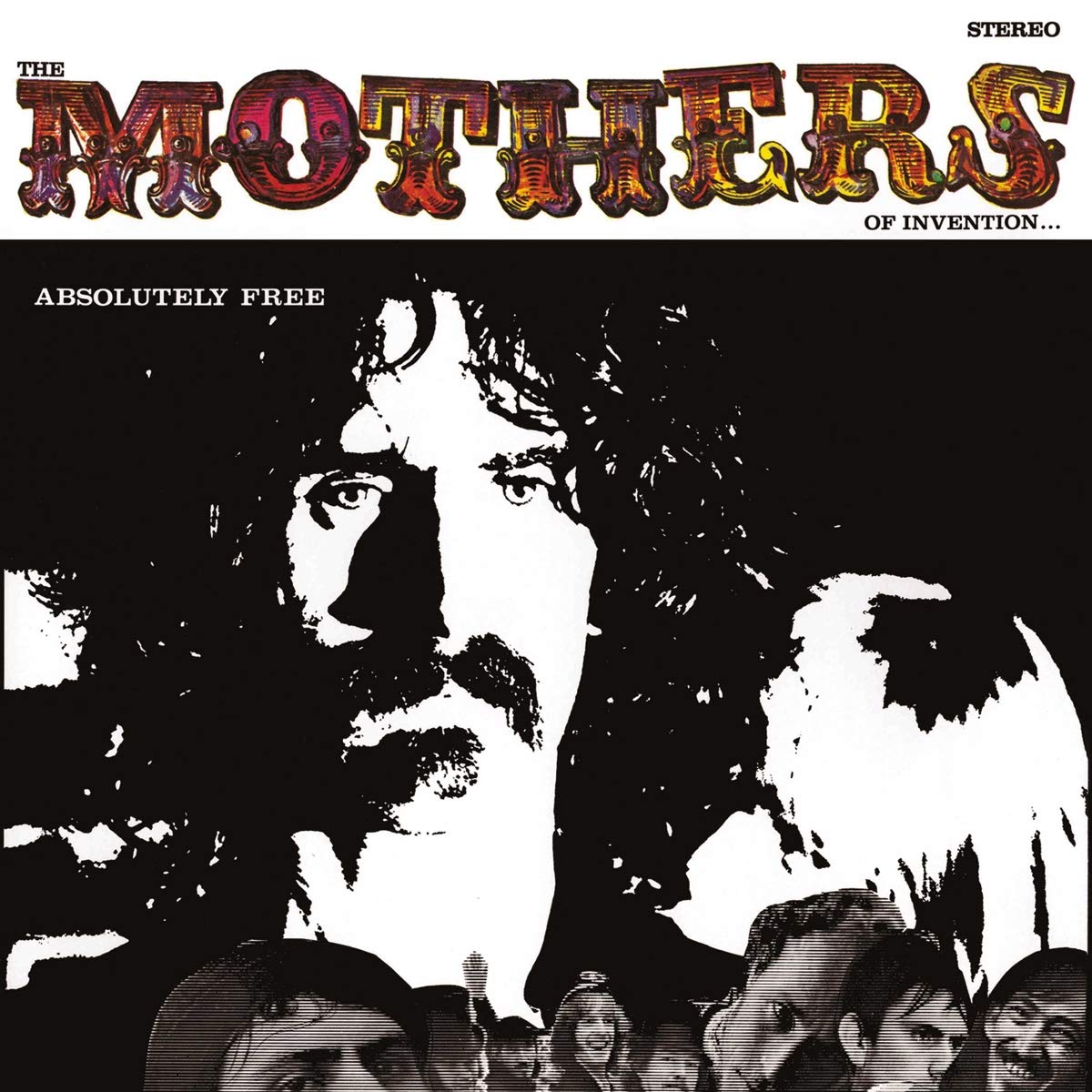
Review: Frank Zappa – Absolutely Free (1967)


So Frank Zappa makes his grand entrance with Freak Out!, an influential bloated double-LP of sarcastic teenager anthems, social commentary, and aggressive, psychedelic meanderings and noodlings. He did what he needed to do, and now he can quit the music business forever and fade into obscurity.

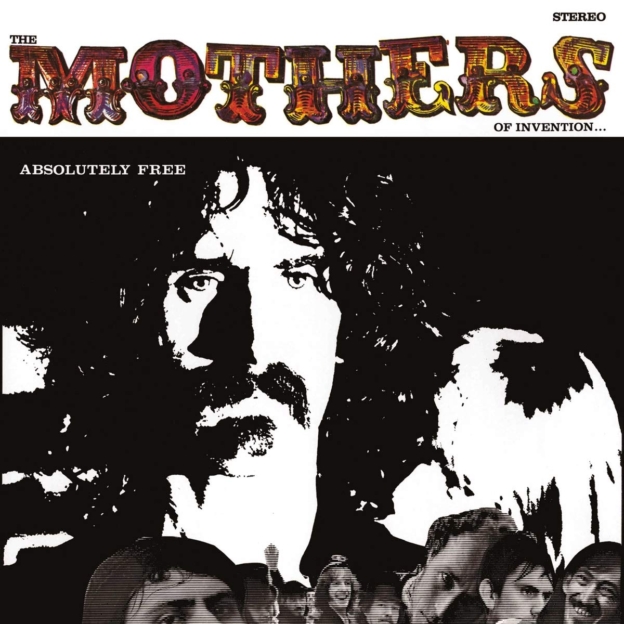
Or he can make another three trillion albums over the next 25 years instead. Absolutely Free is the second album by Frank Zappa and his merry men the Mothers of Invention, and hoo boy is it a humdinger of an album! 45 minutes of duck calls! The grooves of each and every copy of the vinyl record were personally carved out by Frank\’s dick!

Sorry to disappoint you like that. What he have here is a single-LP of more weirdo social statements broken into very loose themes between the two sides. Musically, there\’s a noticeable enhancement of production and diversity. While most of Freak Out! sounded kind of samey, Absolutely Free is a cavalcade of shifting genres, fluttering woodwind instruments, and bizarro abstract lyrical ventures. In fact, even after multiple listens it\’s a very all-over-the-place and jarring album, but don\’t mistake this for a complaint. It\’s a fun album throughout.

Side 1 kicks off with \”Plastic People\”, a bastardized pseudo-version of \”Louie, Louie\” (not even the first reference to \”Louie, Louie\” in the official catalog, and certainly not the last). Here, Frank is making fun of self-absorbed types, and the social commentary gets more convoluted as we progress. Talks of vegetables wrapped in oblique lyrical nonsense abound the first side of the album, but you don\’t need to know what they\’re talking about to enjoy it. Prunes, cabbage, rutabaga, pumpkin, all symbolizing…what? Who gives a fuck, just sit back and enjoy the schizophrenic progression. See if you can spot little quotes and segments from classical composers such as Stravinsky and Holst, Frank loved to pepper his own compositions with this kind of shit. It gives it an eloquent and sophisticated touch that is completely undermined by the stupidity of the words, and we all know about Frank Zappa\’s knack for subverting expectations. My favorite part of the whole goddamn album is the seven-minute acid-blues jam \”Invocation & Ritual Dance of the Young Pumpkin\”, which intersperses furious guitar with a medieval folksy fife or something. It\’s a beautiful thing. The main criticism you\’ll see about Side 1 is that melody and hooks are sacrificed for weirdness and musical passages that run on a little too long, but these people are chumps.

No metaphorical vegetables on Side 2, which kicks off with \”America Drinks\”. The lyric \”you came on strong, with your fast car and your class ring\” pops in, so, again, we\’re going to deal with some lampooning of trivial teenager issues. By now, Frank\’s about 26 or 27 years old, so it\’s a little strange to me how fixated he is with teenage social issues. I\’m guessing ol\’ Frankie got his ass kicked in high school a fair number of times. It continues with \”Status Back Baby\” (\”I\’m losing status at the high school…\”), but then movies on to political/marketing satire on \”Uncle Bernie\’s Farm\”. The real treat here, and a favorite among Zappa fans, is \”Brown Shoes Don\’t Make It\”. It\’s a seven-minute piece basically about politicians fucking their 13-year-old daughters, which is as quaint of subject matter as anything else I\’m sure, but the song basically consists of musical vignettes strung together. It\’s often cited as the first of its kind in rock music history, and such a song would prove to be a major influence to the experimental Mike Patton/John Zorn types who like to shift genres on a dime within one song (Mr. Bungle, anyone?). The album closes out with \”America Drinks and Goes Home\”, which bookends Side 2 with a lounge version of \”America Drinks\”, and a fine note to end on indeed.

Historically speaking, as far the the \”trilogy\” of the early Frank + Mothers albums go, this one is the least significant, and gets forgotten by casual listeners since it\’s sandwiched between Freak Out! and We\’re Only in It for the Money. Myself, I used to think I preferred this one, but ultimately I listen to it a lot less than Freak Out! which I think takes the Gold when comparing the three. People may gripe that I personally would give We\’re Only in It for the Money the Bronze. Fuck \’em.


GOOD

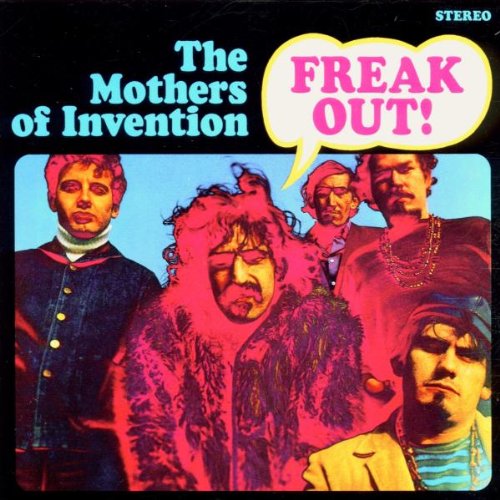
Review: Frank Zappa – Freak Out! (1966)


From what I understand, Frank Zappa scared a lot of people back in the day. It\’s hard to truly understand why in 2017, since popular music has been rendered relatively harmless. After a couple of decades of needless hysteria surrounding rock music\’s alleged Satanic leanings, and then a couple decades of censorship crackdown, it got old for everybody after awhile. But in the mid-sixties there was no black metal, no particularly vulgar lyrics, there was barely even an edge to any of the music at the time. I mean, the Rolling Stones, dangerous? People treated them as if they were, and in the early days they sounded like the Beatles for fuck\’s sake. They had shaggier hair, granted, but they wore suits!

But in comes Frank Zappa, with his shaggy hair and shaggy mustache, and he\’s dragging along with him the Mothers of Invention, a band of equally scruffy-looking misfits. And they\’re all honestly creepy-looking, too, like you\’d find them on the Sex Offender Registry. This is what we\’re dealing with here out of nowhere in the summer of 1966, and the average Joe didn\’t take too kindly to the likes of them at the time. Frank Zappa and the Mothers of Invention\’s debut album Freak Out! kind of came out of nowhere. Hippie culture, at least the hippie culture caricature that young fucks like me are aware of, hadn\’t even peaked yet. Hippies had been around for years already, but the Summer of Love was still a year away. The Beatles were between Rubber Soul and Revolver. Nothing had really set the tone yet for such an album in the zeitgeist. Looking at the cover and the name, people thought it was some drug-fueled degenerate work of \”art\” by some unseemly types, the kind of dregs you wouldn\’t want to associate yourself with. Don Draper wouldn\’t want to be caught with his pants around his ankles fucking some broad in the same room as this album. If little Opie brought home a copy of Freak Out! you\’d better believe that Andy Griffith would pummel the Lucifer out of him with a belt while Don Knotts watched.

OK, fine, but what about the actual music? The original double LP (a first in rock history for a debut) consisted of 14 songs. The first 11 tracks seem relatively benign, I guess, with its 2-3 minute ditties that sound like early rock and doo-wop numbers, but then you get the wailing bluesy \”Trouble Every Day\”, the eight-minute weirdo-poetry suite \”Help, I\’m a Rock\” and then the twelve-minute dissent into Hell called \”The Return of the Son of Monster Magnet\”, which is likely the scariest thing to be released to the unwitting public until the world got to see the Twisted Sister Stay Hungry album cover.

The first 11 tracks are not without their sinister undertones, of course. What we didn\’t know yet about Frank Zappa is that his primary purpose in his art (and he did consider what he did \”art\”) was to take the existing paradigms and twist them, subvert them, pervert them, and bewilder the unsuspecting listener. Teenage social issues such as angst and love are presented on Freak Out! as trivial and pedantic (Frank was about 25-years-old at the time). And rightfully so, since the radio waves were riddled with songs with such juvenile subject matter. A smart guy like Frank doesn\’t want to miss the chance to show the world that he\’s picked up on how asinine it is, right? Asshole. Lovey-dovey lines like \”Wowie Zowie, your love\’s a treat. Wowie Zowie, you can\’t be beat.\” are delivered with a monotone sneer. Angsty lines like \”I never met no one who\’d care if I was dead and gone.\” are delivered as if it were from an upbeat lounge song. Up is down! Black is white! Chaos! Panic!

Oh wait, we\’re not done? It gets scarier? After 11 doo-woppy teeny-bopper rock and roll numbers we are treated with an electric blues number called \”Trouble Every Day\”, which was inspired specifically by the Watts riots and the Civil Rights Movement in general. Biting commentary on social injustice and police racism (sound familiar?). Hand-jobbin\’ Zappa fanatics will cite this song as the first ever rap song, but I strongly disagree and it\’s an irresponsibly stupid thing to say. Yeah, a white person invented rap music. Fuck off.

It gets even scarier? Next comes \”Help, I\’m a Rock\”, which is where the real freaking out begins on Freak Out! Experimental, psychedelic and unsettling, you can catch a whiff of the precursor to industrial music on this track (at least old-school industrial). Very cool.

Oh shit, I can\’t handle it anymore. Buckle up, because the extra-long \”The Return of the Son of Monster Magnet\” closes up the album with a fervor or experimental and psychedelic drumming, complete with eerie wordless grunting and scary electronic tuning radio-type noises. Not for the faint of heart, gang! Frank himself has said that this was supposed to be the rhythm track for an unfinished composition, so all we have on the album is the bones of something bigger, but it works very nicely as it is. Frank never would finish the composition, but he may have agreed that it was good enough.

I don\’t think I\’ll be one to bandy about the \”Very Good\” rating too often, but if one were to dive headfirst into Frank Zappa\’s immense catalog then this would be one of the finer places to start anyway. It\’s pretty cohesive (something that doesn\’t happen too often), the freakouts don\’t completely alienate the listener (something that does happen too often), and overall it\’s a catchy, listenable record. Historically, it\’s influential to the progressive/symphonic rock movements and, uh, Matt Groening of the Simpsons fame too I guess. Paul McCartney cited Freak Out! as an influence to the Beatles\’ Sgt. Pepper\’s Lonely Hearts Club Band. Frank would return the favor by making fun of the Beatles two albums later.


VERY GOOD

Growing Up and the Tastes of the People Around Me

My parents aren\’t the biggest fans of music. Mom grew up on \’60s and \’70s soft/pop rock and is a casual listener of \”oldies\” and Top 40 radio hits. I\’m not convinced that Dad was ever that big of a fan of anything, really, and listens to talk radio most of time. He has told me what he likes and what he was into growing up, such as some Led Zeppelin, some Beatles, some Zappa, maybe Deep Purple, but I have seen no evidence or behavior that suggests he was ever gung-ho about anything in particular.

My parents\’ record collection is modest and doesn\’t highlight a fanaticism to any particular artist. Off the top of my head I can remember a couple of John Lennon albums, a Moby Grape album, an Elton John compilation, Electric Light Orchestra\’s Eldorado, King Crimson\’s In the Court of the Crimson King, Jethro Tull\’s Warchild, Talking Heads\’ True Stories, and Seals & Croft\’s self-titled debut. There might be some Paul McCartney and some Patsy Cline. Lots of others, though. I don\’t think they have any Beatles albums. I\’ve bought my mom some Jethro Tull, David Bowie, and Elton John records. Throughout my childhood my mom was always talking about needing a new turntable to play all these old records, and when they finally bought one in 2002 it hasn\’t gotten much use at all. I\’ve always thought when I was younger that this collection of music was pretty wimpy. I still think it sort of is. I\’m trying to think of the heaviest album in their collection. I guess the King Crimson one, which is an oddity anyway because I don\’t think either of them even like it.

I was born in 1987, so my earliest sticking memories with respect to music involve two of Mom\’s cassette tapes in heavy rotation during car trips: The Bangles\’ 1990 Greatest Hits compilation, and Billy Ray Cyrus\’ 1992 debut album Some Gave All. I\’m not going to give the Bangles too much shit, because they aren\’t awful and Walk Like an Egyptian is a good song, but Billy Ray fucking Cyrus? This is the album with Achy Breaky Heart on it, widely considered to be one of the worst popular songs of all time. That album cover is forever burned in my brain, because Mom made a point to let my 4-year-old self know how attractive she thought Miley\’s dad was in his denim jacket, and I remember how much I thought how stupid that American flag patch looked on his dumb butt. When we would listen to the \”oldies\” station it would likely be folky, rootsy, inoffensive classic rock such as the early Beatles, the early Rolling Stones, Byrds, and Kinks, and anything on contemporary pop radio at the time would be stuff like Phil Collins, or Bryan Adams, or Paula Abdul. Needless to say, Mom\’s music didn\’t make much of an impression on me, but as I got into my 20s I started to appreciate some of this stuff a lot more.

Yeesh. Is that a rattail too? Gross.

So Mom\’s listening to schlocky adult contemporary, Dad\’s listening to Howard Stern and local Detroit morning talk radio, so what\’s my teenage sister listening to during my formidable years? Her collection of cassettes and CDs also suggested no particular affinity with a specific artist. Off the top of my head here I can remember Green Day\’s Dookie, Red Hot Chili Peppers\’ Blood Sugar Sex Magik, Alanis Morissette\’s Jagged Little Pill, \”Weird Al\” Yankovic\’s The Food Album, Weezer\’s Blue Album, Nirvana\’s In Utero, The Presidents of the United States of America\’s self-titled debut, and maybe an album or two from Soundgarden, Beck, Smashing Pumpkins, and Pearl Jam, plus a ton of others. Basically, anything you\’d hear on an episode of MTV\’s Daria. I also remember the soundtrack albums to Forrest Gump and Dumb and Dumber, and she used to like those Now That\’s What I Call Music! compilation albums. None of this music particularly thrilled me at the time either. She also had two albums that would prove to be a SIGNIFICANT influence on my life, and they\’re Adam Sandler\’s They\’re All Gonna Laugh at You and What The Hell Happened To Me? I can trace all my current comedy and music influence back to those two albums. Sad, isn\’t it? I like modern experimental klezmer music because I liked Adam Sandler. That\’s a topic for another post.

And my friends? Fuck them. In middle school and high school, the years where people generally find their taste, they were all listening to shit like Eminem, blink-182, Rammstein, NOFX, Linkin Park, HIM, Third Eye Blind, the Offspring, Three Doors Down, Dave Matthews, John Mayer, all sorts of stuff that even now I can\’t really bring myself to appreciate whatsoever. These are all the same people who will make fun of Nickelback when their whole music collection consists of bands that sound exactly like Nickelback (and probably some Nickelback anyway for good measure). I had one friend in high school who had some overlap with my then-meager musical diet, but this was discovered after my interest in music began anyway. And then I learned of another friend from high school who was as open-minded as I was, but this wasn\’t discovered until later in college. So, none of my friends influenced my taste either, and if anything put me off popular music since I thought this was all there was.

So, in summary, I can say with confidence that none of the people around me were significantly shaping my musical horizons. If only I had known back then that the word of music was way, way, WAY more diverse, but I had to learn that the hard way from scratch. And I\’m better for it, so it worked out.

Those Adam Sandler discs, though. Man.