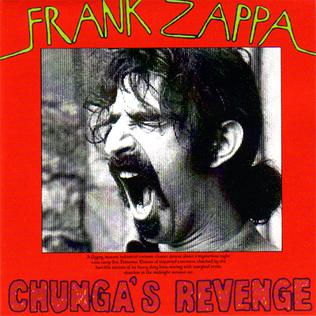


Frank Zappa – Chunga’s Revenge (1970)

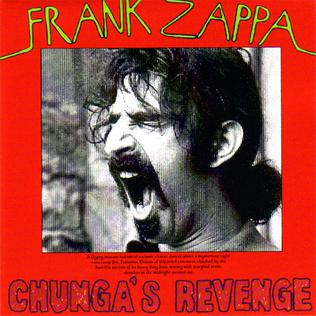
Frank Zappa - Chunga's Revenge

Zappa has a vast catalog. He’s one of those guys that produced so much for such a long time that, for generations, descendants of his family will be able to grab a quick buck by putting out yet another posthumous album of his unreleased material. So we’re talking around 60 albums released in his lifetime (many of them double-length), and another 50 albums released after his death in 1993 (many of them multi-disc boxsets), totaling hours upon hours of material. That being said, your brain now being inundated with such knowledge, let it be known that Chunga’s Revenge is possibly the single most middle-of-the-road offering in Zappa’s whole ding-dang discography. It sneaks in right before one of the lowest points in his career, it’s not steeped in controversy, it’s not (majorly) historically significant, it’s not a bad album, it’s not a great album, there’s no thematic continuity stringing the songs together, you won’t find very many live or alternate versions of most of these songs on other albums except for maybe “Sharleena”, and the project as a whole isn’t even weird or experimental. The iconic photo of Frank yawning on the cover alone saves it from total obscurity. If it were a big dumb picture of a turnip or something things might be different.

This is the first installment in a span of four albums featuring Zappa’s brand new band, an era dubbed by fans as the “Flo & Eddie years”. The only retainer from the original Mothers is the multi-instrumentalist Ian Underwood, but now we have George Duke on keyboards! George Duke is the man; a fan favorite, he’s one of the most esteemed and well-known members of the ever-changing Zappa collective (and he’ll be sticking around long after the Flo & Eddie years have passed, thank fucking Christ). Other members of this stretch are flash-in-the-pan alumni: Jeff Simmons on bass and Aynsley Dunbar on drums being the most significant to mention. Of course, there are the notorious Flo and Eddie themselves (Mark Volman and Howard Kaylan, respectively) who were contractually unable to use their own names after dissolving their earlier band the Turtles. Yes, those Turtles.

The circumstances are unknown as to how and why Zappa even cared to scoop these guys up and put them into the forefront of his band in the first place. The major controversy of this era comes primarily from the perceived complete hogging of the spotlight on Flo and Eddie’s part, and, yeah, kinda. Flo and Eddie were ragamuffin guttersnipes in their early-20’s (Volman is the big, fat one and Kaylan is the small, thin one) with annoying wiseguy voices that were indistinguishable from one another. They also had annoying faces and annoying personalities. They told crude, immature jokes and indulged in silly, tiresome antics. I would expect most Zappa fans to hate these big shot in-your-face characters because, hey, Zappa’s their guy! Who the fuck do these newbies think they are horning in on the action? Why should Zappa take a backseat to these dweebs? Maybe…just maybe…now hear me out…maybe Zappa wanted it that way because it was his goddamned band and he called all the shots? Hard to accept, I’m sure, because Zappa fans want to love everything he did and they can’t stand it when he made decisions that stir up some inner turmoil and conflicting feelings. Some will go as far as to say that they love the Flo & Eddie years! These people are not to be listened to when they voice their opinions.

Luckily on Chunga’s Revenge Flo and Eddie aren’t given much of an opportunity to ham it up. There are a few moments like the shouting during George Duke’s scat singing at the end of “The Nancy & Mary Music” that foreshadow the inherent obnoxiousness of their presence, and most of Side Two is cluttered up with their singing, but taken as a whole it’s not terribly distracting or unpleasant so there’s nothing to really get bummed out about. In small doses it’s ok; I think the end of “The Nancy & Mary Music” is the best part of the song! But that’s because of George Duke and not at all because of stinky Flo and stinky Eddie. Hence, and literally due to the reigning in of these two losers, Chunga’s Revenge is the greatest album of the Flo & Eddie years (even better than 200 Motels, suck it). This in of itself is the first example of its tepidness and unremarkable existence with respect to most of the rest of the Zappa catalog. The best album in the one of the most hated periods? Yeah, ok.

Now the second example of its tepidness and unremarkable existence: the Flo & Eddie years are notable in its deliberately stripped-down and straightforward approach. Gone for now are the free jazz improvisational mindfucks. Gone are the complicated, tightly-composed, and instrumentally diverse compositions. Even a lot of the biting social commentary has been thrown to the wayside. Here it’s back to basics. Here is a collection of by-the-book rock and blues songs and solos with not too many ambitions. It’s a very safe and accessible record, non-offensive to both fans and non-fans alike (especially with Flo and Eddie on a leash), but safe and accessible don’t gel too well with oeuvre of early-Zappa and the end product here is at worst forgettable and at best enjoyable in the moment.

With all that out of the way, I think I’ve taken enough of the piss out of the album. The real, legitimate piss, obviously. Just because Chunga’s Revenge is like the Billy Baldwin of Zappa albums doesn’t mean we have to treat it like it’s the Stephen Baldwin of Zappa albums, you understand? This is a decent album with a mixed bag of lounge instrumentals, crunchy solos, pop tunes, humor, and a little bit of blue-collar white soul. The first track, “Transylvania Boogie”, sounds like a throwback to the raw and bluesy early-Mothers badassedness. More soloing of this ilk, albeit mellowed out, can be heard in the title track. Then you’ve got the autobiographical old-school blues tune “Road Ladies” chronicling life on tour and the, uh, nefarious sexually transmitted diseases that accompany such a life (“Don’t you better get a/Shot from the doctor/What the road ladies do to you“). The logical follow-up to “Road Ladies” several tracks later is, of course, “The Clap”, featuring Zappa himself banging all manner of percussion instruments. Venereal disease is a big theme for Zappa. I think he found it quite funny that all his band mates spent their downtime LEWDLY FUCKING during tours. He had the sense of humor of a 10-year-old, you see.

What else we got here? “Twenty Small Cigars” sounds just like a holdover from the Hot Rats sessions. Because it is! In fact, it sounds very much like “Little Umbrellas” off of that album: a smooth and pretty piece of tightly-constructed cocktail lounge jazz. It cuts suddenly after 2:17 mark, so I’m guessing that the piece either segued into an improvisation that we will never know about, or all the band members suddenly and immediately died! The previously mentioned “Nancy & Mary Music” is the album’s big slab of driftwood that’s floundering around the middle of the tracklist, ponderously trudging along on a few go-nowhere solos lifted right from a live version of King Kong (which can notoriously run up to 30-40 minutes in length during live performances). Needless to say, good luck getting it to grow on you overtime. Here the highlight is the final minute or so of George Duke going nuts and the rest can suck a hell dick.

The vocal tunes of Side Two are good, no question about it. The hard rock “Tell Me You Love Me”, the deceptively complex and stylistically diverse “Would You Go All the Way”, and the old-timey, vaudevillian “Rudy Wants to Buy Yez a Drink” are all fully adequate efforts in hook-laden classic rock (I say that like Zappa is pretending to be a rock musician). The melodies are so good even Flo & Eddie don’t ruin it with their falsetto “Big Girls Don’t Cry”-esque deliveries. And then, of course, the doo-wop “Sharleena” closes out the record with a genuine and loyal send-off.

There’s an excellent album to be unearthed here among the rubble, but Chunga’s Revenge is too loaded up with filler to be hailed as a classic. And, honestly, the few songs that actually do become concert mainstays like “Sharleena” are presented elsewhere in the catalog as better and more interesting live versions. Don’t listen to it now. Listen to it eventually. But not now. There’s better things to listen to now. But listen to it eventually. But not now.

JUST OK

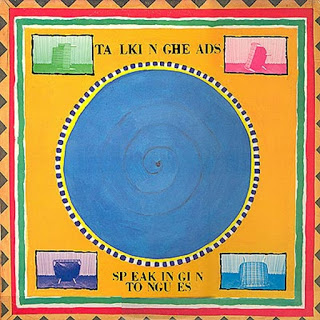
Talking Heads – Speaking in Tongues (1983)

I’ll preface this one with a bold opinion: Speaking in Tongues is not as good as everyone says it is.

Wait, shit, I already made this claim with More Songs About Buildings and Food to much greater effect. Not only that, but More Songs… is a much more controversial album to make such a claim about! Who cares if I say it about Speaking in Tongues, Talking Heads’ fifth studio album and their biggest commercial success to date? No one’s going to argue too vehemently with that, because music trends overtime have proven Talking Heads’ lack of cultural relevance starting around, oh, 1984 after their critically acclaimed concert film Stop Making Sense was released. The problem with Speaking in Tongues, predating the decline, is that it’s the first shift in tone toward funk, soul, and world music, making it naturally the first shift away from art-punk and, more importantly, the first shift away from the full-frontal neurotic overthinking and paranoia we’ve come to know and love from the Heads. So why not judge the album based on its musical merits instead of commenting on the shift and lamenting the final product just because it’s not entirely what’s expected from the band? You got me! But not really. This album is just not interesting enough held up by its own weight to maintain lasting power, IN MY OPINION. I think Speaking in Tongues is packed to the gills with filler and lukewarm musical ideas. I think half of the tracks are overlong and meandering. I think the diversity is lacking in a bigger way than usual. I think that overall, the whole thing is…just ok.

Maybe I’m wrong? Maybe it’s just me? I honestly don’t understand the major mainstream appeal of this record. It’s almost as if everyone bought it to get “Burning Down the House” and “This Must Be the Place (Naive Melody)” in one package (two fantastic songs that bookend the album) and aren’t bothering with the rest? Granted, both those songs were immense hits and “Burning Down the House” was the Heads’ highest charting single, so perhaps the momentum of these two songs really did drive the commercial success of Speaking in Tongues? I really don’t know, but I have a hard time believing that any human being could unconditionally love all nine tracks on here, and that’s coming from a big ol’ David Byrne-fellatin’ fanboy such as myself. Speaking in Tongues and Trues Stories are the two in my collection that get the least amount of spins, no doubt about it. And people HATE True Stories, so that should clearly express how I feel.

That said, I don’t hate Speaking in Tongues. It’s not a bad record. It’s competent and enjoyable enough, it won’t be offensive to your aesthetics, Grandma isn’t going to complain if you’re playing it in the car, it’s aged perfectly fine over the last 35 years, it’s…it’s just ok. I’ll address and expound upon a couple of earlier gripes that might be unfair:

1) overlong and meandering song lengths. It has suddenly come to my attention that my CD version is seven minutes longer than the original LP version, with five out of the nine tracks presented as “extended cuts” and three of these tracks tacking on up to 90 seconds of additional material. I’ve never heard the LP version of the album, but I’d bet both my large dick and my large pussy that “Girlfriend is Better” did NOT need its already-laborious coda drawn out even longer than it already probably was. As it stands, every track between the first and the last breaks the 5-minute mark and a lot of it is unnecessary vamping. I’m sure the LP version would dissolve this perception and I wouldn’t be so harsh, but the CD version is my only frame of reference.

2) lacking diversity. I mean, every Talking Heads album lacks diversity. Between albums, not at all. Within albums, though, hoo boy. This is the Heads’ swampy funk album. Riding off the high of Remain in Light, the band agreed to continue pursuing the afrobeat and deep African funk they had touched upon previously as far back as “I Zimbra” from Fear of Music. For the most part, they play it straight this time. No Brian Eno anymore, so undoubtedly a whole slew of electronic flourishes could’ve been present on the record in an alternate universe where Eno didn’t go on to start producing U2 albums instead. As a result, Speaking in Tongues is less new wave-y than the usual fare but the electronics are still there, albeit toned down. Minimalist songs like “Slippery People” and “Pull Up the Roots” still have their share of synths, but blame the ’80s for that. Otherwise, these are some funky tunes crafted with some deliberate sense of genre authenticity, eschewing the punk attitude almost entirely (at least on a surface level) but leaving a little bit left to give it a small disco dance vibe and still, undeniably, Talking Heads. Can’t fault them too hard on “lacking diversity”; it’s synonymous with “maintaining consistency” and we know the band had been capable of mastering several distinct styles. However, here it all gets a bit similar-sounding in the middle, leaving one’s mind to wander during the rhythmic hypnosis. Repeated listens don’t help a great deal.

3) filler and lukewarm musical ideas. This one is entirely fair, sorry.

Let’s talk about what’s good, though. Byrne is in regular form, still singing in his stilted Talking Heads way and not in his crooning David Byrne-solo career way, but he’s relaxing a bit. He sounds more jaunty and less twitchy. Crazy me, it almost sounds to my ears that he’s having fun! “Burning Down the House” is worthy of its status as one of Talking Heads’ most popular and acclaimed songs. It’s a perfect opener with unparalleled catchiness, and some of the last vestiges of true nervous mania in the Talking Heads catalog can be heard here (vestiges they are, too; this ain’t “Memories Can’t Wait” or “Psycho Killer” anymore). I dare you to get “I’m. Just. An. Or-din-a-ry. Guy./BURNING DOWN THE HOUSE” out of your head. You don’t need me to tell you any of this, you’ve heard the song before already, right? The appeal of “Making Flippy Floppy” is probably due to its position in the tracklist; I don’t believe it would come across as interesting sandwiched between “Swamp” and “Moon Rocks”, but it’s hard not to tap your foot to one of the album’s better beats. The instrumental section is reminiscent of Remain in Light‘s “Houses in Motion” with a little bit more a seductive, dark energy. “Girlfriend is Better” is also a decent tune, long-ass coda notwithstanding, and contains that famous “Stop making sense!” lyric.

After the first three songs you might not find much to get too excited about until “This Must Be the Place (Naive Melody)”, but brilliance and unexpectedness is still peppered throughout if you’re paying enough attention. Usually, you’ll find that the solos during the instrumental passages come with a slightly experimental bent, serving as a respite from the underwhelming and low-energy dance beats. Even Weymouth’s funky bass isn’t able to carry all the burden. “Swamp” is cool enough, though, as an attempt to get that momentum going again with a gritty swagger, some hilarious, unintelligible “old fat black blues guy” muttering at the beginning, and an infectious hook in the chorus (“Hiiiiii/Hi Hi Hi Hi Hi!“…kinda hard to express in writing, I suppose). Other than that, the Heads haven’t given me too much to praise about the other four tracks, which range from lackluster pseudo-gospel (gospel-fusion?) to murky, robotic afrofunk. “This Must Be the Place (Naive Melody)” is likely the first instance of the band creating a genuine emotionally uplifting song without a hint of snark or tension that works very well. Take the opening verse, “Home is where I want to be/Pick me up and turn me around/I feel numb, born with a weak heart/I guess I must be having fun“. Minor-chord that fucker up a little bit and it would be depressing, but the sheer jubilance of the melody keeps it from coming a. Byrne even croons a little!

Speaking in Tongues seems like a deliberate step back from a band who wants to do what they want to do on their own terms and ONLY their own terms, so I can’t give them too much shit for missing the mark when I don’t even believe they were aiming for the mark in the first place. It’s a transition album in terms of creative outlook, but aren’t all the Talking Heads albums like that? Always looking forward and never looking back? In this case, though, the stubbornness of their momentum is probably turning off a lot of old fans who love the Heads for their new wave post-punkiness, and the new wave post-punkiness is waning quickly! Quick, bail now before we get into Little Creatures! You might end up liking it!

JUST OK

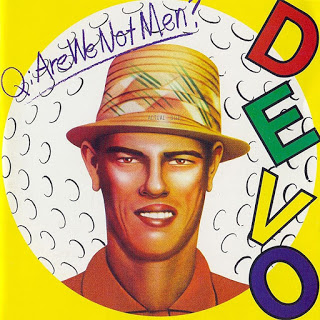
Devo – Q: Are We Not Men? A: We Are Devo! (1978)

Before there was Weezer and Tenacious D, before the Aquabats or They Might Be Giants or Thomas Dolby–hell, before there was even “Weird Al”, there was a band who encapsulated the guilty pleasures of pure, unadulterated geekdom so confidently, so fearlessly, that the future of music would forever be irrevocably shaped. Definitely moreso than by nerd contemporaries like Rush (goddamned obviously) and, arguably, Elvis Costello. I’m talkin’ ’bout Devo, my friend. Devo is more fuckin’ punk than actual punks.

And I’ll tell you why Devo are punks: their whole schtick revolves around the concept of “de-evolution” – that humanity is actually regressing – that humanity are all sheep. They want to throw it in our ugly faces that mankind is getting stupider by the second. That’s pretty punk. However, they wear silly costumes and fill their songs with synthy sci-fi noises and sing in goofy voices, so the outward punkness is undercut to the point where you might not want to admit to people that you listen to Devo. But don’t be ashamed! We’re all out there and we’re proud! Don’t wave them off just because of their flamboyant one-hit wonder “Whip It”, Devo is honest-to-God a really good band…at least in the beginning. They get really bad as the ’80s progresses. Perhaps it was an elaborate meta-commentary of their “humanity is regressing” schtick? Probably not. At least their 2010 comeback album was decent, but I’m getting ahead of myself.

FIRST A LITTLE HISTORY: Before it was even conceptualized as a musical project, the idea of “de-evolution” was illustrated in various collaborated art projects during the late ’60s between Gerald Casale and Bob Lewis, who were buddies at Kent State at the time. This idea was even further exemplified, and thus heightened, by the famous Kent State massacre in 1970 (one of the four murder victims was Casale’s friend). Mark Mothersbaugh, a fellow Kent State student, caught wind of this project and joined their team. The project culminated into a musical outfit by 1973; the name “Devo” coming straight from the “de-evolution” idea.

So, yeah, the real takeaway here is that Devo comes straight out of podunk Ohio, and there’s a certain air of midwest aesthetic positively exuding from them so it shouldn’t come to much of a surprise. Between 1973 and 1978, a slow burn of adding members, members quitting, and small potatoes gigs here and there, led to a happenstance of getting discovered by David Bowie and Iggy Pop. They pulled some strings, got them a record contract, and requisitioned Brian Eno to help produce their debut album Q: Are We Not Men? A: We Are Devo! See what 10 years of hard work will get ya? By the time of their debut, personnel consisted of Gerald Casale and his brother Bob, Mark Mothersbaugh and his brother Bob, and Alan Myers on drums (it is unclear at this time whether or not Myers had a brother named Bob). Bob Lewis likely ended up quitting because the Bob-factor was reaching critical mass.

If all you know about Devo is “Whip It”, the guitar-heavy keyboard-light angular post-punk rawness of Are We Not Men?… will come as a bit of a shock. In fact, it’s not even too nerdy at all on the surface. This stuff kind of sounds like the Buzzcocks or Wire or some other respectable, pouty-faced, sneering and brooding over-educated British band populating the zeitgeist at the time. Once you delve a little deeper, and not by much, you’ll find that Devo has more humor weaving in and out of the crunchy guitar riffs and oddball time signatures than any of those bands combined. Almost annoying so! One of the best hooks in the whole record happens during the chorus of the first track “Uncontrollable Urge”: apparently, the beginning lyrics of the third phrase goes “It’s got style/It’s got class/So strong/I can’t let it pass” but you’d never even tell because a loud, dorky voice goes “NYNE NYNE NYNE NYNE NYNE NYNE NYNE NYNE” over the whole thing! It’s the touches like these the undermine the artsy and brooding sulkiness of their contemporaries on the other side of the pond, or even the intellectual snobbiness of their New York counterparts like Television or Talking Heads. They capture the sound and maintain that aw-shucks small-town-America sensibility that makes them accessible, and I believe this is why a band like Devo would be so appealing to the conservative geek demographic. All those naysaying reviews online that complain about the lack of warmth in the production and the methodically robotic melodies can suck it, too, because the heart comes through just fine in all of these tracks. The relative lack of synths help here for sure, because they’re going to ramp it up in that department for the rest of their career afterward (but you know that already).

My main gripe about Are We Not Men… is that it’s another rare instance of Side B being more enjoyable overall than Side A. My opinion, of course. This album shares this trait with Talking Heads’ debut Talking Heads: 77, although on a much less severe scale. Talking Heads: 77 is top-heavy with similar sounding tracks whose melodies aren’t strong enough to feel incredibly essential, Are We Not Men… is top-heavy with songs that have strong melodies that just lack in sonic diversity. As a result, first-timers may not find much too thrilling about the record until they get to “Gut Feeling / (Slap Your Mammy)”, which offers a slow-build krautrock-type experience escalating into a full-on swirling synth jam before the first lyric even drops halfway through. After that, “Come Back Jonee” and especially “Shrivel Up” barely have vestiges of punk rock influence. “Come Back Jonee” sort of sounds like a new wave Jerry Lee Lewis, with phrases of rockabilly guitar peppered throughout. “Shrivel Up”, the closer, is a huge unexpected curveball: G. Casale drops the goofy voice affected on the rest of the record’s tracks and adopts a quieter, more sinister delivery to match the off-putting, very un-Devo-like anthem of unbridled paranoia that’s possibly about PENISES maybe? It’s a very good song; kinda has that Oingo Boingo demented carnival vibe that you’ve assuredly already read about on my blog before, eh? If nothing else, it’s a display of Devo’s range. It’s not all hyperactive, goofy punk parody, although I don’t think anything else Devo ever did is as slow and unnerving as “Shrivel Up”.

Bringing it back around, there’s not a bad song on here. The closest thing to filler, arguably, is “Too Much Paranoias”, possibly because it’s sandwiched between the great “Jocko Homo” (the nexus of their whole de-evolution philosophy in one compact song; the catchy chorus includes the title of the album) and the great “Gut Feeling”. Other than that, you have a handful of enjoyable and unique dance-punk tunes, as well as the most oddball Rolling Stones tribute ever conceived with Devo’s re-imagining of “(I Can’t Get No) Satisfaction”, replete with awkward jerkiness and self-aware Kraftwerkian methodical coldness, Novelty music this all may be to stuffy types who care more about how their musical tastes are perceived by others than actually, you know, enjoying music, but I don’t really think I need to go on the defensive any further, right? If there’s any one Devo album to check out for your own damn self, this one is it. Your mileage will vary with the rest, honestly, but you might surprise yourself once you realize you’ve become a hardcore Devo-tee! HA HA! HA! HA!

Final comments: It helps that Devo were doing their thing and honing their sound for such a long time before Are We Not Men… made it out to the world. I strongly believe that this album is the best piece of work they would accomplish. If they didn’t pump out a brand new album every year for the next four years and actually took a little more time to refine their work they would have created something that rivaled their debut. That’s what I would say if I actually believed it, but taking some extra time didn’t work for them AT ALL in practice and their three worst releases are tangible proof (Shout, Total Devo, and Smooth Noodle Maps), so I think my stance about their post-Are We Not Men… career is fairly well-founded. VERY GOOD duly deserved in this case, but they certainly won’t get another one on my watch.

VERY GOOD

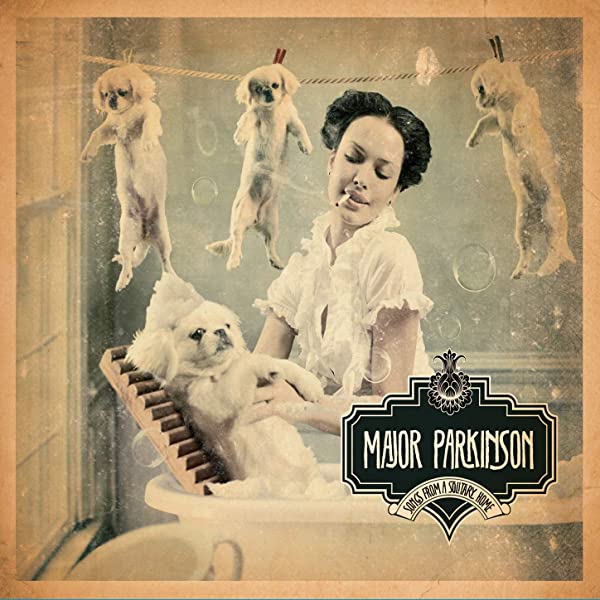
Major Parkinson – Songs from a Solitary Home (2010)

Let me tell you a story about how I even stumbled upon Major Parkinson in the first place. Back in my Mr. Bungle-obsession days of late-college/early-real-life-of-crushing-reality-and-unemployment circa 2011 I was yearning for any and every band that was associated with or similar to the schizophrenic Mike Patton outfit. THROUGH THIS AVENUE the discovery of That Handsome Devil, a unique and fun band of gritty, smelly-looking ne’er-do-wells, led me to delve further into the rabbit hole to find more bands of its kind. A fellow internet person who uses the internet like all the other internet people recommended to me Major Parkinson and Foetus, two bands that sound nothing like each other and barely sound like That Handsome Devil. But that’s ok, because it turns out that Major Parkinson is way better than any band listed so far in this review.

Sorry for making you read that. My point is that I had to follow a twisty and turny path to even be aware of the existence of  Major Parkinson, let alone find myself listening to them. It’s a damn shame that they’ll never be hoisted out of obscurity and recognized as a gem among crazy Scandinavian alt/prog rock, but meh. You know about them now, so I’ve done my due diligence. Songs from a Solitary Home is the sophomore release from this crazy band of lovable Norwegian misfits. The revolving door lineup means they likely have dropped and added some members whose names have O’s with lines through them. This is very much a transition album and serves as a very logical snapshot of the band sitting on the fence between the rambunctious and angular avant-pop punk of their self-titled debut and the mature, progged-out, atmospheric, and ambitious efforts of Twilight Cinema and their new album Blackbox. You’ve got semblances of the raw and gritty DIY aesthetic from the debut, as well as the inclination to craft an album’s worth of songs with reasonably inoffensive lengths and pop-sensible structures. You’ve also still got Jon Ivar Kollbotn belting out subtly sarcastic nonsense with the emotional outpouring of a tortured soul and the raspy voice of a cabaret rhinoceros in heat. Major shifts in style begin here: these guys obviously have a fondness for ’70s progressive rock, because a lot of that influence begins to creep in. Melodies are more layered and refined, instrumentation is more varied, the songs themselves are more diverse and the oddball genre-hopping is far more rampant, even within one song. Restraining themselves to the format of a pop album, among other self-conscious decisions, certainly helps reign in any possible threat of over-indulgence. Every less-talented band with a similar fondness for the most decadent period in rock history would’ve gone balls to the wall on Album 2 and fucked up royally. These guys know what they’re doing.

Just like with their debut album Major Parkinson, I’m going to gladly refrain from trying to decipher the obtuse lyrical poetry scattered all over the record like shit crackers in a bowl of delicious minestrone soup. On the plus side, with this band it’s effortless to treat the vocals like just another instrument in the mix. The gruff timbre of Kollbotn’s “singing” fits perfectly with the rest of the musical atmosphere, no need to really delve too deeply into the meaning behind the words. It’s more fun to tune it out and process the random snippets hitting your ears anyway; phrases like “Humphrey Bogart” or “Simone!” or “67 INCHES!” out of context are what make the experience magical.

Song styles range from warped surf rock (“Teenage Mannequins”) to meek, piano balladry (“Card Boxes”) to hyperactive modernized ragtime (“The Age of  the Paranoia”) to traditional old-west-saloon ragtime (“Downtown Boogie”) to bizarre and slow Eastern-tinged marches (“Ecophobia”) and everything else in between. “Ecophobia” itself is a solid album opener, with its foreboding and unpredictably restrained mid-tempo progression, and a driving (and pretty and jangly and seductive) melody that could make your skin tingle. Halfway through a cool little snare drum cadence kicks in. And the way Kollbotn sings “No one wants to die alone” like a high-pitched serpent adds an extra layer of ethereal creepiness to this already-unique song. Once “Ecophobia” ends, “Solitary Home” starts up with a familiar raucous, jangly off-kilter energy one would expect from Major Parkinson. And all is well with the universe.

Part of the appeal of albums like these is that they’re designed to be impossible to be taken too seriously and yet nothing comes across as immature or half-assed either as a compromise. For example, try not to think about Cookie Monster when listening to cartoonish and playful “Dance with the Cookie Man”. To make it even more self-aware, the inappropriately suggestive lyrics dare you to not to think about Cookie Monster. It’s not even about Sesame Street in the first place, man! And while you’re reveling in discomfort, suddenly a gorgeous piano coda at the end brings you back to reality and you’re in awe all over again. Another throwaway bit I adore is the progged-out synthy solo in the middle of “The Age of the Paranoia”. Not only is it totally campy beyond good taste, sounding like a pitch-perfect indulgent Keith Emerson keyboard exercise during ELP’s worst years, it also very much sounds like the backdrop of Rod Roddy telling you to COME ON DOWWWWWNN during The Price is Right. So what makes this corny quasi-parody any better than the real deal? What’s the real difference between Major Parkinson and Emerson, Lake & Palmer? Well, fuck, I really don’t have to explain it, right? Isn’t it funny how the fine line between worst excesses of prog rock and best examples of parody that are indistinguishable from the worst excesses of prog rock is just the artist’s genuine projection of their arrogance and/or sense of humor? Not to bash ELP unprompted, but come on. Those bitches were smug and unfunny. Plus, to Major Parkinson’s advantage, time can temper the most awful of musical fads. Disco is cool again with the indie kids, haven’t you heard?

While the entertainment factor is a notch above the debut (in my opinion), Songs from a Solitary Home suffers from being burdened with a few weak tracks that slow the pacing at the end to a crawl. The energetic climax of the album appears to be the nervous carnival punk-metal piece “Trampoline Superstar”, which is immaculate in its brevity and its tangible paranoia with a catchy riff to boot. After that it’s a denouement of tracks that don’t ever get as exciting again. “Downtown Boogie” is cute, but that’s about it. “Heart of Hickory” has a cool swashbucklin’ accordion intro and chorus with some interesting male/female vocal interplay, but man is it such a normal and positive-sounding song with nary a tense moment to be found. “Adville” is a slow rocker and meant to be an emotional penultimate offering, and within the context of the rest of the record it draaaaags. Not only that, but the emotion just isn’t there. Or I don’t buy it. Either way it’s one to skip. “The Transient” brings it back up with a jaunty, yet somber, acoustic number to close the record on a, er, uplifting note? I’ll leave you with the final verse of the song: “Suicide is painless in the town where I was born/Life became a suffocated way to block the world out from our own/Upon the carousel that no one wants to ride/We carry piles of smiles and joyful happy moments/In a maze of blazing colors of our lies“. Looks like I should have kept refraining from talking about the lyrics, huh?

Pretty much as good of a transition album as one could hope for. I like that the band is comfortable stretching out beyond the confines of, you know, genres, and are taking advantage of their clear musical talent in almost all respects. Lyric writing not so much, but chalk that one up to Norway. ‘Nuff said. GREAT NEWS FOR EVERYONE WHO HAS JUMPED ONTO THE MAJOR PARKINSON TRAIN: the band has only begun to hit their stride. The better stuff is still yet to come.

GOOD

Frank Zappa – Weasels Ripped My Flesh (1970)


Go back and read my review of Burnt Weeny Sandwich before continuing, because 1) I certainly had to, considering I wrote it over three months ago and I needed a refresher on the spew that I deemed adequate for publishing, and 2) Weasels Ripped My Flesh is its companion album and a lot of the backstory would be repeated. You certainly don’t need to have heard one album to enjoy the other, but a little background is recommended in order to fully appreciate their similarities and differences and enjoy the project as a cohesive whole.

I use the word “project” loosely. Not to reiterate the Burnt Weeny Sandwich review too much because you just reread it (right?), but this album is nothing more than some cutting room floor scraps of older, unused Mothers of Invention material. While Burnt Weeny Sandwich covered mostly studio tracks, Weasels Ripped My Flesh covers mostly live recordings. In both cases, it’s the last real showcase of the original Mothers that we’ll get for a good long while, but as fed up as Frank was with this band it sure is apparent that he was proud of his accomplishments with them with these archival releases.

Seasoned Zappaphiliacs will readily advise the casual pursuer with caution that this is the most inaccessible Frank Zappa album in the catalog. OoOoooOOOoooOOOOooh, scary. Not only can I think of a handful of albums that are even less accessible (The Yellow Shark, Civilization Phaze III, Playground Psychotics, Dance Me This, Orchestral Favorites, Thing-Fish), but I think going into Weasels Ripped My Flesh on your guard with this knowledge is either going to put you on the defensive (“This stuff ain’t fuckin’ complex, son”) or it’s going to scare you away completely (“AAAAHHHHH, son”), depending on your approach. In either case you’re not even enjoying it anymore. Don’t listen to anybody’s advice! That’s my advice. So let me advise you on how you should react to being advised about this album: Tell the adviser to shove it. When I bought this album 12 years ago I had already heard all the warnings and my approach was purely analytical. Let me set a couple of things straight:

  • Almost half the album contains straightforward music that can be recognizable as tunes with melodies to even the most sheltered of Justin Bieber fans. Tracks 2, 5, 8, 9, 10, half of 4, and half of 7 constitutes roughly 18 minutes of music accessible to anybody. On top of that, the other half of Track 4 and the entirety of Track 6 contain music that, while challenging, is unmistakably categorized as “music” by loose definitions. That leaves Tracks 1, 3, 11, and half of 7 that even I will (begrudgingly) label as “noise”. Fine. That’s barely 13 minutes, though, so I hardly consider this something to frighten away the open-minded individual.
  • Almost all of it is enjoyable noise. Track 11, the title track “Weasels Ripped My Flesh”, is the only honest-to-God two minutes of the album that is not worth anybody’s time. It’s a live recording of Zappa subjecting the audience to about a minute and a half of pure guitar feedback and then saying “Good night boys and girls, thank you for coming to our concert.” The rest is the applause fading out. The track serves to show what a typical Zappa audience is willing to withstand, but little else.

With that out of the way, I will admit that this album is a grower. I honestly don’t remember being entirely thrilled by it the first time through because it truly does sound like a collage of unrelated bits. Because it is. After a few listens, though, it’s surprising how unified the whole album sounds. Since everything is rooted in blues and jazz traditions, even the most out-there sections (minus the guitar feedback), the overall package doesn’t sound incredibly diverse anymore by today’s standards. It must have been at the time, though, but I wouldn’t know. I’m not 85 years old like every other Zappa fan! Yikes!

Let’s start with the challenging stuff. “Didja Get Any Onya?” is the very first track and it doesn’t spare the weirdness right away. Manic drumming in 7/8 time with screeching, guttural blasts of brass are the first sounds you hear. Then silence. Then brassy bleats followed by inexplicable high-pitched “MOO-AHH”s from one of the band members. Then more odd drumming and jazzy excursions. Then a bizarre monologue in a German accent. Then more odd drumming and jazzy excursions. Then more “MOO-AHH”s. Then it’s over! I guess if you don’t get a thrill out of weirdos being weird on stage, “Didja Get Any Onya?” will prove to be a major 7-minute slog, but I think it’s funny! More antics of a similar achievement occur in “Prelude to the Afternoon of a Sexual Aroused Gas Mask” that turn out to be very humorous as well (“Blow your harmonica, son. *snork snork snork snork snork*“). In my opinion, finding the humor in the abrasiveness is the first step toward appreciation. I mean, it’s meant to be funny too, so that helps. On the plus side, the rest of the album is a cake walk after these two, so ease up homie.

BUT WAIT, don’t let me skip over the bluesy and straightly-played cover of Little Richard’s “Directly from My Heat to You” that’s sandwiched between the above-mentioned tracks. Don “Sugar Cane” “Sexypants” Harris tears it up on his electric violin in ways that would make an ice road trucker blush! I’ve never heard the original tune, but I imagine that this version is more ballsy and aggressive and less “Tutti Frutti, aw rooty, A-WOP-BOP-A-LOO-BOP-A-WOP-BAM-BOOM” if you catch my drift.

I’d lump “Toads of the Short Forest” and “Dwarf Nebula Processional March & Dwarf Nebula” into the same category. Both start out pretty and unassuming. Both end nasty and alienating. The first half of “Toads of the Short Forest” is a tightly-composed bit of folk rock that’s so conventionally melodious and pleasant that the jarring (on purpose) transition halfway through is almost upsetting. At that point, you’re plunged into the middle of a live free jazz freakout. At some point Zappa talks over the band: “At this very moment on stage we have Drummer A playing in 7/8, Drummer B playing in 3/4, the bass playing in 3/4, the organ playing in 5/8, the tambourine playing in 3/4, and the alto sax blowing his nose.” The source material has questionable quality, so I personally can’t hear the organ. I can vouch for the sax guy, though, he’s really laying it on. “Dwarf Nebula Processional March & Dwarf Nebula” is an odd name that at least hints at the song’s two-facedness. Less pretty than “Toads…”, “Dwarf…” is an atonal jam laden with electronics and featuring some Eric Dolphy-esque flute and clarinet flutters before launching suddenly into a complete fest of avant-garde electronic noise. Surprise!

Speaking of Eric Dolphy, “The Eric Dolphy Memorial Barbecue” is a slow-paced drone-jazz number that is, what I can only imagine, a, uh, loving tribute to Dolphy? It doesn’t even sound like Dolphy! Grrrr! The name itself is probably a sarcastic self-aware jab, as in “let’s honor this great contributor to modern music with a song that has nothing to do with him and call it a barbecue, thereby making it sound self-fulfilling”. Zappa was a big Dolphy fan, though, so perhaps he’s making fun of people who create their own self-fulfilling memorial barbecues? Those people need to get knocked down a peg for sure. Anyway, at about seven minutes this piece never moves enough to justify its length, but the sinister undertones keep it from becoming a disposable track taking up valuable real estate in the middle of the record. Kinda like a real barbecue, you don’t really want to show up to it but you’re happy enough that you did. How’s that for a Dolphy tribute?

All that leaves (besides “Get a Little”, which is merely a pleasant, semi-soulful Hendrix-ian wah-wah guitar jam) are the really good tracks. All three are in succession. It begins with “My Guitar Wants to Kill Your Mama”, which is my personal pick for “single that should have been a hit”. I mean, seriously, “Valley Girl” was Frank’s highest-charting single of his career and “My Guitar…” didn’t even make it? It’s sickening. It’s truly one of the best songs the guy ever wrote; catchy as fuck, gritty enough to give the 1970-era Rolling Stones a run for their money, and dripping with teenage angst! The lyrics are just dumb enough too to be a hit in the charts (“My guitar wants to kill your mama/My guitar wants to kill your mama/My guitar wants to burn your dad/I get real mean when it makes me mad“), but alas. Pay special attention to that un-Zappalike instrumental bridge, it’s all folksy and shit. It’s fantastic! “Oh No” you might recognize if you’re an avid Lumpy Gravy aficionado. It has lyrics this time around, so now it actually wouldn’t sound out of place among the other cynical garage love ballads on Freak Out! Check this phrase out: “You say love is all we need/You say with your love you can change/All of the fools/All of the hate/I think you’re probably out to lunch” Bashing the Beatles with an Eric Dolphy reference! Yow! Finally, a smooth transition into “The Orange County Lumber Truck” yields an excellent acid-blues jam that cooks. I could hang onto it for 10 minutes longer than its meager three-minute run time.

Between Burnt Weeny Sandwich and Weasels Ripped My Flesh, I’ll take the former due to the higher volume of, uh, actual music that holds up better after multiple listens. I love them both, though, and Weasels Ripped My Flesh made a bigger overall impact from an “eye-opener” standpoint once I warmed up to it. It certainly yielded more critical response than Burnt Weeny Sandwich did just from the sheer “what the fuck” factor. If nothing else, Zappa finally proved to the public with this one that no holds will be barred. Nothing after Weasels Ripped My Flesh will hit quite the same way because this release solidified Zappa into the realm of “predictable in his unpredictability” forever. Ah well.

GOOD