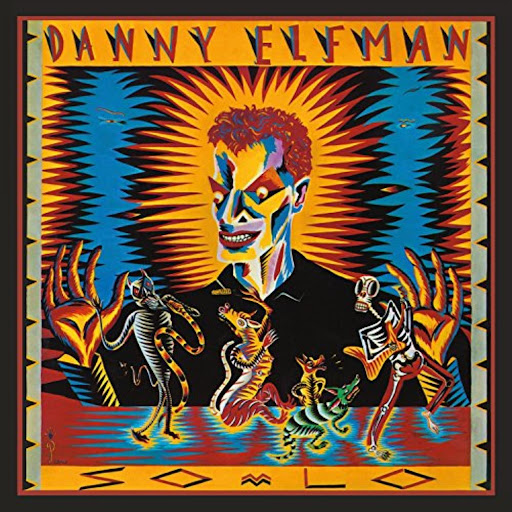
Oingo Boingo – So-Lo (1984)

An anomaly in the catalog! The long lost Oingo Boingo album! The missing link between the distinctive periods of early and late Oingo Boingo! Yoingo hoingo roingo toingo! Please let me die.

So-Lo is officially billed as a solo Danny Elfman output, but for every intent and purpose it is entirely recognized as a a full-fledged Oingo Boingo album. Hell, the irony here is that they actually added personnel: the inclusion of Paul Fox on synthesizers brings the head count up to nine. So-Lo was released under Elfman’s name instead of the band’s name due to record label disputes, but it’s apparent that Elfman was aware of this dispute well before production because it is cited that he used this as an opportunity to depart stylistically from previous efforts and experiment with a different sound. Less emphasis on ska, more emphasis on synths, toning down the wild and erratic mania a notch, and slowing down the tempos. This is in unabashedly a synthpop album from 1984 so it is hilariously dated, but Elfman’s aesthetic and recognizably unique voice at least prevents So-Lo from sounding generic and, therefore, disposable. I can’t make a case for essential listening either, so anybody who has no idea of this album’s existence isn’t missing out drastically. Or anybody who does know about this album, for that matter. That includes you now! Spoiler Alert: I’m gonna assign a “Good” rating to this one, so use that information as you will and do whatever the fuck you want ya turkey, I don’t care.

Only the most loyal of fans were even aware of this album at the time, and since Danny Elfman actually did start putting out solo material around this time exclusively as a composer credit for movie soundtracks I imagine So-Lo got lost in the shuffle quite readily (especially since the overlap of the Oingo Boingo/Danny Elfman soundtrack fanbase Venn Diagram is the size of a needle point). Likely, the advent of the Internet brought a lot more awareness to So-Lo‘s existence and long-time fans who had bothered to dip back into the past and uncover this artifact for themselves were pleasantly surprised to hear the missing link between Good for Your Soul and Dead Man’s Party. Not only is it literally a link, being the album sandwiched between them chronologically, but So-Lo actually sounds like the logical checkpoint along the way of the main path from the high-energy Good for Your Soul to the restrained, mainstream appeal of Dead Man’s Party. Almost impressive in hindsight, it’s as if someone told the band 20 years later to make an album that fit seamlessly into the timeline. But they didn’t. So it’s not impressive.

Because this is 1984 we’re talking about, tastefulness is at an all-time low during this era of radio-friendly contemporary music and So-Lo is absolutely packed to the gills with schmaltzy electronic synthesizer decadence. It’ll hit you full force immediately on the opening track “Gratitude”, where the first few bars sound like a robot pounding on a carnival organ filtered through PVC piping, but in a wonderful way! Not in a bad way like you’re used to with this kind of situation, you know? But to the untrained ear of the person who waves off any and all ’80s music as atrocious, this album doesn’t really help the defense. Songs like “Go Away” and “The Last Time” are even ballad-y, which adds more packets of Sweet’N Low to the mix. The only thing that stops even me from considering this as expendable ’80s dreck is my unwavering Oingo Boingo fanboyism! That is to say, Elfman’s one-of-a-kind personality is all over this record and keeps it from plunging into the enormous cesspool of forgettable pop mediocrity, at least in my opinion. This album is indeed forgotten-as-fuck, though, so maybe I’m being too nice.

Synth hell aside, the melodies are as strong as ever. The aforementioned “Gratitude” has more hooks than some pop artists have in their entire discographies, complete with layered choruses and distorted guitar breakdowns. Two other album highlights with similar energies are “Tough as Nails” and “Lightning”, the former being a Eastern-tinged number with upbeat, skankin’ horns, and the latter being a classic nervous and paranoid Boingo song (really the only one on the record, which makes sense because it was originally slated to be part of Good for Your Soul).  Others range from forgettable at worst to enjoyable at best: “Cool City” has a dumb name and the whole attitude of the song smacks of weenie wiseguy-machismo. The lyrics don’t help either (“The blacks they all hate the whites/COOOOOOOL CITY/The whites think they’re tough but they’re not/COOOOOOOL CITY“), but it has a solid melody to keep it from being a total disgrace. “It Only Makes Me Laugh” is a slightly embarrassing take on some straightly-played 2 Tone ska/new wave, but, again, the melody reigns supreme and it has just the bare minimum amount soul to be convincing enough (“I-I-I-I-I don’t know why I feel this way/I don’t know if it’s right or wrong/To laugh at misfortune/Darkness can never last too L-O-O-O-O-NG!“, pfffffft). Both “Sucker for Mystery and “Everybody Needs” do not have particularly interesting melodies, but a couple of good hooks hold them together adequately.

Doubling back to two slower-paced songs, “Go Away” is the weakest track on the disc for sure. Elfman unleashes his inner Morrissey and belts out some rather cringe-y self-pitying lines straight out of his teenage diary. I mean, come on, with a chorus like “Go away from me, just go away/To another time, another place/To another world, another dream/Go away from me” it makes me want to tie him up to the flagpole after 6th period. But, again, a strong enough melody elevates it. Just don’t listen to the goddamn words. “The Last Time” is markedly better, but you still get lines like “And I think the whole world’s laughing at us/But I don’t care; that’s not the point” that feel juvenile in its breadth of emotion. AND THAT LEADS ME TO MY NEXT POINT…

…HI THERE. From here on out, as Elfman gets swept up further into the world of movie soundtrack composition, he becomes less and less cheeky and more and more “artistic” and “mature”, for lack of better words. So-Lo is the very first, yet small, sign of the transition. The music itself, in terms of tone, structure and rhythm, is very similar to what we’ve gotten from Oingo Boingo before. The herky-jerkiness of Only a Lad is getting tempered further as time goes on, but we’re not yet to the point of the non-experimental adult contemporary pop song frameworks that will start creeping into the records little by little. What’s noticeable here on So-Lo are the lyrical and vocal shifts. Only once in a while do you hear the bouncy rubber band of Elfman’s manic voice, mostly here he croons. Some songs have the snark and the dark clever societal observations, but some are straight from the heart instead of the brain. Elfman is attempting to flex his chops with respect to sincerity and emotional vulnerability, and with the range he’s got who am I to say he shouldn’t go for it? But I’m not buying it. And that’s a discussion for another time.

So, yes, So-Lo gets a “Good” rating and I stand by that opinion 100%. It is a good album, warts and all, but it will be hard to give the band a pass from this point forward. Honestly, over time you might guiltily like “Go Away” because I certainly do. The important thing is to be self-aware enough to know when what you enjoy is garbage! BOINGO 4-EVA.

GOOD

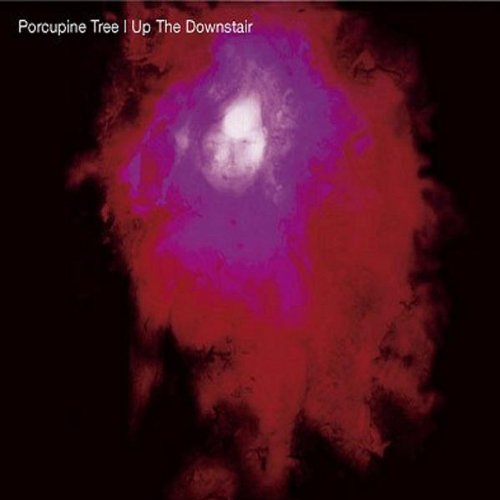
Porcupine Tree – Up the Downstair (1993)

Eh, I guess this is better than the first album. I’ll strive to avoid getting my hopes up too high after the debacle last time. Right away I can tell you that the much-restrained running time cuts back on the filler significantly, so I can add extra points for trimming nearly half an hour off compared with the debut’s bloated length. Other than that, when you really boil it down, Up the Downstair feels like a smaller second helping of On the Sunday of Life with a pinch of salt added for flavor. The album’s title is even yet another embarrassing slice of pothead philosophy. As far as I’m concerned Steven Wilson still hasn’t found his own voice yet and is continuing to ape his heroes. It’s fine, he’s competent enough at it in 1993 and the end product is a passable work of enjoyable music. The production is nice too, but I expect no less from Mr. Wilson’s production prowess even at this early stage. The problem truly lies in Up the Downstair‘s tepidness. It’s not a bad album, but I doubt anyone reaches for this one first as their true Porcupine Tree favorite. The record drips with robotic sterility, perhaps due to the HUGE resemblance I hear between the repetitive melodic space rock rhythms and, like, ’90s-era MIDI files for boss fights in sci-fi games. On one hand I should be all over that shit like the nerd I am, but on the other hand it makes everything sound dreadfully dated almost 15 years later. Yeah, I know, it’s unfair to judge older music through the lens of the future blah blah blah. I’m going to anyway to help fit the narrative I’ve established! My blog my rules, bitches.

Wilson considers this the first proper Porcupine Tree album since it was developed in real-time and not compiled from existing tracks like the debut. Sounds to me like a bit of clumsy retconning to me there in order to save face, Steve. Nice try. On the Sunday of Life is still your first proper Porcupine Tree album and it still gets a nice fat “Kinda Bad” final rating. Suck it. As such, while I won’t consider Up the Downstair anything other than the second goddamned Porcupine Tree album, I will certainly take note that the overall flow of the album’s continuity is nicer than the debut as a result of this real-time production and, of course, the less filler. Once you take some clean tweezers and pick it apart in a laboratory you’ll see very much so that, scientifically, this has the building blocks of a good album stacked all spick-and-span. Well done. But I can tell by now already that Wilson has an incredibly logical Type A personality, so it’s just too calculated and dull to compensate for its efficiency and well-constructed bones. Ho hum. Let’s get on with it, shall we?

The album starts off with an intro of noisy psychedelia that doesn’t build up for more than about 45 seconds before abruptly stopping for a sampled announcement: “What you are listening to are musicians performing psychedelic music under the influence of a mind-altering chemical called…” and then that gets cut off as the next song “Synesthesia” starts up. A chemical called what? A chemical called what, motherfucker?? Don’t leave me hanging like that. Anyway, “Synesthesia” is a killer true opener for the album. The same nervous electronic beat repeats throughout the whole song while Steve Wilson sings very Steve Wilsony, as he does, capped off with a couple of cool-ass acid guitar solos. There’s also a very clever lyrical concept: the verse “It’s only a number/It’s only a death/Another soldier died in action/The telegram regrets“, for example, is a dig at our puny human brain’s cognitive bias to wave off casualties as statistics instead of eliciting meaningful emotional responses. Synesthesia, though, is a phenomenon where the brain may elicit meaningful emotional responses to numbers in of themselves. OK, well, it’s clever enough, man.

Another short interlude follows that I actually never knew existed until I looked at a track list. “Monuments Burn Into Moments” is only 20 seconds long and acts as a sort of reprise of the opening track in order to close out “Synesthesia”. Next comes “Always Never”, a very laid-black Pink Floydian exercise of groove-laden art-rock that sounds a lot like what you’d hear in future Porcupine Tree albums, drenched in a heaping amount psychedelic sauce of course. From this point forward the album starts to sound like extra versions of “Synesthesia” and “Always Never”, bouncing between lengthy up-tempo trance rock numbers (“Up the Downstair” and “Burning Sky”) and mellow, introspective, melodic slow-groove rock numbers (“Not Beautiful Anymore”, “Small Fish”, and “Fadeaway”). All of these songs are successful efforts, nothing outright bad or anything like that, but it’s a little disappointing to make your way through the record and realize that the awesome ideas present earlier are rehashed later, again and again, causing diminishing returns. Thematic and instrumental diversity is also lacking. The saving grace is that “Fadeaway”, the album’s closer, has such a goddamn gorgeous melody and progression that you aren’t leaving with a sour taste in your mouth. But, hey, that’s how you want to make an album, right? Start out strong, finish strong, and never mind the blob of tepid mud in the middle.

All right, I’m being unnecessarily harsh at this point. Every true song on here has flourishes of brilliance and I won’t undermine any of it. Other notable tracks include “Not Beautiful Anymore”, which is the biggest nominee for Most Undervalued Porcupine Tree Track Ever; catchy melody, experimental electronics, beautiful guitar solo, but it’s buried in the center of this early non-representative album. “Up the Downstair” is a driving pre-Internet computer-era electronic romp that is fun enough but it goes on far too long for something that doesn’t change up much through its duration (and if I didn’t know any better, the second half of the song is just a repeat of the first half, no?). “Burning Sky” is similar with a slightly different repetitive electronic beat with guitar solos and ambient sections in slightly different spots, and it also goes on far too long. Again, early generation video games come to mind in a big way here. Perhaps Wilson missed his calling composing for Sega? He’s not funky enough, though, so the ToeJam and Earl soundtrack would’ve bummed people the fuck out.

Honestly though, the pros outweigh the cons and Up the Downstair is absolutely worth the listen, I mean it. The Pink Floyd fanboy is still Pink Floyding it up with his Pink Floyd ripoff pieces, but Floyd themselves have done much worse than this (and you’re an idiot if you disagree, I don’t care how big of a Floyd fan you might be), and Wilson’s own personality is slowly but surely seeping into his work. I’m also glad he stopped trying to be fucking funny. However, he’s attempting to fabricate the thrills on an assembly line here and I’m not buying it. The intention is good, the execution is good, but to me it comes off as a quasi-corporate product of heartless, by-the-book tunes; too cold and calculated to start a revolution and too neat and tidy to be rebellious or challenging. I don’t think ‘m out of line with these claims, and I wouldn’t expect anyone to fault me for standing by my final rating on this one.

JUST OK

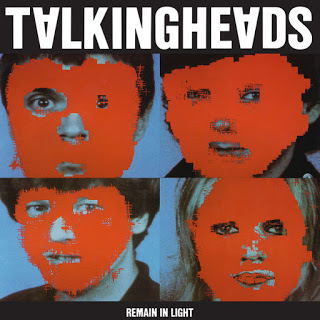
Talking Heads – Remain in Light (1980)

I could write a whole book about this album, and I just might because I’m in the mood to alienate my loyal fanbase of two (me and my imaginary cat). I will also be so bold as to announce that this review may end with the final score of “EXCELLENT” displayed in fanciful rainbow font, thereby breaking and urinating right on top of the system that I had painstakingly upheld thus far. To hell with burying the lede, Remain in Light deserves to be brazenly lauded as one of the finest rock albums ever made right here in my very first paragraph. That’s the stance I’m taking and I’m sticking to it. And I’ll go into an OCD-fueled conniption fit if I really do plaster a rainbow “EXCELLENT” at the end, so I’ll avoid that and you’ll all have to settle for a paltry green “Very Good” instead.

One of the more staggering tidbits of information you don’t see around much is that the Heads “took some time off” between their Fear of Music touring and returning to the studio for pre-production planning on the new album. In this day and age, when most hard-working musical groups and artists average about two or three years between albums, one would expect a rather significant hiatus if an action as deliberate as “taking time off” was considered. In fact, the four members of the Talking Heads took off three piddly months. Byrne spent time working with Brian Eno on their ongoing My Life in the Bush of Ghosts collaborative album. Harrison produced a Nona Hendryx album. Frantz and Weymouth took an extended Caribbean vacation, mingled with the locals, participated in Haitian religious ceremonies, and rubbed elbows with Sly and Robbie in Jamaica. I’ve spent entire summers home from college playing video games and watching TV, so just the mere thought of spending “time off” doing activities that don’t sound at all like taking “time off” is perplexing and infuriating to me.

It wasn’t all lollipops and sweet, sweet Jamaican ganja, though. Franz and Weymouth spent a lot of this time deliberating over dropping out entirely due to their dissatisfaction with Byrne’s tendency to micromanage and overpower the democracy established by the band in the first place. Byrne apparently agreed with this and mumbled something in Asperger’s Latin about “sacrificing egos for mutual cooperation”. Harrison must not have cared one way or another. At any rate, maturity prevailed and compromises were made to allow for a more genuinely collaborative approach during the initial stages of Remain in Light‘s production. If the narrative of “disgruntled band sets aside differences and pulls it together to make the best album of their career” sounds familiar, a little-known band of nerds called The Beatles had done it with Abbey Road a little over a decade prior. Not that anyone is in any position comparing the Talking Heads with the Beatles, but hey, at least the Talking Heads had a woman in the band instead of a Ringo.

The grand vision for Remain in Light was to create an album that seamlessly fused Western rock music with African music, especially drawing upon the work of Nigerian Afrobeat pioneer Fela Kuti, and using Fear of Music‘s “I Zimbra” as an inspirational launchpad. Music was the focus first, lyrics came later. The Heads recruited Eno again to help produce the record and, of course, load it up with bleeps and bloops (and contribute on bass and keyboards when applicable). Most of the album was recorded during freeform, casual jam sessions with the four base members plus a small troupe of additional musicians (including Adrian Belew) and then assembled piecemeal in post. And without personal computers and sophisticated software to make this an easy feat, relatively speaking, the end product is even more incredible. We’re talking a literal analog cut-and-paste job here, a significantly more mind-numbing task than taking 529 Polaroid shots for the More Songs About Buildings and Food album cover! In the end, I wouldn’t call this whole endeavor of “seamless fusion” a total success considering the ’80s electronica with 40 years of hindsight diminishes the intended effect according to mine own two ears, but I’ll be FUCKED, FUCKED, if I didn’t believe that they created a completely unique sonic experience. No other album in existence sounds like this one, with it’s rollicking and unrelenting dance-funk/post-punk marriage polished rough-grit and glossed over with a mechanical sheen. The warmth of both traditional rock and roll and upbeat, polyrhythmic African music is undermined by the inclusion of cold, robotic machinery but not to the point of sterility. This is a critical point, because the ’80s was an era saturated with over-produced computerized emotionless nonsense. Eno scaled it back just enough to still retain the humanity, and it comes through without any perceivable effort. I can’t imagine how hard this must have been to accomplish.

The lack of complete homogeneous synthesis between the two styles is inconsequential anyway and should take a backseat to the mood established as a whole, which is dead on point. So who gives a shit either way as long as it works? Take the first three tracks, “Born Under Punches (The Heat Goes On)”, “Crosseyed and Painless” and “The Great Curve”, three of the most exhilarating and consistent tracks to ever be consecutively placed on an album in history. The sheer, unrelenting energy alone over the span of these 17-odd minutes is enough to give them their high marks and be done with it! But I’m above that! That’s slacker talk and I plan on writing 12,000 more words! Among these three songs the repetitive rhythms sound tribal, but the electronic flourishes sound urban and industrial. Aha! The urban jungle! Throw in a nervous Byrne panting and yelping out cryptic lyrics and you’ve got a perfect musical metaphor for the individual’s experience of the hustle and bustle of modern megalopolitan sprawl. On top of that, you’ve got the tribal rhythms representing the pre-developed world at odds with modern societal expectations and constraints. On top of that, you’ve got Byrne playing the philosopher trying to intellectualize his way out of a situation beyond his control. Good God, I could go on and on. Without getting too specific on the minutiae of the first two tracks, “Born Under Punches” is an extremely veiled song where our neurotic protagonist is trapped in the throes of government heat “(The Heat Goes On!)”. “Crosseyed and Painless” ramps up the stress even further to the point where our neurotic protagonist can’t even trust reality (“Facts all come with points of view/Facts don’t do what I want them to/Facts just twist the truth around“). The best part is the uneasily calm chorus that starts with “There was a liiiiiiine/There was a formulaaaaaaa“, as if the song is pretending that everything is just dandy. I’ve been talking about the Talking Heads’ penchant for the paranoid throughout their whole discography so far, and we’re at peak anxiety here. There’s so much energy it’s begging to be neutralized. It’s truly a mesmerizing aural experience that deserves to be heard to be believed.

I would be remiss if I didn’t delve a bit deeper into “The Great Curve”, though, which tops the list of my favorite songs in existence any day. It probably even tops the list of my favorite things in existence, a list which also includes pixie cuts, the SNES game Earthbound, Fox Mulder, and I SUPPOSE my wife and child. I mean, come on, we’re talking layer upon layer of polyrhythmic action with a driving, perpetual guitar and bass call-and-response parlance and a seemingly never-ending supply of fluidly interweaving vocal sections. Also throw in a couple of crunchy-as-fuck guitar solos courtesy of Belew. Clocking in at nearly 6.5 minutes, I’d be ready, willing, and able to hang on to every note for an additional two hours. This song and its title are simultaneously about Mother Earth and women in general. Whether or not it’s a positive message on both is up to you to decide; far be it from these guys to not give every lyrical line a double (or triple, or quadruple) meaning. But the tumultuous nature (ha!) of the song’s otherwise steady-state condition could probably clue you in.

After the rambunctious blitzkrieg that was Side 1, Side 2 saunters in with a markedly more gentle approach with “Once in a Lifetime”, which surprisingly did not do well in the charts in the US (it hit #14 in the UK). I’m sure if MTV were actually around when the song came out it would be a different story, since they played the music video nonstop in its very early days. I’m sure you must have seen it at least once before, young reader–it depicts a suited-up and bespectacled David Byrne sweating and flailing around in front of a green screen. Byrne’s voice is back in the forefront after being hopelessly lost in the treacherous labyrinth of Side 1 while the rhythm chugs along as if there was nothing to fear in the first place. As great as this song is, it almost sticks out like a sore thumb amidst the high-energy freak outs of Side 1 and the gradual cooldown of the rest of Side 2. Don’t write it off, “Once in a Lifetime” has one of the most memorable chorus melodies of the pop-happy ’80s and the “THIS IS NOT MY BEAUTIFUL WIFE!” was a big ol’ meme long before memes were even a thing, or the Internet itself for that matter.

The rest of Remain in Light, the aforementioned “cooldown”, is just that: a series of tracks gradually dissipating the excess energy created earlier. “Houses in Motion” brings on the funkiest number since “Life During Wartime” with a bassline you could sink your teeth into, some spoken word passages, and a trippy, synthy solo to boot. “Seen and Not Seen” a gravely underrated and completely unsung bit of mild beat poetry (maybe beat prose?) delivered in Byrne’s trademark deadpan monotone cadence and washed over with garnishes of Eno’s synthesizer magic. Psychedelic music in its pure form. Most of the internet will rag on this one, I wholeheartedly disagree. Next up is “Listening Wind”, mellowing out even further with the flipside of the tribal coin. Gone by now are all remnants of the agoraphobic, urban lifestyle, with past heart-racing crises fading away into distant memories and replaced with subtle chirps of the real jungle–but stay on your guard. It’s still not safe. Finally, the weight becomes too cumbersome and crushes you underneath with the last gasp of breath on “The Overload”, a droning, introspective recap. The apocalypse is over now, the vast wasteland lies before you. Haunting in its breadth, I used to hate the shit out of this song because “ENO RUINS THE END OF EVERYTHING WITH HIS AMBIENT SHIT WAAAAHHH” (the end of David Bowie’s Low comes to mind immediately, bleehhhh), but I’ve come around on it in a big way over time. I can appreciate that even to the bitter end, even when the energy has dropped like a stone, they still funnel the anxiety from every possible nook and cranny.

Historical importance? Ooh baby. Well, for starters, Remain in Light topped many publications’ lists of the best albums of the 1980s, which means the ’80s had barely started and nothing as good would come out for at least 10 more years. It single-handedly made African music relevant and important to rock music and Western society in general (this one is sad, because it unfortunately took a group of nerdy white yuppies to accomplish this), paving the path for the big worldbeat boom that still finds its inspirations noodling out from indie rock and psychedelic rock outfits. It’s another nice example of artsy-fartsy smarty-pants aesthetics prevailing over meat-headed butt rockery (the fucking ’80s were full of that shit), effectively lighting the fire under the asses of other artsy-fartsy smarty-pants types who would go on to do great, successful projects themselves. The world always needs more nerd punks, I say. Plus, this is bar none the funkiest album ever put out by white people in history.

So, yeah, don’t be a dillhole about Remain in Light. Listen to it and love it like you’re supposed to.

VERY GOOD

Man Man – The Man in a Blue Turban with a Face (2004)


Indie rock has been inundated with a lot of soft, precious personalities over the years, especially in the mid-late ’00s. Thankfully, I feel like the overall mood of the scene has shifted back closer to the acerbic and raucous end of the spectrum, but in 2004 when the alternative and independent indie rock attitude was so very mild, so lush, so cozy, so timid, so adorable, so aw-shucks folksy, records like Man Man’s debut come as a relief for those who don’t particularly embrace the musical preferences of the Manic Pixie Dream Girl. And by the way, Garden State was a shitty movie.

Not much is known about Man Man’s history and its constantly rotating cavalcade of colorful members. In fact, I’m having a hell of a time trying to find a list of personnel specific to this album. I only know for sure that there’s the ever omnipresent Honus Honus, whose God-given Christian name is Ryan Kattner, serving as the band’s figurehead and lead singer. You also might have Pow Pow and Chang Wang, a couple of cats that I’m not fucking bothering learning the real names of. Without an actual list it’s hard to tell how many or few people are actually contributing, since they each know how to play about 45 instruments and most of them might just be throwing rocks at various drums and marimbas. Knowing that the instrumentation includes, and is not limited to, guitar, bass, drums, xylophone, marimba, piano, Moog synthesizer, clarinet, bass clarinet, flute, saxophones of various pitches, trumpet, trombone, tuba, French horn, euphonium, fiddle, violin, spoons, and pots and pans, at least you can be sure that the band is having a lot of fun with it all.

“Controlled cacophony” is a good description of what to expect from most of The Man in a Blue Turban with a Face (referred to as The Man… from this point forward). Debut albums from these kinds of bands usually serve to make a grandiose entrance and go no-holds-barred with the rowdiness, mostly as a statement about boundary-pushing. Immature bands will continue this formula ad nauseum and never evolve. Mature bands will restrain and focus the rowdiness in order to organically grow into their own. There’s nothing wrong with going in guns a-blazin’ at the very beginning, it’s a very confident stance to take. Just don’t keep it going, then that confidence turns into arrogance and you’ve pretty much got yourself a metalcore band. Yuck. Man Man is following the latter path so far, that of the mature band, albeit slowly; The Man… is for sure their most boisterous effort out of their five (as of 2017) studio albums, but that’s not to say that it’s just chaos from beginning to end. Man Man knows they’re a bunch of rowdy boys and they’re also smart enough to know about the sheer power of the element of surprise, that’s why they subvert the hell out of this rowdiness expectation constantly throughout The Man…, especially at the very end of album with a dainty little doo-wop surf number followed by seven minutes of soothing ocean sounds!

But I’m getting ahead of myself. The album begins with an off-mike belting out of the first song’s title, “AGAINST! THE! PERUVIAN! MONSTER!“, and dives right away into the mix. A couple of measures of melody are played by some sort of stringed instrument, possibly a fiddle, and then this melody is repeated by a chorus of children singing “LAAAAAAA! LAAA LA-LA-LA LAAAAAA!” I love it! Pretty soon Honus Honus will actually begin singing, and you’ll really wonder what the hell is going on. You’ll hear lyrics like “I can’t believe we met on this lonely crowded street” and “I’m hip to your hypotenuse, your geometric ways“, and his cracking voice sounds like Tom Waits and Captain Beefheart going through puberty together. And he sings like that all the time? Yeah, kinda. And eventually the percussion section will just sound like a closet full of kitchenware crashing down like a slow, unending avalanche. And that’s just the first song.

Now, the second song “10lb. Moustache” may make you feel uneasy because it sounds reserved and innocuous, but tense, and Honus is still singing like a desperate baboon. It also may NOT make you feel uneasy because you might have already heard this song in a Nike commercial with Dwight Fucking Schrute from 10 years ago. Nonetheless, this is other side of early-Man Man: nebulous peacefulness. Even when they seemingly play it straight with the mellow vibes, there’s a certain air of discontent hanging on because Honus refuses to remove the gruff from his throat. The uneasiness is definitely deliberate. All the Frank Zappa comparisons you’ll see floating around are apt; these guys are doing everything with a smirk.

If your joke band is also smart enough to be lyrically shrewd and musically capable, then CONGRATULATIONS you’re not a real joke band and no one whose opinions are WORTH A HILL. OF. PINTO. BEANS. is really going to say otherwise (conversely, if you suck at lyrics and/or music and you weren’t intending to be a joke band, then…surprise! Looking at you, Godsmack). I’ll make a case for each attribute:

  • Lyrically shrewd – The icing on the cake for me is that this band, with its crazy instrumentation and chaotic, lively music, is also smart as a whip. They’ll bounce from clever wordplay (“Wearing that guerilla suit to try to scare me but it won’t work/Wearing that gorilla suit to try to scare me but it won’t work“) to thought-provoking philosophy (“And they said I’m tired from waiting around for you/The reasons I start fires is that’s what lost men do“) to vague sexual crudity (“Make fuck like a dog bark moon/Make fuck like a dog bark moon/Woo!“) to overt sexual crudity (“If I told you you’re beautiful, can I finish in your mouth?“) to heartfelt sensitivity (“Why do we do the things we do even though we know we are? Why should I say what’s already been said better one hundred times before?“) to complete utter nonsense (“You call me ling ling I’ll call you panda fist/The sun burn like burn burn eye burn burn“), and it always sounds natural and unforced.
  • Musically capable – The band is obviously well-acquainted with tricky time signatures and complicated passages. They also know how to use interesting and unorthodox chord progressions. They are also using a bunch of different scales, showing a particular affinity for the Eastern European and Middle Eastern ones. You don’t get to hear that too much in American indie rock, especially ones that mostly avoid the old-timey folk influences of those regions. It shows that Man Man has influences outside of mainstream, which is always nice when you don’t want to hear the same goddamn sound you’ve already heard a million times already. Looking at you, Godsmack. Plus, while the song structures on The Man… don’t necessarily follow the verse-chorus form in a textbook way, most of the songs have some decent hooks and resolve in a satisfying way often enough.

While I do enjoy the album, and hopefully the fondness comes through warmly in the review, The Man… is far from a groundbreaking piece of high art. The antics can and do get tiresome, and you may find out that repeated listens may not add extra layers to the experience. Notes get fracked pretty badly on occasion (most notably during the trumpet solo at the end of “Zebra”, for example) but you might not notice amidst the zoo of sounds anyway. The band’s rawness and obvious self-awareness are charming enough to let a few flubs slide. And besides a few pockets here and there, the album tends to get a bit samey and you may find the whirlwind of instruments and Honus’ raspy voice coalescing into a stew of sonic gray slush, especially during some of the longer songs (“Man Who Make You Sick”). Obviously, when you’ve been hooked everything will be like a warm handshake for your ears, but in the end it just feels like a bunch of dudes having fun and dicking around with audio equipment for 40 minutes. And that’s fine for what it is, but it certainly won’t feel essential or timeless. If you find yourself enjoying The Man… like I’m wont to do, you’ll also feel guilty about it, as if it’s music you should have outgrown by this point in your life. Unless you’re, like, 12 years old, in which case just get off my lawn.

JUST OK

Frank Zappa – Burnt Weeny Sandwich (1970)


Gross, look at that album title. Gross, look at that album cover. Why does everything have to be ugly and gross with this guy, with his music and his art and his face. Where are the songs about peace and love and *checks album release date* *checks Wikipedia* uh the Tongai earthquake and *squints* Mick Jagger’s marijuana possession punishment? Whoa, hold on here, Burnt Weeny Sandwich‘s release pre-dated Black Sabbath’s debut by only four days? Cool! Frank Zappa made and released eight whole records before Black Sabbath discovered a new genre on their first try. Zappa probably didn’t even discover his own dick by 1970. Just ask his wife and his only two children at the time. Hey now, that’s not very nice and/or doesn’t make any sense!

The ugly cover brings to mind the Uncle Meat album, which had its own ugly cover in a similar vein to match the collage of diverse and cohesive ideas within. Absolutely fitting in that case. For Burnt Weeny Sandwich, in my opinion, not so much. The music here ranks among Zappa’s prettiest, but it’s not conventionally pretty. It’s Zappa-pretty, so it’s still rough around the edges and you’ll find a few cigar burns but in the right light it’s absolutely magnificent! More magnificent than that ill-suited album cover for sure, which leads the potential listener to expect industrial hard-nosed German electronica or something. I can’t think of a larger disparity in Zappa’s catalog between an album’s art and its musical contents. That’s the whole point though, you can bet your FUCKING CUNT.

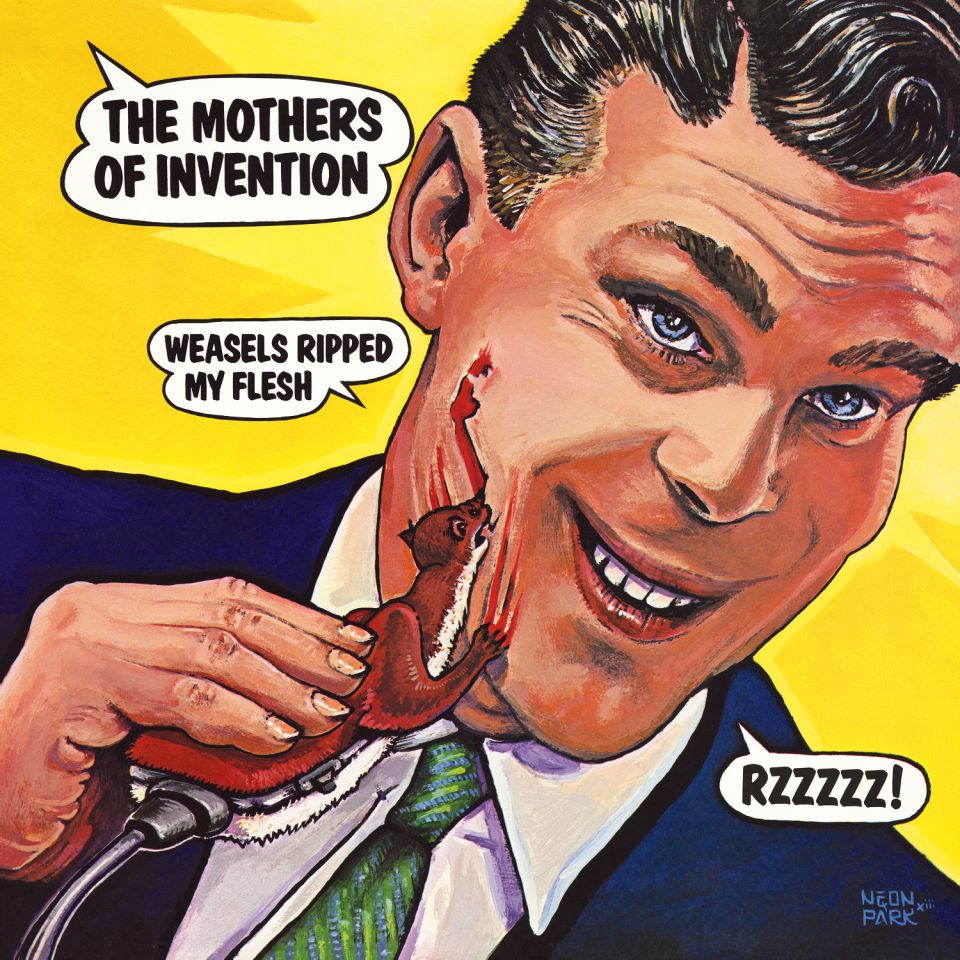
Sorry, clearly I’m waaaaayy too comfortable writing these Frank Zappa reviews. Burnt Weeny Sandwich and Weasels Ripped My Flesh (another album to be released later the same year) can be considered companion albums. Both compile recordings of the original Mothers of Invention before Frank broke up the band prior to the Hot Rats release. Burnt Weeny Sandwich contains more stringently-arranged studio compositions while Weasels Ripped My Flesh showcases more freeform and experimental improvising in a live setting. I once read a review that described the former as a “classical approach to jazz” while the latter is a “jazz approach to classical”, which I think is a complete donkey turd made up by someone who has no idea what he’s talking about. And even if he did and it was actually accurate, does that vague piece of horsefuck clear things up for you? Here, let me try: “Oh, it’s a rococo modicum of painfully self-effacing musique concrète designed to, at best, chip away the social implications of neoplasticism and its ambivalent attitude toward the functional aesthetics of supremacism and, at worst, comment wryly on Aleksandra Ekster’s tendency to subvert the laughable, albeit entrenched, mores of inescapable technopolitical ramifications of the response to ennui in modern times.” Eat my shit.

So, yeah, Zappa’s obviously conscious effort at creating a “classical approach to jazz butts butts butts” yields the first favorable representation of his orchestral side. While Lumpy Gravy was fine enough in spite of its messy presentation, there’s actual good flow on this record EVEN THOUGH he Frankensteined some of these tracks by piecing together odds and ends from different recordings. Not only that, it’s damn accessible, and there’s enough variety to maintain your attention even if a lot of this isn’t necessarily your kind of music. Hard to say that about many of the records in Zappa’s canon.

Burnt Weeny Sandwich isn’t entirely made up of formally composed orchestral arrangements. The album is book-ended by two doo-wop covers, “WPLJ” and “Valerie”. The first one is a fun, upbeat piece of business, featuring raucous backing vocals from a rowdy group of rambunctious miscreants singin’ about white port and lemon juice! The second one is a romantic, smarmy little number. These are the only two tracks with lyrics.

The two shortest tracks, “Igor’s Boogie, Phase One” and “Igor’s Boogie, Phase Two”, each run under a minute. Reminiscent of a lot of the tracks on Uncle Meat, the plinky percussion and hooty woodwinds playfully complement each other. The Igor in question is Frank’s butt-buddy (he wishes) Igor Stravinsky, but if these two interludes are meant to be homages to the composer himself then I don’t see the connection. The music is pretty atonal, more like the “avant-garde” modern classical piece from the likes of Schoenberg or Webern. Pretty BOURGEOIS to think otherwise, wouldn’t you say?

“Overture to a Holiday in Berlin” serves as a short preamble to the longer “Holiday in Berlin, Full Blown” a few tracks later (The Uncle Meat connection strikes again – “Prelude to King Kong” before the big suite). “Overture…” is rudimentary and plinky like the aforementioned Boogies, while the “Full Blown” version fleshes out the melody with some additional piano and saxophone variations and a guitar solo section. Note just how whimsical and light it all seems on the surface until you really listen in on the complexity of the intertwining parts. He makes it sound so fucking easy.

The most underrated gem according to MINE OWN TWO EARS is “Theme From Burnt Weeny Sandwich”, which overlays a guitar solo leftover from the We’re Only in It for the Money sessions onto, basically, a improvised percussion/organ restrained freak out. Not like a Freak Out! “Return of the Son of Monster Magnet” freak out, more like a mellow Uncle Meat “Nine Types of Industrial Pollution” freak out. Clocking in at 4:30, I wish it went on much longer. I find this track immensely relaxing.

Speaking of relaxing, “Aybe Sea” (get it? A B C!) is the contender for the single-most played-straight song Zappa ever wrote (even “Strictly Genteel” has jokes during live performances). There’s no edge, no snarky notes, no harsh tones, no brash noises, just Ian Underwood playing an absolutely gorgeous piano solo with guitar and harpsichord accompaniment. And buried in there on Burnt Weeny Sandwich as a thematic lead in to “The Little House I Used to Live in”, never to be released (or even played?) live, it’s a shame that it didn’t get more noticed.

Oh yeah, I forgot about the most forgettable song on this whole forgettable album, the forgettable 19 minutes of “The Little House I Used to Live in”. It’s so chock full of great, jaunty melodious sections and fantastic virtuoso improvisational soloing from a bunch of forgettable musicians (including another forgettable violin performance from Don “Forgettable Sugar Cane” Harris), seamless and forgettable live and studio transitions, and a really cool, rare, extended, and forgettable, extended organ solo near the end, that I forgot to talk about it! The last couple minutes of the track features an audience member shouting through the applause about some nonsense, to which Frank calmly responds with a faux-sympathetic “You’ll hurt your throat, stop it.” It will still be a while before a regular release of live concert recordings will allow us to really become acquainted with Frank’s on-stage personality, but these little inside peaks early on are pretty neat. We’ll get more of that in Weasels Ripped My Flesh as well. Stay tuned!

This is all about as whimsical and fanciful as Zappa’s able to get, and an absolutely quintessential album for the early period. You could tell that he was proud of these recordings; they showcased his prowess at pushing his band to new uncharted territories. It was ultimately his downfall with the Mothers, of course, since he was sick of their inability to keep up with him. This is ironic, since the next major period in Zappa’s career sees the music getting dumbed down — most people agree that it’s a big fat low point. I’m getting ahead of myself, though. Enjoy the next two records while we’re still young, green, and naive about what’s to come. It’s going to get rocky.

VERY GOOD