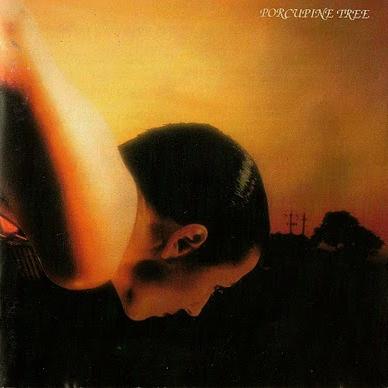
Porcupine Tree – On the Sunday of Life (1992)


Steven Wilson is a name you’ve absolutely heard of before if you have even just a passing interest in modern progressive rock music. I’ll save the rigorously-compiled Steven Wilson career background for when I dip into his solo output probably in errrrrrrrrrrr 2036, but for now I must point out that the man will be turning 50 at the end of this year and he doesn’t look a day older than a supple, rosy-cheeked and stubbly Lisa Loeb (who is turning 50 next year). Wait, I guess that’s not really my point. What I mean to say is the dude looks damn young, but he’s been around for nigh on 30 years now and has been involved in many musical projects and even more collaborations and even more album productions. He’s a workhorse, one of the most respected individuals in progressive rock history, and has a sexy vegetarian body and lusciously long hair. Wait, whoops haha, hold on.

Anyway, the guy has esteemed credentials and an elaborate past, but for now I’ll stick to his work with respect to Porcupine Tree only. The very humble beginnings of Porcupine Tree date back to 1987 when it was just a duo with Wilson and his buddy Malcolm Stocks. They were a couple of Pink Floyd fanboys who were interested in creating a joke band with its own joke mythology. Wilson was working on a project called No-Man at the time, so Porcupine Tree served as a silly, fun distraction for him. Somewhere along the way Stocks moved on to other projects, perhaps because he was tired of hanging out in Steven Wilson’s parents’ basement, so Wilson kept it going by himself. Between 1989 and 1991 two full-length demo cassettes of music were released after Wilson considered the possibility that his project might be entertaining to other people: Tarquin’s Seaweed Farm and The Nostalgia Factory.

Long story short, Wilson had gotten in touch with a dude named Richard Allen, a writer for an underground British music ‘zine, who enjoyed these demo tapes. After founding Delerium Records and signing on Wilson as a co-founder, Allen coerced him to officially release some of this existing material. Hence, therefore, hither and yon and never mind the bollocks eh wot, On the Sunday of Life compiled the very best material from the two cassette tapes Steven Wilson recorded in his joke band Porcupine Tree and it was released as a small run of 1000 copies to the public in 1992.

That’s all well and good, but Steven Wilson ain’t funny, man. Go ahead and Google him right now. I’ll wait. Yes, yes, I know that you too want to lick chocolate off of his sinewy nerd body, get past that for a second. Take a look at every picture of him and make a note that it looks like it would literally kill him to crack a smile. Make a note that it looks like he’s about to ask you to allow him to read you the gothic poetry he wrote back in 10th grade during algebra class. He looks like a man who would never tickle your funny bone, unless “funny bone” was a euphemism for something else and he was doing it very inappropriately in the back of the room during a Periphery concert. And, lo and behold, let this guy run loose with his alleged sense of humor and out comes On the Sunday of Life from the hilarious joke band of crack-ups and goofabouts. Surprise! It isn’t at all funny. And that’s just the first problem with it!

Let’s completely forget the fact that this album is meant to be a joke and weigh the artistry on the merits of actual musicianship. Actually, fuck that for a second, did you see the duration of this thing? Nearly 76 minutes for a debut album from the early ’90s? Unless your joke band is Ween and your 76-minute early ’90s debut is GodWeenSatan: The Oneness, you’re completely out of line trying to subject the public to such a bloated monstrosity of tepid mediocrity, ok? Are we clear there?

I personally wouldn’t call any of Porcupine Tree’s output “progressive rock”, even though it’s labelled and is widely recognized as such. Most of the discography lacks the excess associated with the genre: half-hour long keyboard solos, emotionless angular noodling, overwrought pseudo-profound lyrics about fairies and elves (and any musings into the territory of excess are, thankfully, fairly restrained. Definitely a noteworthy skill). Throughout its history there were certainly distinct periods, and the earliest Porcupine Tree albums fall more into the category of psychedelic rock music. Again, Steven Wilson is big Pink Floyd guy, and one of the most influential albums of all time to his career was Tangerine Dream’s Zeit (a big ol’ bloated work of boring, drone-y 19-minute sound collages and snooze anthems), so this influence is dripping all over the place until at least Signify, three albums later, which sees Wilson starting to come into his own. Until then it’s all very much a disposable ’60s space rock reproduction. Besides the unoriginality, On the Sunday of Life suffers especially from a lack of thematic continuity, making the individual tracks feel extremely inessential. The album is like a diorama of immature, half-baked sound clips cobbled together quickly and messily before the class bell rang. Even the title is a cringe, it sounds like a decadent bit of pot-infused 15-year-old wisdom.

I can start with the actual songs, because on this 18-track hodge-podge there really aren’t many good ones. “Jupiter Island” is promising enough with its psychedelic-garage guitar work and ethereal high-pitched vocals, leading the listener on into thinking the rest of the album is going to be enjoyable. The catchy repeating chorus of “Come on let’s fly to Jupiter Island-uh” just packs unrelenting playful whimsy in your ears! “The Nostalgia Factory” might be the best song of the lot, featuring a cool krautrockin’ beat with interweaving guitar passages and even a (non-excessive) proggy keyboard solo. But then there’s also “Radioactive Toy”, a very engaging ten minutes where Wilson breathily muses about atomic bombs for bit before launching into a nice psychedelic jam. “Nine Cats” feels like familiar territory for fans well-versed in the later years of Porcupine Tree, as does “As the Swallows Dance Above the Sun” and “This Long Silence”. Gothic moodiness in what feels like infinite space; Wilson has a knack for creating atmosphere, and it’s nice to know that he’s already fairly competent at it this early on.

Some of the songier songy songs do fall kind of flat. “Queen Quotes Crowley” reuses the psychedelic krautrock progression heard a few times already, this time with sampling experiments, and nary a hook to be found. The album’s closer “It Will Rain for a Million Years” feels even more superfluous with all the other similar jams that came earlier, leaving you antsy for the album to just be over and done. “Linton Samuel Dawson” is basically “Jupiter Island Pt. 2” with its acid rock synth breakdowns and high-pitched vocals. I just gotta bring up Ween again with this one, because “Linton Samuel Dawson” sounds like a Ween song (and maybe it’s because of this resemblance that I’m willing to call it humorous), especially at the end where it’s proclaimed that Linton Samuel Dawson “aids escape to tranquility/from the boredom of mankind“. He keeps riffing on those last five words in that modified helium-addled voice until the concept seems completely ludicrous. Now that’s satire!

The rest of the album is pure filler. Ambient experiments and heady psychedelic excursions serve as, presumably, transition pieces between the real songs. But there’s too many of them, and more often than not it’s all vastly uninteresting. You can forgive the nearly three-minute “Music for the Head”, which acts as a throwaway introduction in the same vein as how any other typical art rock album could possibly kick off, but others overstay their welcome with similarly overlong mindless free jazz and dull droning such as “Third Eye Surfer” and “Begonia Seduction Scene”. “Space Transmission” is a spoken-word poetry piece that doesn’t feel nearly as important as it’s supposed to. Shorter transitions are annoying in their mere existences on the record (“Message from a Self-Destructing Turnip”, “Hymn”, and “No Luck With Rabbits”). It all makes up nearly 20 minutes of the album’s real estate, which is unforgivable for a debut that’s already packed to the gills. Lose that and you’ve still got about an hour’s worth of music to continue trimming down.

Feh. Don’t even bother. Even the best tracks on On the Sunday of Life pale in comparison to any of the great tracks yet to come in the later years. Spin it once out of sheer curiosity, save your favorite tracks in a playlist (there will be, like, three), and never revisit it again.

And by the way, Pink Floyd already is “Jokey” Pink Floyd, Steve-O. They were very sneery and silly in their beginnings too. God Damn it’s a good thing you got better as time went on.

KINDA BAD

Comedy and Music

My sister, Nicole, is nine years older than me. While I\’m  a scrappy little kid figuring out the world around me, she\’s already a teenager in the early-mid \’90s doing her own thing and listening to her own music. And she didn\’t have much patience for the likes of me at the time, who could blame her?

I wasn\’t terribly interested in her music collection when I was a kid (or ever, for that matter, honestly), but Nicole did prove to be a pretty strong influence for comedy at an early age. Throughout the \’90s we were able to bond over movies like Wayne\’s World, Ferris Bueller\’s Day Off, Ace Venture: Pet Detective (we both agree that the first Ace Ventura movie is better than the second, much to the chagrin of every other person on Earth), Billy Madison, Happy Gilmore, Dumb and Dumber, Austin Powers, Tommy Boy, National Lampoon\’s Vacation, Uncle Buck, and a plethora of others. Nicole turned me on to the Simpsons when I was 3. Beavis and Butthead when I was 5. South Park when I was 10 when it was brand new. I didn\’t even watch a drama until I was probably 14 years old. Who needs that dry, sullen, miserable shit when you have Jim Carrey flailing about the screen, man?

There was always a certain exciting forbidden aspect to watching these movies intended for 13-year-olds OooOooOOOOoooo when you\’re still young enough to be in the demographic to enjoy Nick Jr. Now just imagine the thrill when, in 1996, Nicole brought home Adam Sandler\’s What the Hell Happened to Me? comedy album. This wasn\’t just some mass-marketed movie that I know millions of people had watched, this was an artifact brought into our home for our own personal, private indulgence. Its presence in our home was almost perverse. And, holy shit, it was dirty! Filthy! Horrid skits about creepy old men, farting hypnotists, raunchy talking goats, public sex, crass mothers, all of them with terrible curse words! A smattering of rude, crude songs about fuckin\’, about a shitty car, about getting high! Have you heard \”Steve Polychronopolous\”? I felt like I was besmirching the name of God just by listening to something so edgy, insensitive, and savage! I felt alive! ALIVE!

My 9-Year-Old Comedy Audio-Bible

Give me a break, I was barely nine-years-old at the time. It saddens me, actually, to know that I\’ll never experience such visceral thrills ever again from something so banal and essentially harmless (as it turns out). But at the time I really thought I was indulging in something completely hellish and universally inappropriate, and it was certainly a coming-of-age experience. Again, it\’s Adam-Fucking-Sandler. I feel stupid for even talking about him in this way.

Between me and my sister, two more Adam Sandler CDs would be purchased over the next five years or so. Each one was about 20 tracks with five or six being actual songs, the rest skits. Of course, being the young flourishing comedy nerd that I was, I vastly enjoyed the skits over the songs, but that isn\’t to say that I wrote off the songs completely. I enjoyed most of them, but I remember finding no interest in the singing, the melodies, or the instruments whatsoever. Just the words, only the words, nothing but the words. BUT, fuck it, I rightfully consider it my first foray into the realm of appreciation for SOMETHING music-related. It counts.

I got my first portable CD player from my parents for my 14th birthday. It was a red Sony, the kind that skips when you turn it on its side. The look of disappointment on my face was not only noticed, but expected. They all knew I had no interest in music at the time. My mother gently told me that it was an experimental gift and I was encouraged to see how it goes; no pressure. I started out by buying a couple of Simpsons television soundtracks. This was 2001, and 9/11 had happened just 20 or so days ago, I was still rattled as fuck, and I found the music comforting. By now I was fully entrenched in music performance as a high school band student, so absorbing the music from this new perspective was interesting. Of course, I use \”music\” loosely here, it was all a bunch of semi-artless novelty tunes. Other than that I was buying stand-up comedy records.

It wasn\’t until early December of the same year that I took the plunge and purchased my first ever CD of music by an individual that is widely recognized, and begrudgingly so in most circles I\’m sure, as a legitimate artist in the business: \”Weird Al\” Yankovic\’s Bad Hair Day. This was a huge step for me, but I figured the amalgam of comedy and music was a perfect starting point. Unlike before with the Adam Sandler records, I found myself unexpectedly preferring the music over the lyrics! On a goddamn Weird Al CD! My friends, this was the beginning of my new life.

I got more to say but not now! Smell ya later, homes.

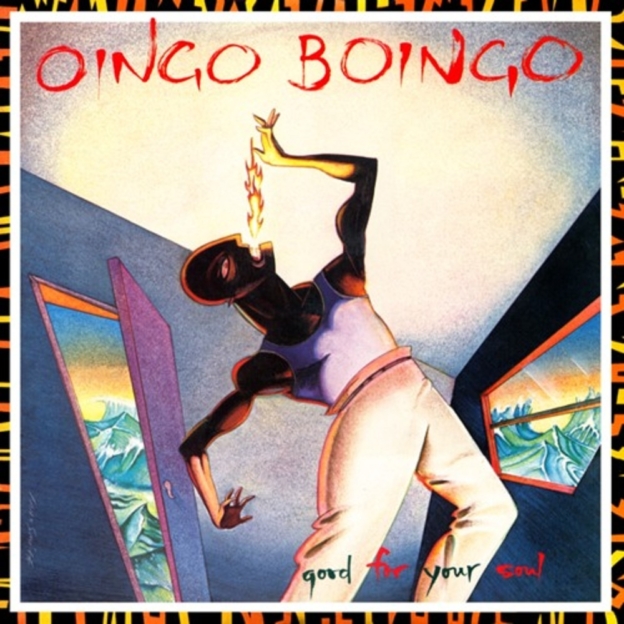
Oingo Boingo – Good for Your Soul (1983)

Well shit. Now I’ve gone and done it. I spent all that energy blowing my wad and singing my lofty dipshit praises about the previous album Nothing to Fear, positively ejaculating my jubilance all over your misshapen face about how there was not one bad song on that album, that it was perfect, and along comes Good for Your Soul, Oingo Boingo’s third album. Do I have the nerve, the gall, to proclaim, yet again, the same exact position? And this time there are eleven songs and there’s not a bad one among them? Can a band, especially one as gauche and “of its time” as garbage early-’80s Oingo-fucking-Boingo, really make 21 great songs in a row? More than that if you dip way back into Only a Lad‘s “Nasty Habits” and call it 22? Is this just some sort of teenage nostalgia-addled close-minded point of view of mine?

Most likely. I can tell you that I’ve known Good for Your Soul intimately for the last 13 years and I can still put it on to this day and enjoy the ever-loving crap out of it just as I could back when I was a piss-pants 16-year-old virgin extraordinaire. I don’t even get awkward and cringe-y about it like I would with, perhaps, “Weird Al” Yankovic’s debut (ACCORDIONS ARE VERY FUNNY, AL. GOOD WORK.) Nope, this is an excellent album. As far as I’m concerned, they’ve upped the ante even further this time around; not bad considering that they started recording tracks for Good for Your Soul immediately after finishing Nothing to Fear. I hate to compare the two, since both are standalone achievements in of themselves, but if I actually do have to compare the two, and I probably should since I already started this arduous sentence about 300 words ago, I can point to improvements in diversity of mood, maintenance of consistency, and overall maturity as evidence of growth of the band as a whole. Again, “overall growth” is a relative term because there was literally no time off between recording the two albums, so take it for what it’s worth. If I told you they were recorded three years apart from one another you’d probably believe me, not that there’s a lot at stake here anyway. It’s Oingo Boingo, not the Renaissance. And it’s not ’70s prog outfit Renaissance either, but they’re pretty good too. Sorry, I had a stroke again. I’d also say that Good for Your Soul is a bit more mellow overall than past efforts, which makes sense because every Oingo Boingo studio album is more mellow than the previous one (until Boingo, their final album), so fuck it. What a pointless paragraph this has been.

It wouldn’t be fair to make the claim that, once again, every song is good and not give Good for Your Soul the same treatment I gave its predecessor with the track-by-track blow-by-blow and whatnot. At the very least it pads out the review nicely! And don’t worry, there aren’t anymore Very Good albums left in the Oingo Boingo machine for the remainder of their career (spoiler alert!) so I won’t have to do it again anyway. Or maybe I’ll dust off this format once I hit their one Kinda Bad album. Oh man, how suspenseful! You can always count on me to keep you indubitably reeling at the edge of your goddamn seat. Anyway, onward with the Good for Your Soul in-depth analysis!:

    1. “Who Do You Want To Be?” kicks your ass right off the bat with a bombastic introduction, vaguely industrial and punchy as fuck. These cats mean business, and they’re not afraid to ejaculate their pseudo-jubilance all over your pockmarked face about it. Energy starts out high high high high high high and it doesn’t let up the entire time. The lyrical matter is old hat by today’s standards, what with the social commentary about television rotting the brains of the youth and controlling their minds (“Who do you want to be today?/Do you want to be just like someone on TV?“). Yawn. Thanks for the input, Grandpa. I’m pretty sure next you’re going to tell me that rock and roll music is for degenerates and frightening individuals of the non-white persuasion? Anyway, fantastic song! One of my very favorites from OB.
    2. “Good for Your Soul” slows things down a bit (relatively speaking, it’s still fairly energetic) with a synthy, moody, yet jaunty, and sorta Depeche Mode-y tune about, yet again, panicked self-doubt and obsession akin to Nothing to Fear‘s “Private Life”. Whether or not the lyrics are actually profound, the melody is so strong that you at least believe it’s profound. It’s one false step before plunging into the vast, murky waters of ’80s cheese for sure, but you won’t feel guilty for enjoying it. I sure don’t.
    3. “No Spill Blood” is a direct, metaphor-free song about H.G. Wells’ “The Island of Dr. Moreau” and anyone who probes for further meaning is full of beans! Classic Oingo Boingo horn arrangements serve as punctuation marks between verses and musical phrases while Elfman yelps out animal calls. An atmosphere of synthy moodiness washes over the bridge. Sounds positively seductive, no?
    4. “Cry of the Vatos” is a short instrumental “throwaway”, which is a rude word and I don’t really mean it. A stylistically logical continuation of the previous track, animal noises and brassy horns aplenty, this catchy, danceable beat-driven interlude is apparently supposed to be a satire of world music. You don’t need to know that to enjoy it though! It’s all a bunch of gruntin’, hootin’ and hollerin’! What’s not to love on its own merits?
    5. “Fill the Void” brings it back down to mid-tempo with a moody and funky reggae synthpop extravaganza. Think of it as the The Police meets Wall of Voodoo, a marriage of two new wave bands that no one asked for! But hey, like I said, every song is good, so allow me to TAKE THE PISS out of it and BREAK BALLS over ‘ere. The song chugs along on the same groove without any major departures aside from the chorus (“What do they want from meeeeeeeeee?/What do they want from meeeeeeeee?“), but it’s a catchy groove, and it’s not irritating, and there are plenty of flourishes of brass instrumentation to keep the loyal Oingo Boingo aficionado satisfied. Much like “Good for Your Soul”, the feeling of profoundness adds weight to the words as Elfman sings soulfully, at least as soulfully as a ginger white boy can in his ’80s new wave band.
    6. “Sweat” brings the energy back up again! This album bobbles between moods like a fine-tuned Duncan Imperial yo-yo. Or if you will, a Yomega Fireball? Hey, I could talk about yo-yos all day, but I’m here to talk about “Sweat”! Man, the desperation in Elfman’s singing is absolutely tangible as he describes situations that would cause one to sweat: getting sent to principal’s office, running for cover during battle, implied sexual intercourse, et al. Kinda brings to mind Nothing to Fear‘s “Wild Sex (in the Working Class)” with its sultry saxophone passages and images of sweaty fuckin’. Listen to this song on a loop, it’ll put hair on your chest. That goes for the ladies, too.
    7. “Nothing Bad Ever Happens” brings it back down to a very deliberate, moderate, emotionless tempo. Intricate synth notes, robotic and tense, weave the framework of the whole song. The lyrics are dead straightforward for sure now, with each verse telling the story of misfortune occurring to those directly around him: a family in the neighborhood tied up and beaten while a burglar ransacked their house, a friend let go from his job with no pension after 20 years, a neighboring family whose son committed suicide. Each verse ends with Elfman bluntly stating “And I can’t believe that anyone would wanna do such a terrible thing/But why should I care?“. Oh man, what an arrogant prick! And that’s his stance throughout, just one of completely ambivalence; there’s no learning, no self-awareness, no empathy, no remorse. These days I like to think that Elfman represents white America, but then it becomes WAY more sad and true.
    8. “Wake Up (It’s 1984)” has a melody swathed in gloomy, synthy goodness, though even with the Orwell reference it feels dreadfully dated. You can totally tell that there was an air of excitement surrounding the development of this song. Like, “Oh my God, we can’t miss this opportunity!”. It could be worse, though, like fucking Will Smith and his fucking “Will 2k” piece of shit. This song implies that, yeah, it’s 1984 and the government can’t be trusted, but it’s always been that way anyway and it always will be. Timeless! See, I redeemed it.
    9. “Dead or Alive” is about zombies, man. Oddly enough, the song about zombies, of all things, doesn’t seem to elicit the same panicked, anxious reactions from Elfman that psychological topics such as isolation do. In fact, the way he delivers the lines “I remember there was a time/When dead and buried meant just that/Underneath the cold dark ground things stay PUT!” makes it sound like the zombies are an annoyance, an inconvenience hampering his day. Ho hum.
    10. “Pictures of You” is like The Cure if The Cure was cognizant of its own Cure-ness (which it is, actually, so never mind). Don’t worry, though, once you hear the first instance of “It’s just pictures of you/In daaaaaarkneeesssss” you can FINALLY eschew from believing the alleged profoundness you’ve been tricked into thus far throughout the record. This song is silly, just like The Cure. While it’s a still a very fine song, this one bottoms my list. I love The Cure, but Oingo Boingo sucks at being The Cure.
    11. “Little Guns” ends the album on an upbeat, maniacal circus vibe that we all know and love and miss from Only a Lad. The dude is singing about toy soldiers or something. Is this political commentary or good ol’ fashioned vaudeville fun? And forget what I said about the sultriness of the saxophone passages in “Sweat”, this song has a saxophone solo that is so unrelentingly sexy that your penis and balls will melt right off your body (and once again, that goes for the ladies too).

Once upon a time Good for Your Soul was hard to find on CD. I remember trying to collect the discography in the early ’00s and this was the only album that was unavailable in stores and online. Only from third-party sellers could I get a copy, and they were asking for $50 or more. These days I’m pretty sure it’s readily available for a reasonable price, so there’s no excuse anymore for not having access to the best album Oingo Boingo would ever release.

VERY GOOD

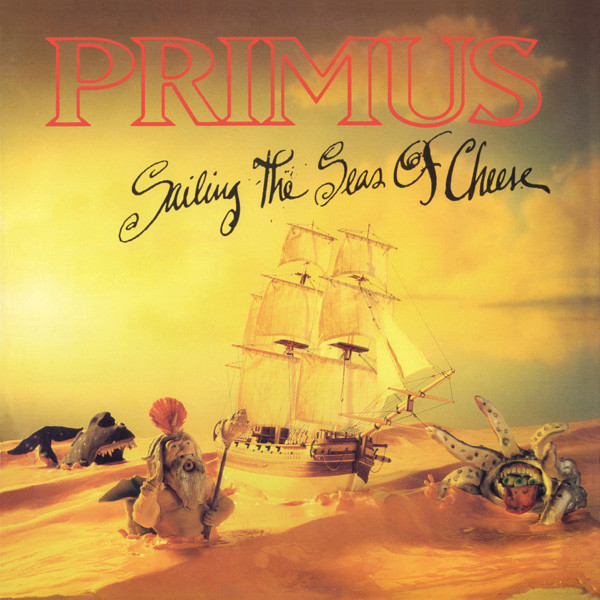
Primus – Sailing the Seas of Cheese (1991)

If you were a twitchy, punky little sniveling pre-adolescent at the turn of the millennium like I was, your very first experience with Primus was likely either the South Park theme song or the first two minutes of “Jerry Was a Race Car Driver” off of Tony Hawk’s Pro Skater, which you probably played obsessively like some dumbass kid deluding himself into believing that he’s really into skate culture. Even though, of course, trying to skateboard was really tiring for your puny atrophied-from-video-games preteen body, and the clothing and accessories associated with skate culture were sort of lame, and a lot of the ska punk music associated with the scene sucked four butts. That’s a little harsh; maybe half a butt, actually.

Primus is definitely not a band associated with skate culture either, which makes the inclusion of “Jerry Was a Race Car Driver” into a genre-pioneering skateboarding video game odd in retrospect, but nevertheless I can’t help but bring myself back to 1999-2000 when listening to Sailing the Seas of Cheese. Never 1991, of course, like I’m supposed to, but in my defense I was three years old at the time and shitting myself constantly. Now I’m 29 and shitting myself constantly. Heyo!

With Sailing the Seas of Cheese, Primus have stepped it up a little. Major-label debut, and by now they must have garnered all the money they could ever need to make an album exactly the way the wanted to without having to mooch off of Claypool’s poor ol’ dad anymore. Claypool’s bass is still the star of the show, and at this point it’s a goddamned prima donna. Trust me, it’s nigh on impossible to remember anything LaLonde plays on lead guitar throughout the record unless you actually go back and force yourself to focus on it. But don’t worry about that for now, because the bass playing on this album is demonstratively more technical and, for lack of a better word, interesting than the bass playing on Frizzle Fry. “Interesting” in the sense that sometimes the notes fly by so fast that it doesn’t even really sound like bass, at least not like practically utilized bass that you’d find in rock music. I’m not calling the bass playing in Frizzle Fry boring, idiot! Anyway, trust me, you won’t even think about the lead guitar much either when listening to this album. The other thing I’ll say about Sailing the Seas of Cheese is that it seems to be more pop-oriented than its predecessor with shorter songs on average. Minor step-ups aside, this album is still very much familiar territory. You get more of Claypool’s same crazy high-pitched twangy voice, more of the same weirdness, and more of the same humor. Pure, unadulterated, unrefined, uncircumcised Primus for your listening “pleasure”.

More of the same isn’t a negative, of course, this shit rules pretty hard with respect to musicianship and competence, and it’s still an experience unlike anything you could get from any other band in existence. Just don’t expect anything profound, or blissfully cathartic, or emotionally life-changing. And especially not right away, either. This is meant to be funky and fun, this isn’t church. Or mosque. Or synagogue. Or whatever place of worship you choose to guiltily avoid in your life.

Sailing the Seas of Cheese begins with a quick minimalist upright bass introduction that sounds to me like it’s culling visions of the rollicking waves of an open ocean, appropriately enough, with its hypnotizing “chuuuuuuuug chug-chug chug-chug chug-chug-chug chuuuuuuuug” rhythm. Claypool invites you to “Come with us/We’ll sail the seas of cheese” before launching into the first proper song, “Here Come the Bastards”, which sounds like some weirdo waltz in 5/4 time. And then most of the rest of the album kind of keeps sounding like weirdo waltzes in odd time signatures if you ask me, with quick-hitting staccato notes flying in all directions. “Sgt. Baker” is actually more of a weirdo march, with politically-charged lyrics from the point of view of a drill sergeant satirically expressing his role in the military (“I will rape your personality/Pummel you with my own philosophy/Strip you of your self-integrity/To make you all a bit like me“). I imagine it’s meant to be commentary on the war in the Middle East. No, the other one. “American Life” is actually more of a weirdo groove, with politically-charged lyrics hyperbolically singing the praises of the American dream (“Bob is an unemployed veteran/Born and bred in the South Bronx/He’s living off the streets down in east L.A./Residing in a cardboard box“). Ah, so now there actually appears to be an actual message to these words. Maybe it’s not fun and games after all? Whatever happened to the bygone days of “TOO MANY PUUUUUUUPPIES!” and songs about crackheads? Oh wait, there’s still more of the album to go.

The aforementioned “Jerry Was a Race Car Driver” is my favorite song on this album. A very funky, memorable bassline and a solid solo from LaLonde that you can actually hear! The song tells two unrelated tales: one of Jerry, the reckless race car driver who drank and drove himself into a telephone pole at the age of 22, and one of Captain Pierce, a fireman who was pushed into retirement at the age of 65. There’s no subtext to the lyrics except maybe the underlying lesson to live like one and not the other. BUT WHICH IS WHICH?! Pretty clever, you saucy lads.

“Eleven” is in 11/8 time, hence its name, but I doubt you would even notice since it’s another big ol’ herk-a-ma-jerk. “Is It Luck?” is a high-speed, repetitive exercise in extreme herky-jerky endurance. See the pattern? It’s a little grating in the wrong mood, but there’s no better example of virtuosity on the album, and possibly the rest of the Primus discography for that matter. Even the vocal breakdown near the end showcases a quick-tongued Claypool showing off his flow in a way that would make mile-a-minute rappers such as Busdriver a tinge envious (probably not, but I just wanted to be the first person to ever namedrop Busdriver in a Primus review). I love the way, lightning-quick, he just runs through “No no-no-no no-no no-no no-no-no no-no no-no no-no-no!” like he says it everyday. He probably does!

The last half of Sailing the Seas of Cheese follows a familiar structure if you’re well-acquainted with Frizzle Fry:  a few fully fleshed-out songs, a couple of short, transitional vignette-type tracks (“Grandad’s Little Ditty”, featuring an old man singing in the shower and now the second album in a row to use the phrase “pull the pud”, and “Sathington Waltz”, an instrumental follow-up to the Frizzle Fry‘s “Sathington Willoughby”), and a closer that reprises the first proper song on the album (“Los Bastardos”). “Tommy the Cat” features Tom Waits as the voice of the titular character (how about that eh?) while Claypool shows off more of his fast-as-fuck spoken word prowess.

The last two proper songs harken back to the slower, groovier, moodier tunes off of Frizzle Fry. “Those Damned Blue-Collar Tweekers” has yet more social commentary about drug use among the working class. You can probably tell by now that Claypool’s upbringing was a very rural, heartland of America average Joe experience (he and LaLonde were raised in upstate California, after all, with Alexander being from North Carolina). I get a kick out of phrases like “Now the union boys are there/To protect us from all the corporate type/While Curious George’s drug patrol/Is out here hunting snipe“, with Curious George likely a reference to Bush Sr. and his War on Drugs push. Subtle commentary like this shows that the redneck Primus boys have some wits about them for sure. “Fish On (Fisherman Chronicles, Chapter II” continues the theme of Frizzle Fry‘s “John the Fisherman” and Claypool’s love of fishing with a nearly 8-minute epic autobiographical tale about the open sea. Sounds positively folksy, right? Except the tune is ominous and foreboding, and the final two minutes have a killer bass breakdown, possibly down-tuned, signifying the tense moments when a giant fish is snagged and getting reeled in. Moby Dick is 8,000 pages, “Fish On” is 8 minutes, take your pick.

Most reviews you’ll find will consider Sailing the Seas of Cheese the pièce de résistance of Primus’ catalog, and it’s a moot point for now since I still have six more studio albums to review (it will be seven more on 9/29/17 when their ninth album The Desaturating Seven drops), but it’s easy to understand why people feel this way. It’s a thoroughly accomplished effort by a band who works together well and plays off each other well. They’ve cultivate a truly unique sound that hasn’t yet been duplicated, not really (Buckethead comes close, but he’s a contemporary, not a successor, and he and Claypool have collaborated extensively anyway). The problem as I see it lies in the dreaded slippery slope of “technicality to the point of numbness” that is all too common in bands with a progressive bent. Yes, Primus are showing off a bit more here than they were before, but the added proficiency yields a very samey-sounding record as an end product. The first half suffers especially, with an endless bombardment of quick-note basslines it sounds like mush for a while until things settle into place and click. Once it clicks it’s good, but don’t ask me what “Eleven” sounds like because I’ve heard it 100 times and I still don’t remember. It makes for an enjoyable listen, but it’s only in the moment. Frizzle Fry has the narrow edge over Sailing the Seas of Cheese in my opinion; seek the debut for a tastier, meatier package. Or something. That’s the kind of buzzphrase dipshittery that online music reviews are supposed to end with, you know.

GOOD

Review: Talking Heads – Fear of Music (1979)


I\’d like to say that it\’s shame that the Talking Heads didn\’t hit their height of commercial success until 1983, after they made the two best albums they were ever going to make, but Fear of Music and Remain and Light have rightfully gotten the accolades and widespread mainstream attention they deserve anyway. So I\’ll save my pitying for bands that never got the critical acclaim they deserved, like Cardiacs. Go listen to Cardiacs.

Up until now I\’d describe the Talking Heads\’ music as \”cute\”, but finally with Fear of Music they introduce a little bit of a gloomy, sinister edge to undercut the usual pleasant slice-of-life lyrical minutiae. Just a little bit, mind you. Take a look at their band photos again when you get a chance, they certainly don\’t ever exude an air of psychological torment or oppression. And why should they, these WASPy New England-educated motherfuckers? No, there are no real demons here, this is more of an exercise in experimenting with the dystopian mindset. And it\’s about damn time, too, because now the Talking Heads have an album that actually feels important thanks to its weighty, moody presentation and disposition.

It\’s all in part due to Brian Eno\’s production contributions again as well. You would never guess that Eno was even involved at all on the previous More Songs About Buildings and Food, but Fear of Music has his unmistakable trademark knack for ethereal ambiance positively SPLOOGED all over it! But man, if there was ever a doubt on God\’s gray earth that Eno and Byrne were made for each other, this album would make a believer out of anyone (belief in God or belief in Eno/Byrne? HMMMM…). Essentially, the record is made up of 11 tracks that, save for the opener \”I Zimbra\”, feel mired in vague despair and paranoid hopelessness. And the keyword here is \”vague\”, because the hooks are laden with so much anxious, unsettling uncertainty that the resulting product actually might be more powerful than your average full-blown gothic Joy Division anthem (where you know precisely where the evocative emotions are coming from).

Let\’s start with the previously mentioned \”I Zimbra\”, which thematically sticks out like a sore thumb compared with the rest of the songs to follow, but nevertheless wouldn\’t belong anywhere else but as the opener to the Talking Heads\’ Fear of Music album, right? As it turns out, this is unquestionably the most important track here, where the band is joined by real African musicians playing actual African rhythms on genuine African instruments with…lyrics whose words are taken straight from a 1916 Dadaist nonsense poem by German guy Hugo Ball. OK, so it\’s not entirely African, But the real key here is the incorporation of the African stuff with the aesthetics of Westernized music, which wasn\’t really happening yet in mainstream rock in 1979. The Talking Heads would start becoming obsessed with world music in the upcoming albums, but they nail it pretty well getting their feet wet with \”I Zimbra\”.

Next come the tracks that actually present the album\’s concept: stick \”Fear of\” in front of most of these song titles and you\’ll certainly get the gist of what they\’re going for here. Byrne mutters nervously during the sinister-in-its-innocuousness \”Mind\”, which chugs along on a relatively low-energy groove. And speaking of Joy Division, \”Paper\” is reminiscent of the dancier tracks off of Unknown Pleasures (which was only released two months earlier than Fear of Music, by the way) and a lot less bleak. The jangly guitars do sound as if they\’re being played in the darkness at the end of the universe, which is obviously by default much cooler than any jangly guitar section off of More Songs…, objectively. \”Paper\” is a gem that is thoroughly underrated, and my personal favorite on the album. I used to think it was about marriage (the proverbial piece of paper), but who knows? These artsy lyrics go right over my puny little head.

DID YOU CATCH THE PART WHERE I BARELY HAD ANYTHING TO SAY ABOUT \”MIND\”? SHHHHH…

\”Cities\” is almost agoraphobic the way the frantic beat fades in at the beginning, as if the rhythm is out of control and spilling out infinitely in all directions. Consider this song a spiritual successor to Talking Heads: 77\’s \”Don\’t Worry About the Government\”, or More Songs…\’s \”The Big Country\”. It\’s another song about guy trying to carve out a place in the world he can call his own. Except, in this case, it seems more like Byrne is teetering on the brink of mental collapse trying to carve that place out before it\’s too late (\”I\’m checking them out, I\’m checking them out/I got it figured out, I got it figured out/There\’s good points, some bad points/But it all works out, I\’m a little freaked out/Find a city, find myself a city to live in/I will find a city, find myself a city to live in\”).

\”Life During Wartime\” is one of the Heads\’ more well-known songs, with a very persistent and danceable groove (and the Stop Making Sense concert-documentary version of this song features one of my very favorite David Byrne dances of all time). I really like this one! My interpretation of the song is that he\’s using music to talk about how unimportant music is when one is primarily focused on day-to-day civilian survival during a war. Maybe! But what the fuck does David Fucking Byrne know about this, anyway? The guy probably lives in a giant Fabergé egg.

\”Memories Can\’t Wait\” is a cool sonic departure from the usual fare, very gothy in its desolate, wall-of-sound presentation that switches to beautiful, calm-before-the-storm introspection during some of the verses. Again, like almost all the other tracks on Fear of Music, every nook and cranny is replete with desperation and paranoia. I believe this one is about the mania of being trapped in one\’s own head, constantly thinking and obsessing with no Off switch. The way Byrne belts out \”These memories can\’t waaaaaaaaaaiiiiittt!\” at the end is haunting. For me, anyway. Maybe for you it sounds like dog shit!

\”Air\” is a cool song! Let\’s move on!

\”Heaven\” is another haunting tune that takes the concept of Heaven, turns it into a metaphor about going to a bar, and still makes Heaven sound really eerie and unsettling without saying anything that people don\’t already know about Heaven. Genius! The dreamy chorus with \”Heaven…Heaven is a place….A place where nothing…Nothing ever happens\” is positively ethereal, and not in a good way. Kind of in a fever dream way instead. And there\’s nothing overtly sinister about the song, it\’s all very subtle, but man is it effective. Do a lot with a little, I always say! About my penis! HA!

\”Animals\” is angsty! I mean, right off the bat you get a very convictive \”I\’m mad!/And that\’s a fact!\” from Byrne\’s weenie-voice. \”I found out that animals don\’t help!\” comes next. And you can probably guess at this point that most of the rest of the song is going to be petty weirdo gripes about animals, almost like it\’s out of jealousy, and it\’s hilarious. Musically minimalistic stripped-down jangle-punk with odd time signatures, but each note still packs a punch and hits you right in your ugly face.

\”Electric Guitar\” is perhaps the one weak track on here, and possibly the most forgettable. Nice use of tuba, though. Is the song a comment on the gravitation toward synthesizers in popular music during the very late \’70s, eschewing electric guitar? A comment on the negative attitude toward rock music in general? Is it about an actual walking, talking electric guitar? The following 40,000 words delve deeper into this topic, and-

OK, the album ends on a somber, droney note with \”Drugs\”. In typical Eno fashion, just as with almost every album he had produced by any artist or band, including his solo work, the end of the album is SULLIED and RUINED with some dull, dull, dull dull dull 5-minute meandering sound collage! But not really, this is a good one. The emotion of the song is still panicked, still antsy and scrambling like everything that came before it, but it\’s subdued. Helpless. Numb. Almost like giving up. Fun little electronic blips and percussive thwaks dot the landscape of the slow, plodding, pernicious rhythm. Occasional crescendos peter off back to equilibrium. Finally, at the end, like a final gasp of air, a crunchy, abrasive, gloomy guitar solo closes out the album as it fades to nothingness.

Nifty, eh?! Fear of Music has the characteristics of a transitional album, but executed with such care and obsessive-compulsive precision that, released in August of 1979, it ekes out as one of the best albums of the decade. Don\’t listen to other things right now, listen to this instead. Except maybe Cardiacs.


VERY GOOD